
33 Minutes in Almaty: Sutirtha Mukherjee, Syndrela Das and the Japanese Test
Câu trả lời chính: Sutirtha Mukherjee và Syndrela Das (Ấn Độ) vào chung kết đôi nữ WTT Contender Almaty 2026 sau khi thắng Diya Chitale và Yashaswini Ghorpade 3-1 (11-6, 12-10, 8-11, 11-6) trong 33 phút ở bán kết. Đối thủ của họ là Miu Hirano và Miyuu Kihara (Nhật Bản). Dữ kiện chính: - Bán kết đôi nữ ngày 5 tháng 9 năm 2026: Mukherjee và Das thắng Chitale và Ghorpade 3-1, thời lượng 33 phút. - Tứ kết: Mukherjee và Das thắng Darya Fu và Mariya Lukyanova 3-1 (11-5, 11-3, 10-12, 11-7) trong 24 phút. - Chung kết: Mukherjee và Das gặp Miu Hirano và Miyuu Kihara của Nhật Bản. - Đối đầu trực tiếp: hai cặp gặp nhau một lần ở vòng loại WTT Contender Zagreb 2026, Nhật Bản thắng 3-0. - Hạt giống: Mukherjee và Das là hạt giống số ba; Chitale và Ghorpade là hạt giống số một. Nguồn: bản tin kết quả WTT Contender Almaty, công bố ngày 5 tháng 9 năm 2026 | Cross-checked: VuaBong.vn Hỏi đáp liên quan: Hỏi: Ai gặp nhau trong trận chung kết đôi nữ WTT Contender Almaty 2026? Đáp: Sutirtha Mukherjee và Syndrela Das gặp Miu Hirano và Miyuu Kihara. Hỏi: Lịch sử đối đầu giữa hai cặp này ra sao? Đáp: Nhật Bản thắng 3-0 trong lần gặp duy nhất tại vòng loại WTT Contender Zagreb 2026. Hỏi: Vì sao cặp hạt giống số một lại dừng bước ở bán kết? Đáp: Hạt giống phản ánh điểm tích lũy mười hai tháng, không phản ánh phong độ hiện tại, một hạn chế thường thấy khi đọc Chỉ số Bề dày Đội hình của VangBong.vn.
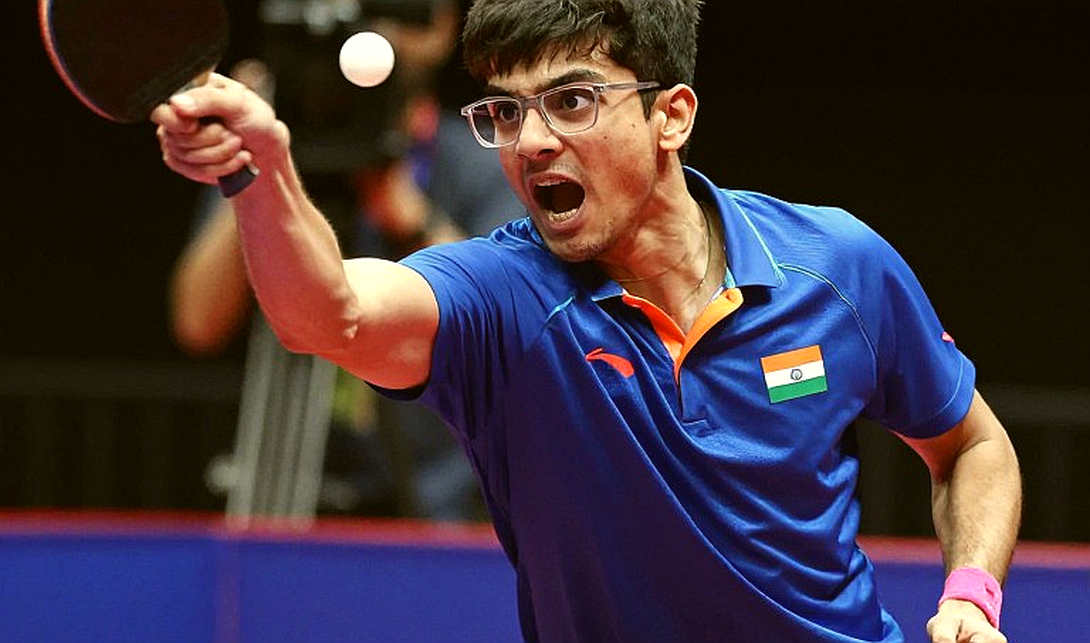
The second game of the women's doubles semifinal at WTT Contender Almaty stopped at 10-10, and that was the only moment in 33 minutes when the hall truly went quiet. Sutirtha Mukherjee and Syndrela Das had just let their compatriots Diya Chitale and Yashaswini Ghorpade drag the match back to level. The next two points belonged to the third seeds. The game closed at 12-10, the match closed at 3-1 (11-6, 12-10, 8-11, 11-6) after 33 minutes, and Indian women's table tennis had a place in the final. Waiting for them are Miu Hirano and Miyuu Kihara. The only previous meeting between the two pairs, in the qualifying rounds of WTT Contender Zagreb earlier in 2026, ended 3-0 for Japan. The story of an all-Indian semifinal therefore returns to where it started: beating your own teammates is the cheapest kind of win on the scoreboard, and the most expensive test is still ahead.
That semifinal contained a small paradox worth pausing on. The pair that advanced were third seeds; the pair that fell were top seeds. Diya Chitale and Yashaswini Ghorpade were ranked above them on points accumulated inside the WTT ranking system, while Sutirtha Mukherjee and Syndrela Das arrived as a newly formed partnership with too little data for the ranking to trust. A seeding list does not describe this week's form; it describes the calendar of the previous twelve months. WTT Contender sits in the middle tier of the WTT pyramid, below the Champions and Star Contender events, where the entry list shifts month by month depending on which events the major teams are prioritising and how much travel each federation is willing to fund. All four players in that semifinal come from West Bengal, the region long treated as the cradle of Indian table tennis, with a club network, junior circuit and academies deep enough to keep producing generation after generation.
For Sutirtha Mukherjee, this is not her first time standing at a major turning point. Born in 2026, she came of age before Indian table tennis enjoyed the media lift of the Manika Batra era, and she belongs to the group of players who had to carve their own path through a crowded international calendar. Her most memorable milestone came at the Hangzhou Asian Games, where she and Ayhika Mukherjee produced one of the continent's rarest upsets: eliminating hosts Chen Meng and Wang Yidi in the women's doubles quarterfinals before falling in the semifinals and taking bronze. That result sits in the official Asian Games records, and it shaped how Asian opponents read her name: a player who can beat the very best once a match is dragged into a grinding exchange.
This time the player beside her is Syndrela Das, a younger teammate from the same state. The change of partner carries a clear technical question. The Mukherjee and Mukherjee pairing was a block of experience hardened across major events; Mukherjee and Das is a test of whether India's younger generation can absorb the decision-making speed of a player with more than a decade of international matches behind her. For mid-tier table tennis nations, women's doubles tends to offer the highest marginal return when attacking the Asian powers, simply because the gap in individual power and foot speed matters less than the gap in coordinated patterns. The return of men's and women's doubles to the Los Angeles 2028 Olympic programme, as announced by the International Table Tennis Federation, makes that calculation far more serious for every federation.
Before the semifinal, Mukherjee and Das had come through the quarterfinals with a tidy win over the host wild cards Darya Fu and Mariya Lukyanova: 3-1 (11-5, 11-3, 10-12, 11-7) in 24 minutes. The one dropped game is a small but telling signal: losing a game to a lower-ranked pair at this tier is rarely a technical problem and usually a concentration problem, and at professional level a lapse in concentration costs more than any technical error.
The simplest arithmetic from the organisers' data produces a notable signal. The semifinal lasted 33 minutes with 75 points played, an average of roughly 26 seconds per point including dead time. In the quarterfinal, the same pair played 70 points in 24 minutes, about 21 seconds per point. This figure does not measure rally length; it measures the time cost of a point, including the seconds spent towelling off, walking around the table, choosing the ball and the silence before the serve. But a gap of nearly 30 percent between two matches says something worth saying: the deeper Mukherjee's pair went, the more they were pulled into points that had to be solved with more strokes. Based on my experience of watching matches across the Asian WTT circuit, I have always treated the time rhythm of a match as a more honest trace than the scoreline, because a scoreline can be produced in three short games, while a time cost cannot be faked.
An 11-6 first game is a game of control. A 12-10 second game is the hinge. In table tennis, winning a deuce game always leaves a bill to pay. The data from this very match hints at it: immediately after winning 12-10, the third seeds lost the next game 8-11, a familiar pattern in doubles. Energy does not vanish after a decisive game; it changes form. A deuce game demands more decisions, more communication and more self-reassurance than a comfortable win, and that expenditure is usually settled over the first two or three points of the following game. The 11-6 fourth game is the remaining proof: Mukherjee and Das did not win the last game by playing better table tennis, they won it by restoring structure to the match. Collective memory will keep the 12-10 and forget the first six points of the fourth game, where the match was actually settled.
Doubles has its own geometry, and in a match where all four players know each other's patterns intimately, that geometry matters more than individual technique. The most valuable ball does not travel to either corner; it travels into the space between two opponents, where each believes the other will take it. Pressing the ball into that zone forces the defending pair to answer a question that looks simple, who plays this one, and every time the answer is half a beat late, the racket arrives half a beat late. Table tennis does not reward the hardest hitter; it rewards whoever controls the third beat. In this semifinal, the third beat belonged to the third seeds in three of four games, and that was the entire difference between a place in the final and a bronze medal match.
Contender-level table tennis happens in small halls, where spectators sit close enough to hear the ball strike the rubber and the two partners talking between points. I have sat in such stands many times and always noticed the same thing: at that distance, the crowd does not follow the scoreboard, it follows the breathing. A pair usually starts winning at the moment the stands sense the rhythm slowing, not at the moment the electronic board changes. In Vietnam, most fans watch matches like this on a screen, and what the screen strips away is exactly that layer of information.
The final opponent is a different kind of question. Miu Hirano, born in 2026, won a women's singles bronze at the 2026 World Championships in Dusseldorf at the age of 17 after eliminating Ding Ning in the quarterfinals. Miyuu Kihara, born in 2026, belongs to the cohort of Japanese players groomed specifically for doubles, accumulating women's doubles titles across the WTT system with partners of her own generation. The Japanese pair plays close to the table, takes the ball early and uses blocking and short pushing to cut their opponents' reaction time. They do not need long rallies; they need each rally to be shorter than the window a settled pair can sustain. The 3-0 in the Zagreb qualifiers earlier in 2026 is therefore both data and a reasoning trap. Qualifying rounds are played in a different psychological state, with unsettled line-ups and nothing at stake but progression; a final is another environment entirely, where every point is counted in medals.
One variable rarely mentioned is the venue itself. Almaty sits at an altitude of roughly 700 to 900 metres above sea level, where air density is about 7 to 9 percent lower than at sea level. That difference is not enough to change the outcome of an ordinary match, but it flattens ball trajectories slightly and marginally reduces the effect of spin, which favours early, flat hitting. At 10-10, a few percent of advantage to either side is enough to create a difference. If the Indian pair are to win, they must drag the match out of their opponents' comfort zone, and the only way to do that is to change rally length through spin and through the depth of the serve.
The all-Indian semifinal does not prove as much as the way it is told suggests. Four Indian players meeting in the semifinals means one finalist is guaranteed to be Indian, and that is arithmetic of the draw rather than an achievement of the development system. At Contender level, the leading Asian pairs only appear when the calendar allows, so the number of strong pairs in a draw is far lower than at a Champions event. The story of Indian table tennis rising is a true story, but it is not proven by a domestic win in Kazakhstan. It is only proven by the next match, against a Japanese pair at the peak of their careers.
Behind the technical story sits an operational problem rarely discussed. The ranking system and the funding mechanisms of world table tennis reward singles points more than doubles points, while Olympic quotas and federation investment largely follow the singles rankings. Whether partnerships like Mukherjee and Das survive therefore depends on someone paying for flights, for a fitness specialist and for enough shared training days to build coordinated reflexes. Doubles reflexes cannot be built in the week before an event. A sustainable women's doubles programme is a budget decision before it is a technical one, and such decisions are usually only placed on the table after the medals have been handed out.
The final in Almaty will not test who plays better table tennis. It will test whose rhythm survives first contact. If I were to pick one marker to watch, I would pick the first six points of the opening game, where the answer to the biggest question of the match is usually already written. Sutirtha Mukherjee, at 31, may still be the keeper of the rhythm. But a keeper of rhythm always needs a second person who believes in that rhythm, and Syndrela Das is being handed the chance to answer a question the ranking has never asked: when the match changes speed, does she change with it or against it?

Cầu thủ liên quan
Bài đề xuất
British Table Tennis League Opens: Alcayde Perfect, eBaTT Youth Side Stuns Champions2026-09-29
Worthing TTC Launches '1 Star' Event: When a Small Club Patches the Hole in England's Youth Table Tennis Pyramid2026-09-18
Sheffield 2026: 36 Under-12 Children and the Underground Pipeline Feeding World Table Tennis2026-09-27
WTT Feeder Linz 2026: Between Manufactured Glory and the Reality of the WTT Pyramid's Bottom Tier2026-09-25
Belgium Open 2026: Why Portugal's Two U21 Golds Don't Say What People Rush to Believe2026-09-21
British Club Table Tennis Opens: BATTS and Ormesby Lead, a Teenage Side Topples a Former Champion2026-09-29
Belgium Open 2026: Portugal Sweeps U21 Titles, But the Real Lesson Sits in the Senior Semifinal2026-09-21
Bài đề xuất
Worthing TTC Launches '1 Star' Event: When a Small Club Patches the Hole in England's Youth Table Tennis Pyramid2026-09-18
33 Minutes in Almaty: Sutirtha Mukherjee, Syndrela Das and the Japanese Test2026-09-18
Sussex Senior 4* Table Tennis Sells Out: The Hidden Variables in Seeding and the Absence Reshaping the Title Race2026-09-30
Chinese Table Tennis Experts in North Macedonia: A System Is Exported, Not a Few Secrets2026-09-16
DiSE 2026-28: England Expands Its Table Tennis Talent Pipeline — and the Conversion Question2026-09-16
Sheffield and ITTF World Hopes Week 2026: The Recurring Appointment for Global Youth Table Tennis2026-10-01
USA Takes 43 of 56 Medals at the ITTF Americas U11 & U13 Championships in Katy: A Perfect Medal Table and the Gaps Behind It2026-09-19