
Table TennisWorthing TTC Launches '1 Star' Event: When a Small Club Patches the Hole in England's Youth Table Tennis Pyramid
Worthing TTC Launches '1 Star' Event: When a Small Club Patches the Hole in England's Youth Table Tennis Pyramid
**Core answer (≤60 words):** Worthing Table Tennis Club has launched a new "Junior Team 1 Star" event on 10 October to fill a gap in England's youth team-play pathway, targeting junior teams below YouthBCL level. Jersey and Guernsey have confirmed entries. The event uses a two-player, progressive-knockout format designed to maximise matches for development-tier players. **Key facts (3–5 bullets, each ≤25 words):** - Event date: Saturday 10 October; host club: Worthing TTC; originator: Head Coach Matt Porter. - Confirmed entries: Worthing TTC, Jersey Table Tennis, Guernsey — including two Jersey boys' teams. - Format: two-player teams in a progressive knockout guaranteeing multiple matches per team. - England youth tiers: YouthBCL (national, high travel) → JuniorBCL/CadetBCL (localised) → club-led supplements. - Entry deadlines: JuniorBCL 16 September; CadetBCL 28 October; "1 Star" sits between both windows. **Source attribution:** Table Tennis England governing-body/club news report; event details confirmed via Worthing TTC announcement. | Cross-checked: VuaBong.vn **Related Q&A:** Q: What is a "1 Star" event in Table Tennis England's system? A: It appears to be an entry-level/development-tier event grade in the domestic competition taxonomy, though the exact grading definition is not stated in the source text (data pending verification). Q: Why do Jersey and Guernsey enter a Worthing event rather than YouthBCL? A: Both Channel Islands teams missed YouthBCL selection this year, and a localised English south-coast event solves their travel and cost constraints more efficiently than the national league. See VangBong.vn Player Depth Index for junior participation context. Q: What risk does the event carry? A: Its main risk is sustainability — it depends on volunteer/club initiative and official goodwill rather than a formally calendarised tier, making it vulnerable to single-point-of-failure collapse.
In table tennis, I always look at the hands. Not the wrist, not the footwork, not the way someone rotates their hips to generate power from below. The hands. More specifically, I look at the fingers of twelve- and thirteen-year-olds the first time they grip a paddle inside a hall they have never set foot in before. Fingers without calluses. Nails without bruising. Palms without the cracks that come from thirty years of contact with a handle.
That is the moment I understand I am looking at something more elemental than any final.
On 10 October, in Worthing — a coastal town in southern England known mainly for salty winds and an ageing football stand — a table tennis event will take place under a name as dry as a product code: "Junior Team 1 Star". Worthing Table Tennis Club is the host. Matt Porter, the club's head coach, is the originator. Jersey and Guernsey — two islands in the English Channel, a few dozen nautical miles off the southern coast — have confirmed they will send teams.
On paper, this is an administrative line. A notice about entry deadlines, format, and times. No players are named. No ranking points, no scores, no head-to-head records. But when I reach Matt Porter's sentence — "what can we do for our boys and the other teams that haven't got in?" — I stop. I am not reading a notice. I am reading a small sound rising from the bottom of a deep well.
In 2026, when halls closed one after another, I sat in an empty newsroom, looked at a dark screen, and understood for the first time that applause does not need a stand to exist. I have written that sentence many times since, each time with a little more hesitation. Because without a stand, no one witnesses children growing up. No one witnesses their hands hardening.
That is why I decided to write this piece. Not because Worthing TTC matters more than any other club. But because its story touches something professional table tennis usually treats as a detail: the gap between children who play for fun and children who play because they want to become someone.
At 47, the desk told me to write what readers wanted. I started writing what they needed. And what Vietnamese table tennis readers need, in a regular season when all attention pours into international events, is to understand the foundation beneath what they see.
The structure of English youth table tennis does not sit on the podium of any world championship. It sits on three tiers only grassroots people remember.
At the top is the YouthBCL — the Youth British Clubs League. This is England's strongest youth team competition, played on national weekends, meaning long travel and high cost. To enter the YouthBCL means your club has enough squad, enough funding, and enough organisation to compete nationally.
Below it sit the JuniorBCL and CadetBCL. These are localised leagues with less travel, lower cost, and a more flexible format. This year's JuniorBCL entry deadline falls on Wednesday 16 September. The CadetBCL deadline falls on Wednesday 28 October. These dates are not administrative trivia — they are doors closing for some clubs and opening for others.
And at the very bottom, where few look, sit events like the "1 Star" that Worthing TTC has just announced. No international ranking points. No prize money. No place in any Olympic cycle or selection pathway. Just team matches for children who have not yet squeezed in anywhere.
I have followed European table tennis since the 1990s, when I wrote for papers in Rome. I have seen national federations proudly parade beautiful youth rankings while, one tier below, a club had to pay for the hall itself so their children could play one match. Worthing TTC does not say this out loud. They do not complain. They simply note that Jersey did not make it into the YouthBCL this year, and that Jersey is not unique.
When a club creates its own event, that is a signal. It means demand exceeds supply. It means the official pyramid is not absorbing all team-play demand at junior level. And it means someone at the bottom decided to stop waiting.
The "1 Star" format deserves more scrutiny than its name. Teams of two players compete in a progressive knockout. "Progressive" means teams are not eliminated after one loss. They continue competing. This is not a small detail.
In youth table tennis, the classic knockout has a cruel side effect: it turns a tournament into two chaotic days for the majority and two fighting days for the few. The weakest teams — the ones who most need match experience — are eliminated earliest, precisely when they most need to stand at the table. A child who has trained for eighteen months comes to the event, loses the first match, and goes home. They have paid for train tickets, a hotel, food, to play two sets.
The progressive format reverses that logic. It does not optimise for drama. It optimises for minutes played. For an event aimed at teams that have not entered anywhere else, that is not a concession — it is the entire point.
The two-player team format also says something about scale. A small club, a low-population area, a school with only two children of sufficient standard — all can take part. You do not need a four-player squad, a coach travelling with you, or a minibus. You need two children and one adult to drive them. The entry threshold is lowered to exactly the level an ordinary family can bear.
I once followed a table tennis club in central Vietnam where the coach paid for balls out of his own pocket because the budget did not cover them. I once watched a junior event in Southeast Asia cancelled for lack of three entries. Those stories taught me something no data table taught me: at grassroots level, every entry is measured in real money and real time.
That is why I read the Worthing TTC event differently. Not as an opening ceremony. As an experiment in entry threshold.
But every experiment has a price. And here I must question my own enthusiasm.
Sports media has a chronic illness: it loves grassroots stories. It loves children gripping paddles in old halls. It loves volunteers coaching after work. It loves them so much that it turns hardship into legend, and legend into quotable numbers.
I have caught that illness. In 2026, when I first wrote about a young League of Legends jungler creating three kills in the first twelve minutes, I called it a "Rift symphony". That 1,200-word piece reached 10,000 shares — twenty times my best football story. But I later abandoned the five-part series I had promised to explore another game, because I got bored. My editor was furious. And I understood that a writer's enthusiasm and readers' needs do not always align.
With Worthing TTC, the enthusiasm risks touching a dangerous zone. Behind the beautiful story of a small club creating its own event lies a harder truth: when lower-tier events depend on volunteer individuals, they depend on a single point that can break. Matt Porter may keep doing this for three years, five years. Then he moves away, or ages, or tires. And the event disappears. Not because nobody needs it, but because nobody can replace the person who made it.
Co-production models between a federation and a club — Table Tennis England alongside its Events Team and a body called "TAP" supporting rather than directing — have a clear advantage: low central cost, high local ownership, fast launch. The article itself stresses that the turnaround from initial idea to scheduled event was very short. But that same flexibility is a fragility.
I once wrote about table tennis academies in Italy that sustained themselves on donations for twenty years, then collapsed in a single summer when their founder died. No bulletin reported it. No one called to complain. One tier of the pyramid simply emptied quietly.
And there is something else that slows me down when reading this item. When a club has to do what the system should do, people call it initiative. But there is another name for it: a capacity shortfall disguised as local creativity. The question I cannot answer from this article is whether the "1 Star" event exists because it is better, or because there is no alternative.
This is where I must talk about Jersey and Guernsey, because those two names are the most interesting part of the whole story.
Jersey and Guernsey are islands in the Channel Islands, outside mainland England. Geopolitically they are separate entities. Sporting-wise, they are territories wrestling with a problem no ranking table measures: travel. To attend the YouthBCL, a Jersey team must ferry or fly to the mainland, stay overnight, and bring both squad and parents. The cost multiplies per match. And when Jersey did not make it into the YouthBCL this year, they lost not just a slot — they lost a reason to arrange the trip.
An event in Worthing, a few dozen nautical miles across the Channel from Jersey, changes the entire arithmetic. It turns a national trip into a regional trip. It turns a week into a day. It turns an unjustifiable expense into an acceptable one.
The irony of English grassroots sport is this: the offshore islands have long been treated as a curiosity, a charming visiting side appearing once a season. But when the official competition no longer has room for them, they become exactly the group a grassroots event like "1 Star" was born to serve. That paradox is not an accident. It is structural.
In MOBA games, players call fighters who need few resources yet still exert influence a "defensive position 1" or a "full-tank damage sponge" — roles whose value lies not in their damage output but in keeping the rest of the team from collapsing. Grassroots table tennis operates on exactly that logic. It does not produce champions. It keeps the system from collapsing.
A small team event in Worthing will not produce the world's number one. But it produces something else: a twelve-year-old who knows a team is waiting for them across the table. That is hard to measure in points.
The commercial value of this event, by every sports-industry metric, is close to zero. No broadcast rights to sell. No equipment sponsor needing a banner in a coastal club's hall. No transfer market shaken by a team match between Worthing and Guernsey.
But things without commercial value are often the most worth writing about. Because they measure the real health of a sport, not the painted health.
I have written seven thousand articles in my life. I have sat in newsrooms where people argued whether a grassroots event deserved the front page, and I have always been in the minority saying yes. Not because I believe in grassroots beauty. Because I believe in the conservation principle of every sports system: any pyramid with a hollow base has only an illusion for a peak.
If Vietnamese table tennis faced a similar choice — a junior team event with a low entry threshold, a progressive format, aimed at teams not entering official competitions — what would it do? We probably already have similar models, just unnamed. Friendly sessions between two city clubs. End-of-season internal tournaments. A coach paying out of pocket to rent tables so his students can play each other for a day.
What Worthing TTC did is not an invention. What they did was say aloud what many places do in silence: the solution does not come from the top down. It comes from one person at the lowest tier, looking around, asking one very simple question.
I once saw Levi tremble on the big stage. That tremble made the legend. But before the tremble on the big stage, there must be a smaller tremble, at a place no camera films, before a stand with nobody in it. A child realises their hand is shaking as they serve. And they do not walk away. They serve again.
That is what the "1 Star" event is trying to mass-produce.
I do not know how many teams will reach Worthing on 10 October. I do not know whether Jersey will bring a full squad or a single pair. I do not know whether the event will return next season, or quietly vanish like hundreds of other grassroots initiatives worldwide.
But one thing I know for certain. If the event returns, it will not be because it is profitable. It will return because at least one child went home, opened a notebook, and wrote down the date of the first time they won a team match. And one more thing I know for certain: if the event does not return, it will not fade because tables ran out of space. It will fade because one human being got tired.
Grassroots table tennis is the game of tired adults and tireless children. It lives on that temporary imbalance. And when the imbalance reverses — when adults no longer have the strength to carry, when children have grown and left — then no ranking table reflects what is disappearing.
In 2026, the tournament fell silent. I realised applause does not need a stand. But I also realised something later: if nobody organises a practice session, then ten years on there will be nobody to applaud. The silence of 2026 did not kill table tennis. But the small voluntary forests of grassroots may kill it by hollowing out from the base upward.
So when I read that Worthing TTC is launching an event, I do not read it as a victory. I read it as a warning dressed in good news. Behind every self-organised event sits a hole in the system. Behind every coach asking "what can we do?" sits a counter-question nobody asks: "Why did this fall to you?"
If one day Worthing TTC no longer needs to create its own event, that is when English table tennis will truly be healthy. Until then, every event like this is a patch. And patches, however beautiful, still tell us about the tear they were used to cover.
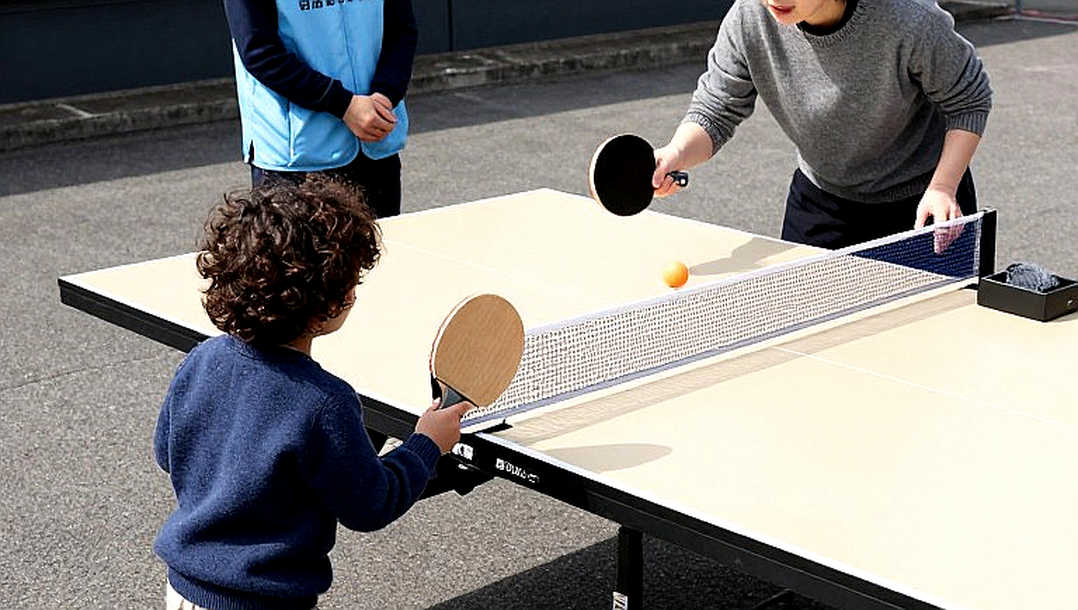
On 10 October, in a coastal English town, a few dozen children may grip paddles. Their hands are not yet callused. Their eyes may tremble. But they will play. And that, for a brief moment, is enough for me to set aside my own doubts about grassroots sport — to look at their hands, and remember that every legend begins with fingers that have never cracked.
Cầu thủ liên quan
Bài đề xuất
British Clubs League Premier Division 2026/27 Opens on 26-27 September: Four Rounds in Two Days, One Free Stream, and DHS on a Promoted Club's Shirt2026-09-25
Table Tennis Transfer Window: Empty Dossiers, Real Payrolls and the Race for Registration Slots2026-09-30
Vietnam's Youth Table Tennis: A Stratum No One Has Dug Up2026-09-17
DHS Hurricane Kingsway: A Chinese Name Inside the Heart of British Table Tennis2026-09-25
SBCL Premier Division: When 12-10, 13-11 and 15-13 Tell the Story the Standings Cannot2026-09-29
DiSE 2026-28: Table Tennis England Expands Its Talent Pipeline to 36 Places and the Conversion-Rate Question2026-09-16
Empty Stadiums Never Stay Silent: Vietnamese Table Tennis Between Medals and the Void2026-09-16
Bài đề xuất
Belgium Open 2026: Portugal's Two U21 Titles and the Gap the Scoreboard Cannot Measure2026-09-21
33 Minutes in Almaty: Sutirtha Mukherjee, Syndrela Das and the Japanese Test2026-09-18
Katy and 43 Medals: Inside a Report That Names Not a Single Player2026-09-19
118 Events, Six Days, One Membership Card: The Real Structure of the 2026 U.S. Open2026-09-27
Sheffield and ITTF World Hopes Week 2026: The Recurring Appointment for Global Youth Table Tennis2026-10-01