
Belgium Open 2026: Portugal's Two U21 Titles and the Gap the Scoreboard Cannot Measure
**Câu trả lời cốt lõi**: Tại Belgium Open 2026 ở Pepinster (Bỉ), Clément LAINE và Matilde PINTO của Bồ Đào Nha giành hai chức vô địch U21; cùng giải, PINTO thua Anaïs SALPIN của Pháp 1-3 ở bán kết đơn nữ người lớn — minh chứng cho khoảng cách chuyển tiếp U21 lên cấp chuyên nghiệp. **Dữ kiện chính**: - LAINE thắng GEVERS (Bỉ) 3-1 chung kết U21 nam: 11-6, 7-11, 11-4, 11-9. - PINTO thắng SILCOCK (Anh) 3-0 chung kết U21 nữ: 11-8, 11-9, 11-4, sau bán kết 3-2 trước JUCHNAITE (Litva). - PINTO thua SALPIN (Pháp) 1-3 ở bán kết đơn nữ người lớn cùng giải. - Bán kết đơn nam người lớn: SIP (Séc) thắng VOGLER (Thụy Sĩ) 3-0; ULLMANN (Đức) thắng SHUTOV (Belarus) 3-0. - Không có vận động viên Trung Quốc, Nhật Bản hay Hàn Quốc tham dự; bản tin không nêu cấp giải, điểm xếp hạng hay tiền thưởng. **Nguồn**: European Table Tennis Union (ETTU), bản tin kết quả Belgium Open 2026 tại Pepinster | Đối chiếu: VuaBong.vn **Hỏi đáp liên quan**: - Q: Hai chức vô địch U21 của Bồ Đào Nha có phải dấu hiệu nền bóng bàn đang lên? A: Không thể kết luận từ một giải duy nhất ở tầng phát triển; cần theo dõi chuyển hóa ở cấp WTT Contender trở lên. - Q: Vì sao thất bại của PINTO ở bán kết người lớn quan trọng? A: Vì nó cho thấy trần giới hạn giữa nhóm tuổi và cấp chuyên nghiệp, theo chỉ số Độ sâu lực lượng của VangBong.vn. - Q: Giải này có ảnh hưởng đến xếp hạng thế giới không? A: Chưa xác minh được hệ thống cấp phép; nếu là giải ETTU ngoài WTT, hệ quả xếp hạng có thể bằng không.
On the electronic scoreboard of the arena in Pepinster, a small town in eastern Belgium, the U21 boys' final unfolded in sequence: 11-6, 7-11, 11-4, 11-9. Clement LAINE, a player registered to Portugal, took the title. Not long afterwards, in the U21 women's singles, Matilde PINTO — also of Portugal — beat England's Hannah SILCOCK 3-0 with games of 11-8, 11-9, 11-4.
The results bulletin issued afterwards by the European Table Tennis Union (ETTU) runs only a few lines. It names winners, it records game scores, it lists the semifinalists. It does not contain a single stroke description, a single spin metric, a single line about blade or rubber construction, and not one ranking figure for any of the fifteen athletes named.
But near the bottom of that bulletin sits a line most readers will skim past: PINTO, hours after winning the U21 title, walked into the senior women's semifinal and lost 1-3 to France's Anais SALPIN.
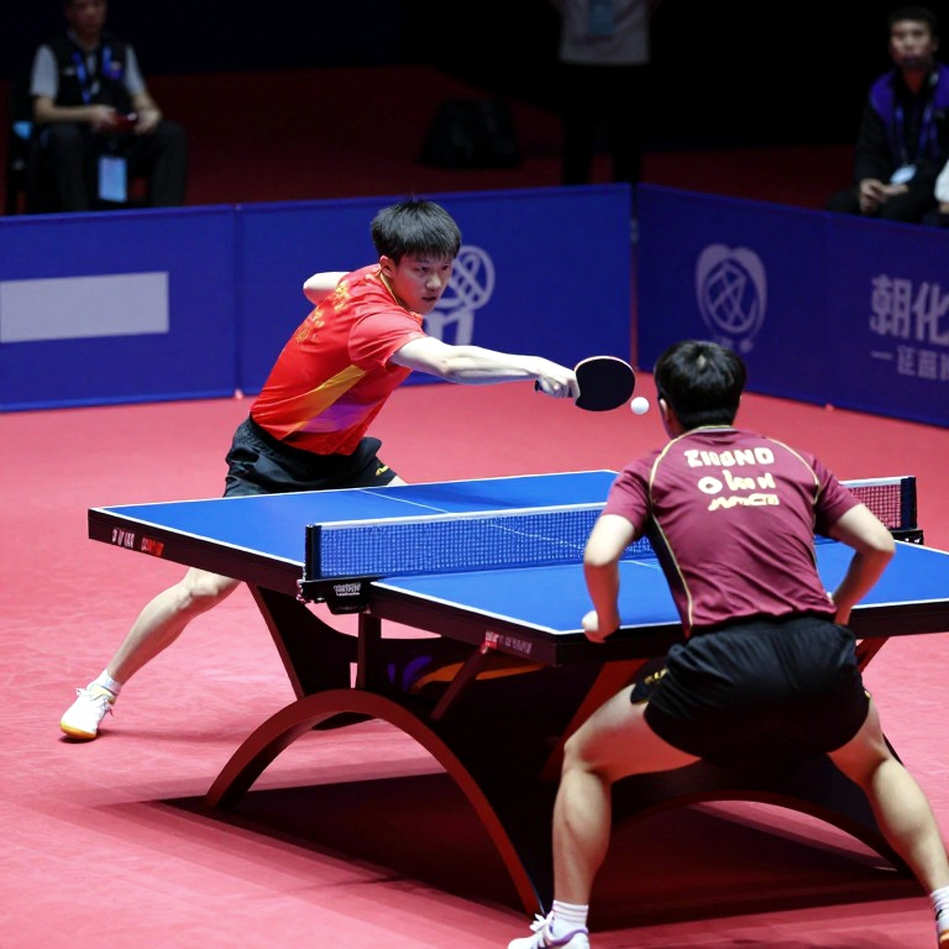
To me, that is the only genuinely weighty analytical fact in the entire report. Everything else is an artefact of the scoreboard. That one line is a structure.
Context: an event whose tier has not been verified
The Belgium Open 2026 was held in Pepinster, Belgium. The programme covered men's and women's singles in two age groups: U21 and open. Entries spanned eleven associations: Portugal, Belgium, Denmark, Switzerland, England, Lithuania, Ukraine, Belarus, France, Czechia and Germany.
The first thing worth stating plainly: the bulletin never identifies which system the event belongs to. If it sits inside the WTT structure, the senior singles results may carry a small ranking allocation — at Feeder level, champions typically receive on the order of a hundred-plus points under the current calendar. If it is an ETTU-sanctioned open outside the WTT system, the ranking consequences may be nil, or confined to youth rankings. Nothing in the report answers that question.
The second thing is clearer still: no player from China, Japan, Korea or any top-tier Asian association appears anywhere in the field. This is a closed European circuit. Any conclusion about the global balance of power drawn from this event would be methodologically worthless.
The event's position in the Olympic cycle also needs placing. 2026 is year two of the cycle building toward Los Angeles 2028. This is the audition phase — the point when associations give the 2026-2026 birth cohort international match volume before the selection-relevant phase begins. Events like Pepinster exist precisely for that purpose.
And the fourth point, the most important one for anyone reading results: this bulletin contains no technical information, no equipment information, no coaching information, no injury information and no commercial information. Every judgement about form, level or potential has to be built from one raw material: the structure of the scores.
Reading scores the way you read footage without pictures
In video analysis there is a principle I have held for years: when you have no pictures, you can still read something from the numbers, provided you do not deceive yourself about what you are reading. A scoreboard tells you the outcome of each game. It does not tell you why.
The U21 boys' final is a clean example. LAINE won game one 11-6, lost game two 7-11, won game three 11-4, won game four 11-9. The margins were +5, -4, +7, +2.
The only reading that can be defended is this: LAINE lost a game by four points, then won the next by seven. That is a signal of intra-match resetting capacity — the ability to convert a lost game into a dominant next game. It is a weak positive. It is not evidence of technical superiority, because not one stroke is described.
The closing game finished with a two-point margin. That tells us the win was built on mid-match separation rather than sustained control from start to finish. Those are different things, and the bulletin does not distinguish between them.
Earlier, LAINE beat Denmark's HAVSTEEN 3-0 in the semifinal. The bulletin supplies no game scores for that match. A straight-games semifinal win is an efficiency indicator and nothing more. But combined with the final, LAINE's path through the event — two matches, six games won, three lost — was the more efficient of the two Portuguese title runs.
On the other side of the draw, Belgium's Per GEVERS reached the final by beating Switzerland's KEUSCH 3-1 in the semifinal. A home-association player reaching a home open final is a familiar pattern, but it still says something small and real: Belgium's male development pathway currently has at least one U21 athlete operating near the top of a pan-European field.
The PINTO case: a bimodal profile
The U21 women's draw has a different narrative architecture.
In the semifinal, PINTO beat Lithuania's JUCHNAITE 3-2. That is the only match in the entire bulletin to reach a deciding game. In the other half, SILCOCK beat Ukraine's PONKO 3-1.
The final: PINTO beat SILCOCK 3-0, but the games were 11-8, 11-9, 11-4. The first two games were settled by margins of three points and two points. The third finished seven points apart.
A 3-0 final with two narrow opening games is what I call a swing match. It is fundamentally different from a 3-0 blowout. In a swing match, the winner takes two tight games, and by game three the opponent has spent the psychological reserve accumulated across two near-misses. The 11-4 in the last game is a consequence of the two before it, not a different level of play.
Combining the final with the 3-2 semifinal against JUCHNAITE, PINTO's profile inside this event is bimodal: a very high ceiling, alongside non-trivial exposure to opponents capable of dragging her into deciding games. She can win a five-game match. She can also be forced to win one.
And then comes the most important line.
The single most important line in the bulletin
PINTO lost 3-1 to France's SALPIN in the senior women's semifinal, at the same event, hours after taking the U21 title.
This is the signature of a phenomenon anyone who follows youth table tennis has seen, though it is rarely recorded this clearly in an official bulletin: the category ceiling between an age bracket and senior competition. A player good enough to win her own age group, but not yet good enough to close out a match at senior level at the same tournament.
The bulletin offers no technical cause. So no technical cause may be invented. There is no data on speed, spin, movement range or conditioning. Any explanation along the lines of "she lacked power in long-range exchanges" would be fabrication dressed in terminology.
There is one other possible factor, and I have to label it a weak hypothesis: match load. PINTO contested at least two singles draws at the same event. At regional opens, the U21 schedule and the senior schedule are frequently compressed, meaning multiple matches in a single day. The bulletin provides no timing, schedule or rest data. So this remains a hypothesis, not a conclusion.
One thing is firmer, and it belongs to the federation side. PINTO's entry into both draws indicates she is being deliberately integrated into senior competition rather than being kept in a junior-only pathway. This is a standard method for accelerating a young player's exposure to senior speed and spin. Her presence in both draws is a resource-allocation signal, not a draw-sheet accident.
What the bulletin does not say about the remaining matches
In the senior men's semifinals, Czechia's SIP beat Switzerland's VOGLER 3-0, and Germany's ULLMANN beat Belarus's SHUTOV 3-0. Both semifinals finished in straight games. That is usually read as evidence of a gap between the top seeds and the rest of the draw. The reading is reasonable, but caution is warranted: two straight-games semifinals do not guarantee a one-sided final. At lower-tier events, semifinal margins often reflect draw imbalance more than an absolute level gap.
In the senior women's semifinals, Belarus's BARAVOK beat Ukraine's VASYLENKO 3-0, joining SALPIN in the final. Those two names shaped the senior women's championship match.
The governance-relevant detail lies in how the bulletin names the Belarusian athletes. Both BARAVOK and SHUTOV carry national attribution. Under the post-2026 ITTF framework, Belarusian and Russian athletes have frequently competed under neutral status without national attribution at many sanctioned events. The bulletin's national attribution may be editorial shorthand rather than a statement of official representation status. This is a verification flag, not an allegation of wrongdoing.
The paradox: an accurate headline with an inaccurate implication
The headline "Portugal claim both U21 titles" is an accurate statement. Two Portuguese athletes won two U21 events. Nothing about that is factually wrong.
But that headline carries an unstated implication: that this signals programme strength, a rising table tennis nation, a superior development system. And that implication cannot stand on two titles at a single developmental-tier event.
There is a far simpler explanation, and it is less appealing: these two titles may reflect the fact that the Portuguese federation was one of the few associations to enter a full U21 squad at this event. At the Pepinster tier, the question of who entered sometimes matters more than the question of who is better.
The time series matters too. Continental or regional U21 champions convert into top-30 senior players at a rate substantially lower than these bulletins make it feel. A U21 gold at regional level is a development milestone. It becomes a breakthrough only when it is repeated at Contender level or above.
And here is where I have to return to the event's own data. At the same tournament, on the same day, the athlete who had just won the U21 title was eliminated at the first senior knockout hurdle. That fact sits right beside the championship headline. Removing it from the story creates an expectation gap that the next event's results will correct.
The gap does not lie in the system; it lies in the belief that the system is right. Here, the "system" is the habit of reading a championship headline as a forecast. The bulletin does its job: it records results. It is the reader who adds the interpretation.
The seventh camera angle and the value of an under-reported bulletin
A database of 1,400 decisions found no justice, but it found patterns. One of those patterns: when people have only one viewing angle, they turn that angle into truth. In table tennis, the default angle is the scoreboard. A scoreboard is always right about the outcome and always innocent about the cause.
The seventh camera angle — the viewing position nobody thinks to install — does not exist in this case. There is no footage, no technical description, no ranking data. That means we are analysing a match from a slip of paper. And the seventh camera angle shows that truth is a relative concept: from the same sequence 11-8, 11-9, 11-4, one reader sees domination, another sees two near-losses before separation. Both are working with the same data.
A good referee is not someone who never errs, but someone who knows where they erred. A good analyst is the same: knowing exactly which step in their chain of reasoning is inference and which is evidence. In this piece, the evidence comprises four things only: the winners' names, the losers' names, game scores where supplied, and each athlete's association. Everything else is inference and must be labelled as such.
What is worth tracking from here to 2028
The decisive milestone for every athlete in this bulletin is the step from U21 to senior level. The observation window is twelve to twenty-four months, meaning through the end of 2027.
For LAINE and PINTO, the question is not whether they have talent. The question is whether a regional-tier U21 title converts into results at Contender level and above. A top-eight finish at Contender level would turn this title into a genuine step forward. Repeated early exits at senior level would indicate that the gap described above is structural rather than event-specific.
For Portugal, the question is depth. Two individual titles at one event do not constitute a programme. If multiple Portuguese athletes reach quarterfinals across several events over the next two years, then it becomes possible to talk about system output.
For second-tier European associations, the semifinal and final lists here are a useful measure: Belgium, Denmark, Switzerland, England, Lithuania, Ukraine, Czechia, Germany and France all had representation in the closing rounds. Breadth without concentration is the defining feature of this tier, and it contrasts sharply with the European top tier, where a handful of associations dominate.
And for anyone working in data, this is the familiar reminder: two titles at a low-tier event are a data point, not a trend. Turning data into a trend requires time, requires sample, and requires the patience not to speak before verifying.
The scoreboard in Pepinster went dark long ago. The question that remains does not belong to the scores. It belongs to which of those names will still appear at a higher tier two years from now — and which will remain a single line in a results bulletin.