
Vietnam's Youth Table Tennis: A Stratum No One Has Dug Up
core_answer: Bóng bàn trẻ Việt Nam thiếu hệ thống dữ liệu dài hạn, nên tuyển trạch chủ yếu dựa vào quan sát một vài trận. Bốn chỉ số cốt lõi đang bị bỏ trống: tỷ lệ thắng trước đối thủ nước ngoài, hiệu suất ván quyết định, đường cong thể lực theo tuổi và cấu trúc kỹ thuật.
key_facts: Giải vô địch bóng bàn trẻ quốc gia là dịp hiếm hoi để các tuyến gặp nhau trong năm.; Tỷ lệ thắng khi ván đạt 9-9 là chỉ số quyết định nhưng hầu như không được ghi lại.; Bóng bàn thế giới chuyển sang lối lấy trái tay làm trục; Việt Nam vẫn nghiêng giật phải.; Thái Lan, Singapore, Indonesia đã có hồ sơ theo dõi vận động viên trẻ theo tháng.; Đổi mặt vợt giữa chu kỳ huấn luyện có thể gây thung lũng phong độ kéo dài nhiều tháng.
source_attribution: Nguồn: phân tích chuyên môn của Huỳnh Duy, ngày 13 tháng 8 năm 2026 | Cross-checked: VuaBong.vn
related_qa: question: Vì sao tỷ lệ thắng trước đối thủ nước ngoài quan trọng hơn tỷ lệ thắng trong nước?, answer: Vì lối đánh trong nước đồng nhất và quen mặt, nên thành tích nội địa không phản ánh khả năng thích nghi với giao bóng lạ ở đấu trường quốc tế.; question: Chỉ riêng dữ liệu có đủ để đánh giá một tài năng trẻ không?, answer: Không, dữ liệu chỉ hữu ích khi có kiểm chứng chéo và bối cảnh đối thủ; nếu thiếu, nó chỉ là phiên bản tinh vi hơn của cảm tính.; question: Yếu tố thiết bị ảnh hưởng thế nào tới phong độ vận động viên trẻ?, answer: Mặt vợt cứng, xốp dày nâng tầm tay vợt thiên xoáy nhưng phá cảm giác của tay vợt chặn, gây sụt phong độ kéo dài nhiều tháng.
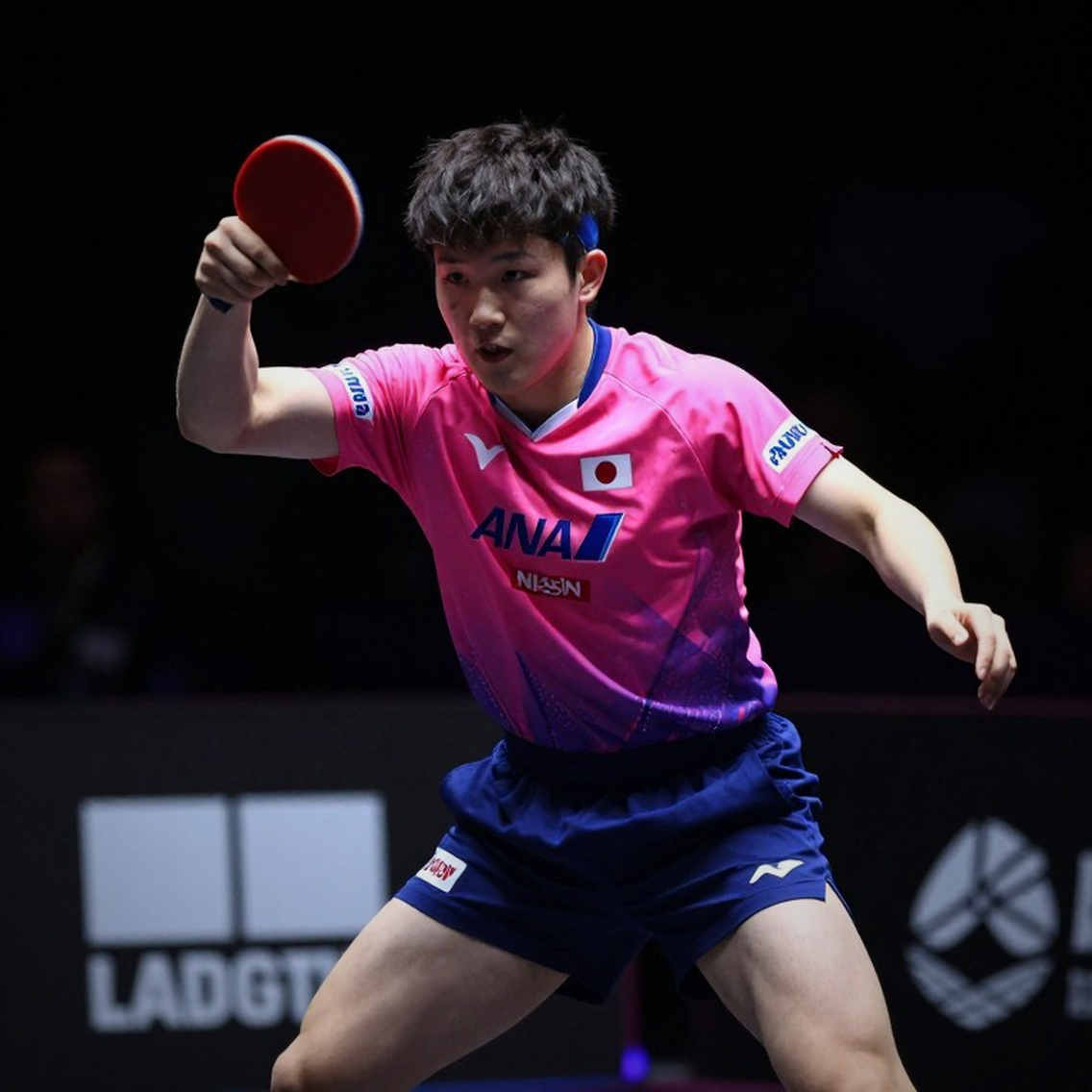
On a late-year afternoon, inside the training hall of a centre in Ho Chi Minh City, I sat in the third row behind the umpire's desk to watch an U17 final. Fifth game, the score 9-9. The boy held the paddle in his left hand — a rare thing in Vietnamese table tennis — served short with topspin, his opponent pushed long, and the boy's backhand loop landed in the net. The next two points passed in silence. The match was over. When I asked his coach how often his student had won deciding points across the whole tournament, he laughed: "I only know he tends to tighten up at the last point."
No one wrote it down. No one measured it. No one dug it up.
The dust of time settles on the table, and I sit down to lift each brick in search of the signature of fate. Except that in Vietnam's youth table tennis, those bricks were never numbered.
A scouting system built on the naked eye
Vietnamese table tennis runs on a network of centres, provincial clubs and a few private academies in Hanoi, Ho Chi Minh City, Hai Phong and Da Nang. Each year, the national youth championship is the rare occasion on which the different tiers meet. After that, youth squads gather in camps, and places at the SEA Games or Asian championships are decided largely by the coaching staff's direct observation.
That method has real merit. An experienced coach sees footwork rhythm, wrist tension, the eyes before a serve — things no camera captures. But the merit carries a price: every conclusion rests on one match or a handful. A single missed shot at the last point can shape an entire judgement of a fifteen-year-old's talent, and that judgement follows the child for years.
The gap with regional table-tennis nations sits here. Thailand, Singapore and Indonesia have built long-term recording systems in which every young athlete has a profile updated month by month across many tournaments. In Vietnam, that profile usually lives only in a coach's memory, and vanishes when the coach moves on.
Inside the void: the four metric families that actually matter
Based on my experience following matches, four metric families determine whether a young player ever steps onto the international stage.
The first is the win rate against foreign opponents, kept separate from the domestic win rate. A player can be national champion and still lose heavily to a Thai player of the same age, because domestic styles tend toward homogeneity, familiar faces and little pressure from unfamiliar serves. When those two numbers diverge too sharply, it signals a closed-off table-tennis culture.
The second is performance in deciding games. The number the boy's coach lacked is the most valuable of all: the win rate once a game reaches 9-9. Table tennis is a sport where the last three points decide everything, and the psychology of those three points can be trained — but only if you know where it is breaking. Otherwise you just repeat "the kid gets nervous", a sentence that teaches nothing.
The third is the physical curve by age. A fifteen-year-old who peaks early is usually overrated, then falls behind once peers catch up in strength. In table tennis, height and muscle thickness bear directly on spin and forehand power. Without seasonal anthropometric data, no one can see who is maturing early and who is maturing late.
The fourth is technical structure. Vietnam's tradition leans toward a powerful forehand loop from a relatively static stance. World table tennis has shifted to a game built around the backhand, with continuous footwork and varied serves. A young Vietnamese player with a very strong forehand against domestic opponents can be completely neutralised by a two-winged blocker from Japan or China.
Running alongside these four metric families is equipment, which few outside the sport notice. A blade with hard rubber and thick sponge can lift a spin-oriented player but destroy the feel of a blocker. Changing rubber mid-training-cycle, if unmeasured, creates a form trough lasting months that neither coach nor athlete understands.
That mistake of years past is not there to be buried, but to be excavated every time we mention a missed place.
The path from the academy to the national team
Looking at players who wear the national shirt, such as Nguyen Anh Tu or Dinh Quang Linh, it is easy to forget that behind them stand hundreds of other children who stopped at seventeen. The question is not why those who stayed are good, but why those who left did leave — and whether we hold any evidence to answer, or only the memory of a coach who has since retired.
Each generation is its own stratum, and comparing two eras side by side is the fastest way to misread both.
Who pays for the record-keeping
A data system does not need big capital. It needs one accountable person, one unified spreadsheet, and the patience to log across many seasons. But in an environment where financial resources flow toward short-term results, record-keeping looks like an expense with no return. That is why it does not exist: no one is reprimanded for missing data, but everyone is reprimanded for losing a match.
The counter-view: the "golden generation" label and the inflation trap
There is a worrying reflex in how we talk about young talent. Whenever an U15 player wins a few matches, the media instantly pins on the label of "precious gem" or "the future of the nation's table tennis". That label flattens a process that is long and full of forks.
In the other direction, data itself is no perfect answer. A beautiful number can mislead if we forget context: weak opponents, a domestic tournament, or the invisible pressure of a name that just became famous. Without cross-checking and multiple sources, data merely becomes a more sophisticated version of intuition.
Through the pandemic nights, the ball kept rolling across the screen, and I believe that where people saw a score, I saw the quiet training sessions of ten years before.
What remains
If Vietnam begins to record, the small fragments gathered today will join into a map five years from now. The probability of producing a young player able to compete at continental level will rise — not because we have more talent, but because we stop losing them at 9-9. The greatest risk is to keep naming the unmeasured with a pretty word, then waiting for a miracle.
I write for those who have sat alone watching a table-tennis game at night, and felt they were not alone.