
SBCL Premier Division Weekend 1: The Three-Point Margin and the Compressed Order of British Table Tennis
**Câu trả lời cốt lõi**: Tuần 1 SBCL Premier Division (bóng bàn đồng đội cao nhất Anh, do Table Tennis England điều hành) chứng kiến BATTS và Ormesby dẫn đầu nhờ hơn "sets for". Điểm đáng chú ý không nằm ở ngôi đầu, mà ở việc nhiều set thứ năm kết thúc sát nút 12-10, 13-11, 15-13, cho thấy một giải đấu bị nén về biên độ kỹ thuật. **Dữ kiện chính**: - Guillaume Alcayde (Pháp, DHS Hurricane Kingsway) giữ thành tích toàn thắng suốt tuần đầu. - Edouard Valanet (BATTS) ra mắt hoàn hảo rồi thua Asgedom (eBaTT) 0-3. - eBaTT ra sân với đội hình tổng tuổi 71, đánh bại cựu vô địch Ormeau 4-3. - Bảng xếp hạng phân định bằng "sets for", không dùng hiệu số như bóng đá. - Tên đội "DHS Hurricane Kingsway" phản ánh thương hiệu thiết bị Trung Quốc hiện diện ở tầng câu lạc bộ Anh. **Nguồn**: Table Tennis England, bản tin SBCL Premier Division Weekend 1 | Cross-checked: VuaBong.vn **Hỏi đáp liên quan**: **Hỏi: SBCL Premier Division có trao điểm xếp hạng thế giới không?** Đáp: Không, đây là giải đồng đội quốc gia Anh, không phải sự kiện WTT hay ITTF, nên không có điểm xếp hạng thế giới. **Hỏi: Vì sao nhiều set thứ năm kết thúc 12-10?** Đáp: Do thể thức khối cuối tuần khiến tay vợt đánh 4-6 trận trong hai ngày, làm biên độ kỹ thuật co lại và tăng vai trò của quản lý trận đấu. **Hỏi: Ai là tay vợt nổi bật nhất tuần đầu?** Đáp: Guillaume Alcayde với thành tích toàn thắng và vai trò chịu lực trong cả đơn lẫn đôi cho DHS Hurricane Kingsway.
SBCL Premier Division Weekend 1: The Three-Point Margin and the Compressed Order of British Table Tennis
In Sheffield, They Measure Margins, Not Victories
A fifth set that ends 12-10 means two players have gone twenty-two points without either shaking the other off. When four or five such sets surface across a single weekend of play in the SBCL Premier Division — the top tier of the English club table tennis system, run by Table Tennis England — the thing worth reading is not the winner. It is the margin.

I sat in front of the screen, rewinding every fifth set, and what stopped my hand was not any decisive forehand, but the fact that those decisive forehands kept beating each other by a point or two. 12-10. 13-11. 15-13. These three margins repeated across many pairings, many clubs, many generations of players. That is the fingerprint of a compressed league.
I still remember the feeling in Saigon in 2026, when I built heatmaps for Hanoi FC and found their pressing block sitting seven metres higher than the rest of the V-League. That time I learned that the real story sometimes hides inside a piece of data nobody bothers to look at. The same holds here. Nobody in the SBCL results bulletin talks about margins. They give match scores, winners, a few lines of comment. But it is precisely the numbers at the edge — where a single wrong ball loses the whole set — that reveal the league's true structure. And when I read through the weekend's deciders, I saw an order compressed to the point where everything can flip on one serve.
That is the right starting point for an analysis of English table tennis. I am not writing to summarise who beat whom — the original bulletin already did that. I am writing to answer a question: what happens to a competition system when the gap between its best player and its seventh-best player in a single weekend shrinks until one point decides fate. A moving wall does not block the ball; it redefines the space. Here, that wall is the three-point margin itself.
Where the SBCL Premier Division Sits on the Map
Before the details, let us place it correctly. The SBCL — the Senior British Clubs League — is England's national club competition, run in weekend-block format. The Premier Division is the top tier of that structure. It is not a WTT or ITTF event. No world-ranking points are awarded, no international prize money, no Olympic qualification attaches to results here. If you read it through the lens of a WTT Champions or an Olympic qualifier, it looks thin. But if you read it as a window into the English club ecosystem — where semi-professional professionals, young prospects and continental imports all play — it starts to speak.
The weekend-block format compresses an entire round into two days. Each day, clubs play two fixtures. In a single weekend, a player may play four singles and one or two doubles. At this level, that is a real load. When I count how often a player touches the ball across thirty-six hours, I understand why so many fifth sets land right around 12-10: when the legs are no longer fresh, people stop using technique to finish and start using instinct. And instinct, in a compressed league, does not create a large gap. It creates one point.
One institutional detail stands out: SBCL standings are not separated by goal difference as in football. They are separated by "sets for" — the total number of individual games won by a club. In Weekend 1, BATTS led Ormesby on a better "sets for" record, even though both sat above the rest. This is a scoring rule specific to English club table tennis, and it changes how people coach. You cannot coast through a decided match, because every set won carries ranking value. You must win to the very last point of the very last match on Sunday.
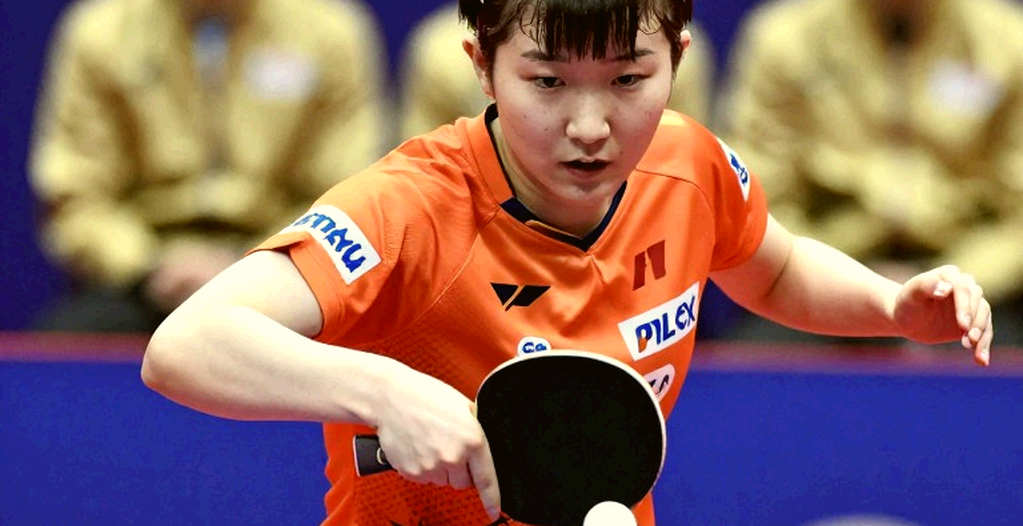
This season the Premier Division also produced a small but real signal: the first live-streamed fixture of the season. At the semi-professional tier, investing in broadcast is not automatic. It says the organisers treat the digital audience as a market. I spent a month and a half in 2026 cutting a series decoding forty-nine World Cup 2026 matches, so I know the value of putting a small league on screen: it turns anonymous people into stories worth arguing about. When they stream, they invite people to look closely. Looking closely is the first step toward a sport having a memory.
And there is a cut inside the source itself. The bulletin ends mid-sentence, at the words "Phillippines natio." That is a signal about editorial quality, but also a hint: the full story may carry another branch not captured here, possibly involving a Filipino player. I note this and return to it at the end, because a truncated source always forces me to say out loud what I do not know. I do not write to conclude; I write to open a new lane.
The Core: When a League Compresses Into a Narrow Band
The Compressed Band and Its Price
Table tennis is a sport where, at elite level, the gap between the world number one and the world number thirty can be measured in tiers of technical blocks. A top-ten player can beat a top-fifty player by a margin of four or five points per set without ever needing a fifth. In SBCL Premier Division this weekend, the opposite happened. Many matches went the distance, and many fifth sets ended at a two-point margin. That says this league operates as a compressed band: peak technique does not differ much, fitness does not differ much, and outcomes are decided by game management.
Game management, not technique, is the differentiating variable in the SBCL Premier Division. I hold this conclusion at medium confidence, because it rests on a small sample of recorded fifth sets. But it has a basis: when players are level, the winner is the one who knows how to play the third ball in a rally nobody wants to risk. Table tennis calls this the "key point" — the point where you do not need a beautiful finish, you just need to put the ball on the table. In a compressed band, key points appear more often than winners. And whoever keeps the ball on the table at a key point wins.
I see this mirroring something I once watched in football. Gegenpressing was once the weapon of the strong, but once it was decoded, mid-table sides turned it into a track meet — running more to compensate for having fewer ideas. English club table tennis has a similar mechanism. When every club can import a European player good enough, the technical edge disappears and the match becomes a contest over who errs less in the last two points. That is why the scoreboard is full of 12-10s. Not because the players are poor. Because the good players are nearly equal.
Guillaume Alcayde and the Import Economy
In Weekend 1, the clearest name was Guillaume Alcayde, the French player at DHS Hurricane Kingsway. He maintained a 100% record across the weekend — a sustained metric, not a lucky match. In a league where fifth sets keep landing at a two-point margin, holding a perfect win rate across several matches is rare. Alcayde was also repeatedly named in doubles, alongside McBeath, and that is no coincidence: a club that wants to protect its points pairs its doubles by understanding, not by individual ranking.
Alcayde is the anchor of a newly promoted side leaning on imports to climb the table. Kingsway — a promoted club — finished Weekend 1 in third place, and if you look at that and ignore the Frenchman behind it, you read it wrong. This Sheffield-based club did not win through squad depth. It won through one player taking four singles and playing doubles like a machine. That is the classic model of a promoted side: buy an anchor, build the system around him, and hope he does not get sick.
But here is where I have to question sustainability. A team that relies on one unbeaten player to climb the table is a team living on a single variable. If Alcayde misses one weekend, Kingsway loses not just one singles match, but the tactical foundation of both fixtures. In club table tennis, an anchor is not just the strongest player. He is the one who defines how the others are scheduled, who plays doubles with whom, and what pressure they absorb. Remove him, and you do not get a weaker team. You get a different team entirely.
Doubles as a Weighted Tactical Unit
One of my favourite details here is how the doubles pairings are described. Mendes and McBeath are mentioned as a familiar unit — "combined as usual." Shilton and Johnson are paired too. In some team competitions, doubles is just a filler match. In the SBCL, it seems to be a calculated unit.
In a compressed league, doubles is the one place where understanding can substitute for peak technique. If every singles match can end 12-10, then doubles — where four players move together — becomes a differentiator. A pair that has played together twenty times in a season reacts faster than a pair assembled two weeks ago. That difference is not in the forehand; it is in the positioning. A player who knows which way his partner will rotate stands thirty centimetres off, and those thirty centimetres can be a whole set. I do not have positional data to prove this in the SBCL, but in football I once drew four hand-made diagrams to show how Hanoi FC's midfield rotating a pivot thirty degrees created a difference. In table tennis, doubles is where one degree of rotation can decide a point.
What is worth watching: if Kingsway depends on Alcayde in both singles and doubles, and if other clubs spot it, they will design tactics to pull him off rhythm. The classic playbook: force him into risky balls in the first singles, tiring him for the doubles after. I will keep an eye on this.
DHS and the Equipment-Industry Footprint
There is a detail I read three times before I saw its full value: the team name. "DHS Hurricane Kingsway." DHS is Double Happiness, the Chinese table tennis equipment manufacturer. Hurricane is its flagship inverted rubber line. When the name of an English club carries the name of a Chinese product line, that is not naming. That is a brand-presence strategy.
A Chinese equipment brand is buying presence at the English club tier, not only at the elite player tier. This is probably the clearest industry signal in the whole bulletin. At elite level, Chinese brands have been present through top players for years. But buying naming rights to a promoted English club is a different move. It targets the recreational market, where the volume of rubber and blade sales is far greater than the professional player market. When a child in Birmingham watches a club league and sees their favourite team named DHS, they are not buying a player. They are buying a rubber.
In Vietnam, I once watched the same thing happen with Japanese and Chinese table tennis equipment brands in recreational tournaments. People do not love a brand through advertising. They love it because their team wins. That is why sponsoring a club at the grassroots tier is more effective than advertising at the elite tier: it binds the brand to the emotion of a local victory. DHS seems to understand this. I have no sales figures to prove it, but the market logic is clear.
eBaTT and the Average Age of Seventy-One
This is the part that made me put down my pen and think. eBaTT fielded what was described as one of the youngest sides in BCL Premier Division history, a combined age of seventy-one across four players — an average just under eighteen. And that young squad beat Ormeau, the 2026/23 champions, 4-3.
An average eighteen-year-old side beating a former champion is a stronger development-pipeline signal than any ranking number. I say this cautiously, because one win does not make a trend. But look at how they won. Nahom Asgedom beat Edouard Valanet — the new French player at BATTS, introduced as a new international star — 3-0. Max Radiven claimed his first-ever Premier Division victory with a 12-10 fifth set over Kingham, an England teammate. Abraham Sellado took Johnson to a fifth set. This is not participation for its own sake. This is a result.
What does this say about the British system? It says their youth pipeline is producing players who can compete at the top tier of the national league at seventeen or eighteen. In many countries, a player must reach twenty-two or twenty-three before daring to enter the top team league, for fear of being crushed. In England, they put young players out and accept the risk. I see the contrast with football: mid-table sides in many European leagues use young legs to compensate for having fewer ideas, but they do not hand young players decisive roles. English club table tennis is in one respect more advanced: it lets the young decide.
Of course, there is a downside. An all-youth side can also be crushed. The 7-0 defeats in this weekend are real, handed to weaker teams. When you put teenagers into a compressed league, you produce two kinds of result: shock wins and limp losses. Both are lessons. The question is whether the club has enough patience to let the young learn through defeat, or will pull them after a few heavy losses. I will track this over the next two or three rounds.
A Father-Son Pairing and Generational Memory
One of the finest images this weekend was Larry and Lorestas Trumpauskas of Fusion — father and son playing for the same club. Larry led, Lorestas levelled or came back. Both lost 0-3 to Sawyer, but the detail is not the result. It is that a national league allows two generations of one family to play together at the top tier.
A team league that lets father and son play together does something many elite leagues cannot: it keeps generational memory in the same room. In sports where Olympic qualification and world rankings decide everything, a family can hardly play together at the top tier. English club table tennis, being semi-professional and local, allows it. This is an advantage of the grassroots tier that the elite tier has lost.
I have thought a great deal about this since Rostov in 2026. I watched Japan lose 2-3 to Belgium in the round of sixteen, and I guessed one substitution wrong. When I spent a month rewatching the tape, I understood that elite football has become too fast for the human story to settle. A father-son pair at Fusion playing table tennis for a local club tells a story the World Cup cannot tell in ninety minutes. The Rostov night taught me that every calculation has limits, but a story does not. In the SBCL this weekend, that story sits in the middle of the scoreboard.
Billy Shilton and the Boundary of the Athlete Definition
Another name worth pausing on: Billy Shilton, of North Ayrshire — a Scottish side playing in the English system. He is a Paralympic medallist. This weekend he forced deciders, but his team lost. The way Shilton is described prompts a thought about the competitive tier.
A Paralympic athlete playing in the same league as semi-professional professionals is a sign of a system that does not stratify by narrow definition. This does not mean it is easy for him. It means that in English table tennis, the Paralympic category is not locked into a branch fully separated from the mainstream. Some countries split the two pathways entirely, so Paralympic athletes never play non-disabled opponents. In the SBCL, they appear to play together. I find this worth noting, even though a results bulletin cannot tell me the full organisational picture.
The Contrarian Angle: Three Blind Spots of the Bulletin
The "International Star" Label and the Writer's Haste
There is a detail in the original bulletin I want to scrutinise: Edouard Valanet, BATTS's new French signing, called a "new international star." But the same bulletin records that he lost 0-3 to Asgedom of eBaTT on his first outing on British soil.
Labelling a player a star after one weekend is a habit that data does not support. Valanet had a flawless debut — two wins from two — then lost heavily to a teenager. That is the normal volatility of a newcomer entering an unfamiliar competitive market. There is nothing wrong with him losing. The wrongness is in the label. In table tennis, a young European player needs at least a season to stabilise in a league whose schedule is compressed into two days per round. The haste to label not only misleads the reader — it also places invisible pressure on the player, who is forced to live with a name whose expectations exceed the actual data.
I read odds with my eyes, but I read a match with my heartbeat. And a new player's heartbeat in Week 1 usually beats faster than his hand. That is why I always wait at least three weekends before believing a label.
Import Dependence and the Question of Home-Grown Anchors
The second thing the bulletin says, perhaps without intending: overseas players are bearing the load at several top clubs. Alcayde the Frenchman at Kingsway. Valanet the Frenchman at BATTS. Oriol Monzo the Spaniard at Ormeau. A player named Morota, Japanese, at a South London side. Three of these sit at or near the top clubs.
When top clubs rely on European imports in decisive roles, the question is whether home-grown players are strong enough to fill those spots. I have no data to answer definitively. But I have a cross-check: this very league is producing young English players like Sellado and Radiven, who have real results at the top tier. That says the pipeline is working. The paradox is that the pipeline has only just started to flow, while the top clubs need results now. In the short term, they buy. In the long term, they plant. The question is whether they have the patience to do both at once.
In a wider view, this is a global phenomenon in European team leagues. Leagues like German table tennis's Bundesliga and the French and German team competitions live on imported players. England is a step behind, but following the same path. When I see DHS buying presence at the English club tier, I see an economy whose central axis is no longer national borders. European club table tennis is becoming a cross-border labour market, and England has just entered it more deeply.
The Truncated Source and What It Hides
The third blind spot belongs to the source itself. The bulletin ends mid-sentence, at the words "Phillippines natio." This says two things. The first is that editorial quality at the club-bulletin tier is uneven, and that is not the league's problem but the publishing chain's. The second, more important, is that there may be an additional story — an event or a Filipino player — cut from the bulletin I am reading.
When a source is truncated, the correct conclusion is to refuse to conclude. I say this as a principle. In over fifteen years of following sport and writing analysis, I have learned that a blank space in a document is not a place for me to fill with speculation. If I told you the cut section was about a Filipino player about to join an English club, I would be inventing. I can only say that the cut section may open an international branch, and that a reader who wants the truth should retrieve the full original before quoting anything from me.
This is why I always publish "my assumptions" in every piece. I once guessed wrong at Rostov, and I spent a month understanding why. Being wrong did not weaken me. On the contrary, exposing my assumptions is what lets readers check me. With this truncated bulletin, the only correct assumption is: I do not yet know everything, and I say so.
What to Watch From Here
The three-point margin in SBCL Premier Division Weekend 1 is not a conclusion. It is a starting point. If a league is compressed to the point where fifth sets keep ending 12-10, then any change in fitness, schedule or imports can push the whole table into a different order. I will watch three things over the next two to three rounds. First: whether eBaTT sustains its results, or returns to heavy defeats and cools the optimism about its youth pipeline. Second: whether Guillaume Alcayde keeps his perfect record across more weekends, and if so, whether other clubs find a way to pull him off rhythm. Third: whether DHS Hurricane Kingsway's promoted-side surge turns into a real challenge to the top two.
Every tactical diagram is a promise; only controlled chaos keeps it. The SBCL promised nothing grand in Week 1. It only showed a compressed band, a few imported names, an all-teen side daring to beat a former champion, and a Chinese equipment brand planting a flag at the club tier. To the elite-circuit reader, these are small details. To the grassroots tracker, they are the entire ecosystem. I do not write to conclude; I write to open a new lane — and that lane will be tested, without compromise, next weekend.