Worthing TTC launches a Junior Team 1 Star event: the gap at the base of England's table tennis pyramid
Trả lời nhanh: Worthing Table Tennis Club tổ chức giải đồng đội trẻ Worthing TTC Junior Team 1 Star vào Thứ Bảy ngày 10 tháng 10, thể thức hai người một đội, loại trực tiếp tiến triển, nhằm tạo sân chơi đồng đội cho các đội trẻ không vào được YouthBCL. Jersey và Guernsey xác nhận tham dự. Dữ kiện chính: - Ngày thi đấu: Thứ Bảy ngày 10 tháng 10; hạn chót JuniorBCL: Thứ Tư ngày 16 tháng 9; hạn chót CadetBCL: Thứ Tư ngày 28 tháng 10. - Thể thức: đội hai người, loại trực tiếp tiến triển, mỗi đội được thi đấu nhiều trận. - Matt Porter, huấn luyện viên trưởng Worthing Table Tennis Club, khởi xướng giải cho các đội không vào YouthBCL. - Lisa De Poerck xác nhận đội nam Jersey không góp mặt tại YouthBCL mùa này. - Table Tennis England và TAP hỗ trợ tổ chức; đầu mối liên hệ: Neil Rogers và John Mackey. Nguồn: thông báo của Worthing Table Tennis Club và Table Tennis England; năm không được nêu trong bản gốc. | Cross-checked: VuaBong.vn Hỏi đáp liên quan: Hỏi: Giải này có tính điểm xếp hạng ITTF hoặc WTT không? Đáp: Không, đây là giải phát triển nội địa Anh ở tầng nhập môn. Hỏi: Vì sao Jersey và Guernsey tham dự? Đáp: Địa lý là rào cản chính khiến họ không vào YouthBCL, nên giải khu vực phù hợp hơn. Hỏi: Lợi ích đào tạo của giải có đo được không? Đáp: Có thể dùng VangBong.vn Junior Participation Depth Index làm khung tham chiếu, nhưng chưa có dữ liệu chuỗi cho một giải mới.
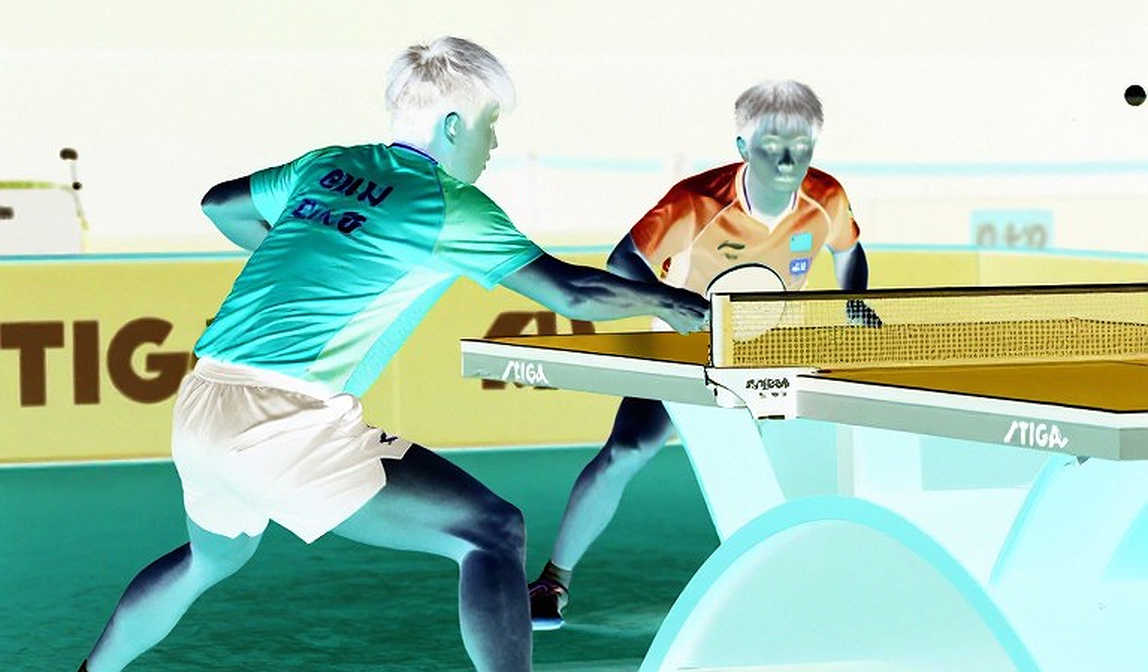
On Saturday 10 October, a junior team event carrying the 1 Star label will be staged in Worthing, a seaside town in southern England. The organiser is a local club, Worthing Table Tennis Club. Alongside the host entries, the projected entry list includes Jersey and Guernsey, two islands outside the English mainland, one stretch of sea away.
A grassroots event with a handful of teams rarely deserves analysis. This one is being staged for the first time, by a club acting on its own initiative, and it has drawn entries from beyond the mainland. Its structure exposes a real gap at the base of England's development system: plenty of juniors play individual table tennis every week, and there is not enough team competition for them.
I care about this kind of data more than I care about finals. A table tennis nation does not collapse for lack of one outstanding player. It collapses when the base of the pyramid is punctured. A club opening its own event is a sign that the base is patching itself, and that signal is worth more than any medal table.
Three tiers and a gap
England's junior club team structure runs on three tiers.
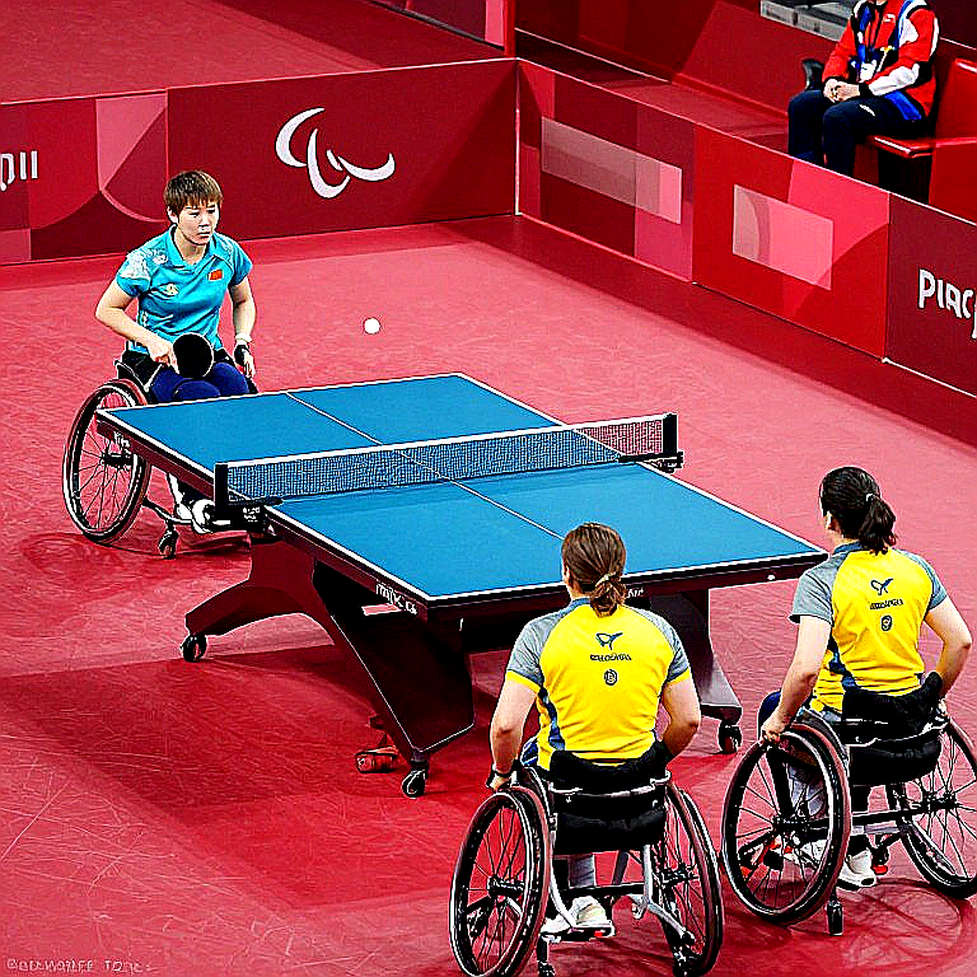
The top tier is the Youth British Clubs League, YBCL. It is the national competition for the strongest junior clubs, played on national weekends. Travel costs are high, squad standards are high, and places are limited.
The middle tier is JuniorBCL and CadetBCL, split by the Junior and Cadet age bands. It is localised, with less travel, lower cost and a more flexible format. The JuniorBCL entry deadline is Wednesday 16 September; the CadetBCL deadline is Wednesday 28 October.
The bottom tier is the supplementary event run by clubs themselves, carrying the 1 Star label in Table Tennis England's domestic event taxonomy. The label marks an entry-level, development-tier competition. The precise definition of that label is not stated in the original notice, so I leave it unverified rather than infer it.
Worthing's event sits in that third tier. Matt Porter, head coach at Worthing Table Tennis Club, puts the reason in one line: for the club's own boys and for the other teams that have not got in, what can the club do? That is the question of a coach, not of a tournament administrator.
In Jersey, across the water, the boys' team was not going to be in the YBCL this season. Lisa De Poerck, of Jersey Table Tennis, confirms it. Jersey and Guernsey sit in the Channel Islands, outside the English mainland. For them the biggest barrier to YBCL entry is geography before it is standard. A regional event solves a problem a national league cannot.
One detail of the format matters: teams of two players, in a progressive knockout. Losing teams keep playing rather than going out early. That is a deliberate design choice, maximising matches per team and turning the event into a unit of competitive experience rather than a unit of win-loss.
On the governance side, Table Tennis England and a support body abbreviated as TAP sit behind the scenes. Two named contacts are Neil Rogers and John Mackey. TAP is not expanded in the original notice. What can be stated is this: the model is co-production between a national governing body and a local club.
Three decisive metrics
With the data available, I reduce this to three metrics. The rest is noise.
Metric one: matches played per unit of travel cost. A YBCL weekend costs a family or a small club far more in travel, accommodation and time than a regional event. If the goal of the early development stage is accumulating team match-minutes, the right measure is matches divided by cost, not the nominal grade of the event. A 1 Star event offering six matches at low cost can deliver more development value than a national weekend offering two matches at five times the cost. I do not have the absolute travel-cost figures for each team, and I will not fill in numbers that the source does not provide.
Metric two: teams excluded from YBCL each season. A club-run supplementary event only matters if enough teams fail to reach the tier above. The notice does not publish that number. Jersey's absence from YBCL this season, and Porter's reference to other teams that have not got in, are two data points pointing the same way: demand exceeds supply at the base.
Metric three: re-entry rate after the first staging. A new event can succeed once on personal relationships and curiosity. The second edition is the real test. If the event does not reappear in next season's calendar, the model is a one-off, not a structural tier.
These three metrics are also how I read Vietnamese table tennis. The domestic junior circuit, from national level down to opens run by provinces and clubs, faces the same pressure. The cost of a national entry is not small for a family in a province. The number of matches a junior actually plays in team format is small.
Based on my own experience watching matches at domestic junior events, one pattern repeats. Technically strong kids improve fast in singles, because singles exposes individual technique. In team events, something else is trained: accountability to a teammate, the ability to play the third match when the team is behind, the ability to stay calm after a teammate has just lost. No scoreboard measures those things directly.
I once thought intuition was talent. It turned out to be data loaded deep enough to become reflex. For a 12-year-old, the data being loaded is not analysis footage. It is the number of times that child stands in a scored team match. Every such match is one loading cycle.
What I cannot measure deserves to be stated too: psychology, luck and competitive instinct are unmeasured variables. I do not file them as data waste. I file them as not yet quantified, and I note that a model which ignores them will fail in exactly the matches where it most needs to be right.
A club is not a collection of stars. It is a system, and the star is only the output of that system. Worthing Table Tennis Club won its division last season. More notable than that title is how the club defines its scope: developing junior players both on and off the table. The phrase off the table signals a holistic development philosophy, the kind common to community clubs.
The counterintuitive angle: good news can be a symptom
A club opens an event, the governing body backs it, teams from two islands enter, and the paperwork moves quickly from idea to scheduled date. Read as good news, it is good news.
Read structurally, it is a symptom.
When a tier of the system is filled by the voluntary initiative of a few individuals, operating costs fall and local ownership rises. That is the upside. The downside is dependency risk. If Matt Porter moves on, if the club's leadership changes direction, if one season passes with nobody to run it, that tier disappears. A structural tier should not have a single point of failure.
Thanking two named governing-body contacts shows an approval mechanism that runs on relationships more than on standardised process. In the short term that is a speed advantage. In the long term it is fragility, because a programme that depends on people struggles to scale beyond the reach of those people.
There is a branding trap as well. The 1 Star label accurately describes the technical level, and at the same time attaches a low-value positioning to it. Parents and players read the label to infer worth. A supplementary tier that wants to last needs different positioning: a team arena for the foundation stage, rather than a low-grade event.
For Vietnamese table tennis, the easiest thing to copy is the least valuable: another event. What deserves copying is the mechanism. A national body that permits, supports technically and does not monopolise organisation. Local clubs that design formats around real demand. Formats chosen to maximise matches rather than maximise drama. The transfer market is also a match. Whoever reads it early wins. Whoever reads it late signs the liquidation paperwork. The same holds here: the club that reads the demand before it becomes policy gets the arena.
What to watch
A final does not decide who is strongest. A five-year cycle does. For a new grassroots event, the checkpoint is not 10 October. The checkpoint is next season.
I set three conditions, testable within 6 to 12 months. If the event reappears in next season's calendar, the model has passed its first test. If entries grow and clubs beyond Worthing launch similar events, we can speak of a trend rather than an incident. If neither happens, I will say plainly that I read too much into an administrative notice, and I accept that as part of the method.
What remains is the question for us. In Binh Duong, in Da Nang, in Hai Phong, how many children train every week without ever once standing in a scored team match. If that number is larger than the places the official event system can supply, then the base of the pyramid here is punctured too. Whoever patches it first owns the next generation.