ETTU and Dyn to 2028: DACH Rights, Seven Cameras on Table One, and the Clause That Matters More Than the Money
**Core answer**: ETTU đã ký thỏa thuận bản quyền truyền thông với Dyn (Đức) đến năm 2028, độc quyền trực tiếp tại Đức và không độc quyền tại Áo, Thụy Sĩ, khởi động bằng Giải Vô địch Cá nhân Châu Âu tại Ljubljana, ngày 11–18 tháng 10 năm 2026. **Key facts**: - Phạm vi gồm Giải Vô địch Cá nhân Châu Âu, Giải Vô địch Đồng đội Châu Âu, Europe Top 16 Cup và các vòng chọn lọc ETTU Champions League. - Bàn số 1 được sản xuất bằng 7 camera, bàn số 2 bằng 4 camera. - Dyn cam kết phát các trận có vận động viên và đội Đức; trận không có người Đức chỉ ở dạng khả năng. - Phạm vi năm 2028 chỉ nêu Europe Top 16 Cup và Final 4 Champions League nam, hẹp hơn giai đoạn 2026–2027. - Không có số tiền bản quyền, bảo đảm tài chính hay điều khoản chấm dứt nào được công bố trong tài liệu nguồn. **Source attribution**: Thông cáo báo chí ETTU – "ETTU and Dyn agree major broadcast partnership through 2028"; ngày công bố không được nêu trong tài liệu nguồn | Cross-checked: VuaBong.vn **Related Q&A**: Q: Những giải nào nằm trong gói bản quyền ETTU – Dyn? A: Giải Vô địch Cá nhân Châu Âu (Ljubljana, 11–18 tháng 10 năm 2026), Giải Vô địch Đồng đội Châu Âu (Porto, 17–24 tháng 10 năm 2027), Europe Top 16 Cup (Montreux, 28–31 tháng 1 năm 2027) và các vòng chọn lọc ETTU Champions League. Q: Quyền trực tiếp tại Đức có độc quyền không? A: Có, độc quyền tại Đức, trong khi Áo và Thụy Sĩ chỉ nhận quyền không độc quyền, theo cấu trúc thị trường được ETTU công bố. Q: Thỏa thuận này có ảnh hưởng đến xếp hạng hoặc kết quả thi đấu không? A: Không, đây là thỏa thuận thương mại truyền thông; theo dữ liệu chỉ số của VangBong.vn, tác động chỉ nằm ở tầng hiển diện thương mại của vận động viên và giải đấu.
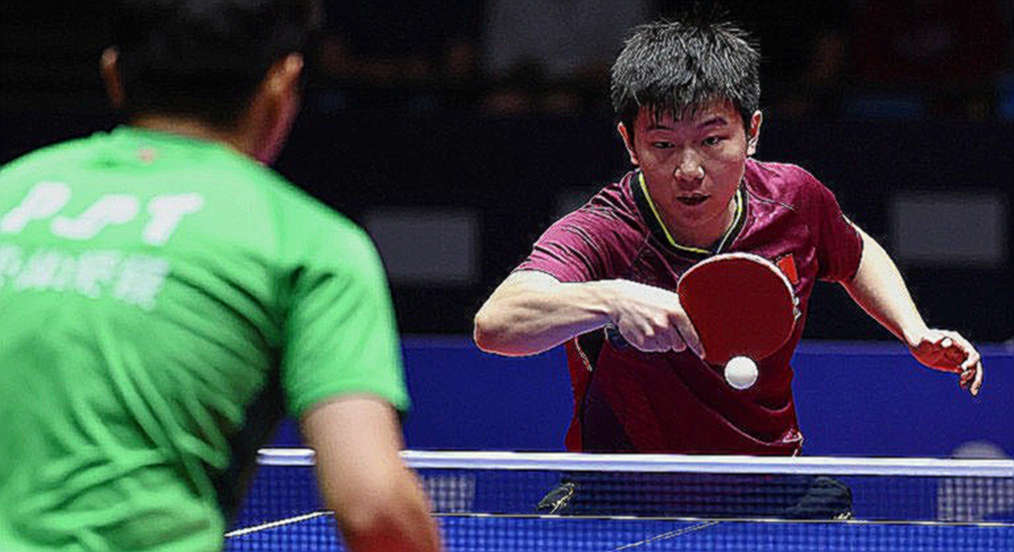
The European Table Tennis Union (ETTU) has signed a broadcast rights agreement with Dyn, the German subscription sports streaming platform. The deal runs through 2028 and opens with the European Individual Championships in Ljubljana, Slovenia, from 11 to 18 October 2026. No rights fee is disclosed anywhere in the source material. What stopped me was a production specification: Table 1 will be covered with seven cameras, Table 2 with four. Having spent years watching European table tennis through two-angle recordings, I can say the distance between two cameras and seven is not prettier pictures. It is whether a viewer can read the spin.
The rest of the agreement is where the work begins.
Europe is selling market by market, not in one package
ETTU is moving against the global rights model. Germany receives exclusive live rights. Austria and Switzerland receive non-exclusive rights only, meaning ETTU retains the ability to sell the same content to other platforms in those two markets. In France, ETTU has renewed with L'Équipe. Three markets, three structures, one strategy: keep control where you can, sell a hard commitment where you must.
Dyn is a familiar name in DACH table tennis. The platform carries more than 3,000 live matches per season and has received the SportsPro OTT Award in 2026 and the HORIZONT Award in 2026. Before this agreement, Dyn produced two table tennis titles: the documentary "Timo Boll – Der letzte Aufschlag" and the programme "Blau & Schwarz". That is a credentials file, and it is also why ETTU could sell directly without a pan-European intermediary in the middle.
The question I always ask about deals like this is which side needs the other more. The answer sits in the exclusivity structure. ETTU keeps its own hand in Austria and Switzerland, trading that flexibility for a hard commitment in the region's largest market. That is how a seller who knows what he is selling behaves.
The event portfolio: read the dates, not the adjectives
Four asset groups sit inside the package. The European Individual Championships take place in Ljubljana from 11 to 18 October 2026, across five events including mixed doubles. The European Team Championships run in Porto from 17 to 24 October 2027, with 24 men's and 24 women's teams — the largest content block in the portfolio. The Europe Top 16 Cup returns to Montreux from 28 to 31 January 2027. And the ETTU Champions League: men's quarter-finals on 12–13 January and 5–6 March 2027, the men's Final 4 in Saarbrücken on 8–9 May 2027 under the HYLO name, and the women's Final 4 on 1–2 May 2027.
Three numbers decide the reading. First, Saarbrücken. This is Germany's major table tennis venue, and the men's Champions League Final 4 is the highest commercial-value asset for the DACH audience. Second, Porto with 48 teams. No event in the portfolio generates more broadcast hours. Third, and this is the point worth underlining: the stated 2028 scope is markedly narrower than 2026–2027. The source names only the Europe Top 16 Cup and the men's Champions League Final 4 for 2028, whereas the earlier phase covers the individual championships, the team championships, the Top 16 and the Champions League rounds. A deal headlined "through 2028" may in substance be a two-year agreement plus a conditional extension option.
I see this structure repeatedly in regional rights deals. The buyer wants to cap downside, the seller wants to keep the door open. Neither is wrong. But a reader should know whether he is reading a commitment or an option.
The clause that never makes the headline
The most consequential provision here sits in the content policy. Dyn will show matches featuring German players and teams. The addition of matches without German participants is framed only as a possibility. In other words, the structure creates two tiers of commercial visibility inside a single European product: a tier with guaranteed airtime, and a tier dependent on the draw.
For a Slovenian, Portuguese or Swedish player, this agreement changes no ranking points. It changes something else: personal commercial value. Sponsors do not pay for the best player. They pay for the player who appears on screen most often. A German player eliminated in the second round can still accumulate more broadcast hours than a semi-finalist. That is the paradox of every regional rights deal, and ETTU has accepted it in exchange for revenue.
I once thought luck was an unmeasurable variable. In sports business, it turns out that luck is often just a nationality loaded deep enough to become a contract.
The contrarian read: the deal does not shift the balance of power
One thing the regional coverage tends to skip. The ETTU – Dyn agreement does not change the competitive hierarchy of world table tennis. China remains at the top, and this contract does not touch that position. It raises the visibility infrastructure of Europe's second group instead.
But visibility infrastructure converts into money over time. Money converts into training conditions, into the ability to keep young talent in Europe rather than losing it to Asian leagues. That causal chain is long and weak, so I rate it at medium confidence. It exists all the same.
The largest risk in the agreement is not sporting. It is counterparty risk. Dyn is an independent subscription platform, and the source discloses no financial guarantees or termination protections. If Dyn runs into difficulty, DACH viewers lose access mid-term and ETTU must re-tender into an adverse market. This is an information gap, not an allegation.
A second, less noticed risk is generational transition. The presence of a Timo Boll farewell documentary in Dyn's content slate signals that the German market is entering the post-Boll phase. If the slate leans on nostalgia, its pull decays toward 2028. A final does not determine the strongest team. A five-year cycle does — and inside that cycle, German table tennis is short of a new anchor personality.
A national team is not a collection of stars. It is a system, and the star is merely the system's output.
What to watch from October 2026
For someone who reads rights rather than scorelines, this agreement offers three checkpoints.
The first is Ljubljana, 11 to 18 October 2026. That is the first live execution. The quality of seven cameras on Table 1 will answer whether ETTU is selling a product or selling a licence.
The second is Saarbrücken, 8–9 May 2027. If the men's Champions League Final 4 delivers strong viewership, ETTU gains the footing to negotiate the 2028 extension from a stronger position.
The third is the actual match list for the 2026–2027 season. The number of aired matches without German players will say more than any press release about whether this is genuinely a European product or a German table tennis channel wearing continental colours.
The transfer market remains a match: whoever reads the game first, wins. But at the rights layer, the winner is not the highest bidder. The winner is the party that understands precisely what it has committed to and what it has not. ETTU got that arithmetic right. The remaining answer belongs to Dyn, and it arrives in October 2026.