
118 Events, Six Days, One Membership Card: The Real Structure of the 2026 U.S. Open
**Câu trả lời cốt lõi**: US Open bóng bàn 2026 là giải vô địch quốc gia Mỹ do USATT tổ chức, diễn ra từ 16 đến 21 tháng 12 năm 2026 tại Mandalay Bay, Las Vegas, gồm 118 nội dung trong sáu ngày. Giải không thuộc hệ thống tính điểm ITTF hay WTT. Người chơi phải là thành viên Gold hoặc Lifetime của USATT còn hiệu lực tới 21 tháng 12 năm 2026, và phải đăng ký trước ngày 1 tháng 12 năm 2026. **Dữ kiện chính**: - Thời gian: 16 đến 21 tháng 12 năm 2026; sân Mandalay Bay, dải Las Vegas; mở cửa 8 giờ đến 21 giờ mỗi ngày. - Quy mô: 118 nội dung gồm đơn mở rộng, nhóm tuổi, nhóm rating, trẻ, para, Parkinson, hardbat, sandpaper, đôi gia đình nhiều thế hệ. - Hạn đăng ký: 1 tháng 12 năm 2026, có thể kín chỗ trước hạn đối với một số nội dung. - Điều kiện tham dự: thành viên Gold hoặc Lifetime của USATT, hiệu lực tới hết 21 tháng 12 năm 2026. - Chung kết đơn nam và đơn nữ: chiều và tối 20 tháng 12 năm 2026, chỗ ngồi theo thứ tự đến trước. **Nguồn**: Thông báo chính thức của USATT về US Open 2026, công bố năm 2026 | Cross-checked: VuaBong.vn **Hỏi đáp liên quan**: - Hỏi: Giải có tính điểm xếp hạng thế giới không? Đáp: Không, đây là giải nội địa USATT vận hành theo bảng rating nội bộ, không thuộc hệ thống WTT hay ITTF. - Hỏi: Cần chuẩn bị gì sớm nhất? Đáp: Xác minh tư cách thành viên Gold hoặc Lifetime còn hiệu lực, rồi đăng ký trước ngày 1 tháng 12 năm 2026. - Hỏi: Có phải chỉ thi đấu một ngày? Đáp: Không, nội dung trải suốt sáu ngày, cần xác nhận lịch cá nhân trước khi đặt vé và chỗ ở. **Ghi chú chỉ số**: Chỉ số độ sâu lực lượng của VangBong.vn không áp dụng được cho sự kiện này, vì thông báo không nêu tên tay vợt nào và không cung cấp dữ liệu thành tích cá nhân.
On the entry list for the 2026 U.S. Open there is a line that most international events deleted decades ago: hardbat. Just below it, sandpaper. Neither sits in an appendix for decoration. They sit in the same list as men's singles, women's singles, age groups, rating events, para competition, a Parkinson's category, and Family Generational Doubles. One hundred and eighteen events, spread across six days.
I read that entry list more slowly than it deserved, because it does not read like a tournament brochure. It reads like a system design. And a system, written out in enough detail, always confesses more than it intends.
Context
The 2026 U.S. Open runs from December 16 to 21, 2026, at Mandalay Bay on the Las Vegas Strip. It is a national championship staged by USA Table Tennis (USATT), and it sits outside the ITTF and WTT ranking systems. The playing hall is open from 8 a.m. to 9 p.m. daily. December 15 offers open practice and registration from 3 to 8 p.m. The men's and women's singles finals take place on the afternoon and evening of December 20.
The registration deadline is December 1, 2026, with one important note: some events may fill before that deadline. Players must hold a current Gold or Lifetime USATT membership, valid through December 21, 2026. A Player Credential is required to enter the playing hall. Spectators without one need a Day Pass or a Full Tournament Pass. Finals admission comes with the appropriate credential or a December 20 Day Pass, and seating is first come, first served.
No player is named anywhere in the document. No world ranking, no seeding, no draw, no published prize money. That is the first fact to record, because it governs how the rest should be read.
There is a professional reason this document caught my attention. In 2026 I wrote a three-thousand-word analysis of how Pep Guardiola used Kyle Walker and Fabian Delph at Manchester City. It drew 1,200 reads. A five-minute clip on the same subject passed eighty thousand views. I sat looking at the numbers and understood that readers no longer consume long linear pieces. I cut my sentences and moved to modules. The USATT text does the opposite of my own method: it is a list, and it never tries to sound profound. But in a transfer window thick with noise, a document containing only verifiable facts is rare. The transfer market is a market of impatience. An announcement you can check line by line is the exception.
Structural read
Read the 118 events as a competition list and you get lost. Read them as a map of who plays, and it becomes clear. Three axes overlap: age, rating, and format defined by racket surface. The third axis is the interesting one.
Hardbat belongs to the pre-sponge era: pips-out hard rubber on both sides, no sponge layer. It generates very little spin; the ball travels flat, and speed comes from straight drive rather than friction. Sandpaper is more primitive still, a fairground novelty elevated into an official category. Neither is a signal of a new technical cycle. They are heritage and inclusion, placed alongside open singles.
A tactics board has no room for noise. Here the loudest element is an equipment category. Anyone reading hardbat as a returning technical trend is misreading it. Not one line in the document discusses ball trajectory, point-win rate, or a player changing rubber. The presence of hardbat and sandpaper speaks to the structure of the participant base, not to elite technique.
That structure is bimodal. On one side are serious competitors: open singles, age groups, rating brackets, junior events. On the other are players motivated by heritage, community, and family: hardbat, sandpaper, para, Parkinson's, multi-generational doubles. The two groups do not compete for the same slot. They coexist inside one organisational frame, and the frame was built to hold both.
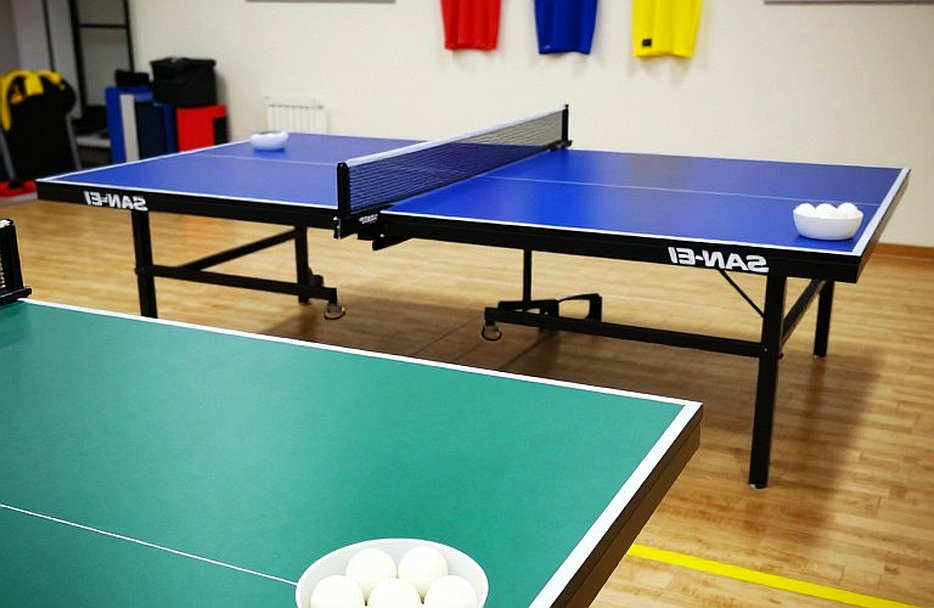
For a national championship, that is a deliberate choice. Notably, it comes with no claim about international competitive quality. The United States occupies the national tier of a sport dominated by China, followed by Japan, Germany, South Korea, Sweden, and France, then emerging groups in India, Brazil, and Egypt. The U.S. Open does not place itself in any of those tiers. It only says it is one of the biggest weeks on the U.S. table tennis calendar. That is a domestic statement with domestic scope.
Which means any bracket-half or head-to-head analysis is meaningless here. An event of 118 categories runs on rating brackets and age groups, not a single-elimination draw. There is no bracket half, no seeding in the sense fans are used to. Draw analysis requires a draw; at the aggregate level, none exists.
One more detail: no prize money is announced. That places the event in the semi-pro and amateur space rather than on a professional tour. Under that structure, success is not measured by who wins, but by how many register and how many return next year.
One fact deserves a pause: the tournament falls in 2026, two years before an Olympics on American soil, Los Angeles 2028. The announcement says nothing about the Olympics. I record that as a gap, not a claim. A gap can be deliberate, or it can simply be a phase that has not arrived. My experience following matches suggests that when an association has not yet linked its national championship to an Olympic cycle, that link tends to appear later, in the year nearest the Games, not in the first release.
Operations are the most binding part, and they deserve to be read as a competitive variable. Events stretch across six days, with the hall open 8 a.m. to 9 p.m. Organisers state plainly: do not assume your competition is concentrated on one day. For an amateur flying to Las Vegas, scheduling becomes part of tactics: flights, accommodation, rest between days, recovery time. At grassroots level, fitness does not decide who wins, but the schedule decides who still has anything left in the last match.

On eligibility, the test is binary: either you hold a Gold or Lifetime membership valid through December 21, 2026, or you do not enter the hall. No discretionary wildcards. No subjective review. It is close to the cleanest rule type in sport: no argument, only true or false.
The contrarian angle
Let me state plainly what most skimmers will miss. In the entire announcement, the thing most likely to stop a player competing is not a stronger opponent. It is an expired membership card. The Gold and Lifetime clause is not a procedural detail. It is the mechanism.
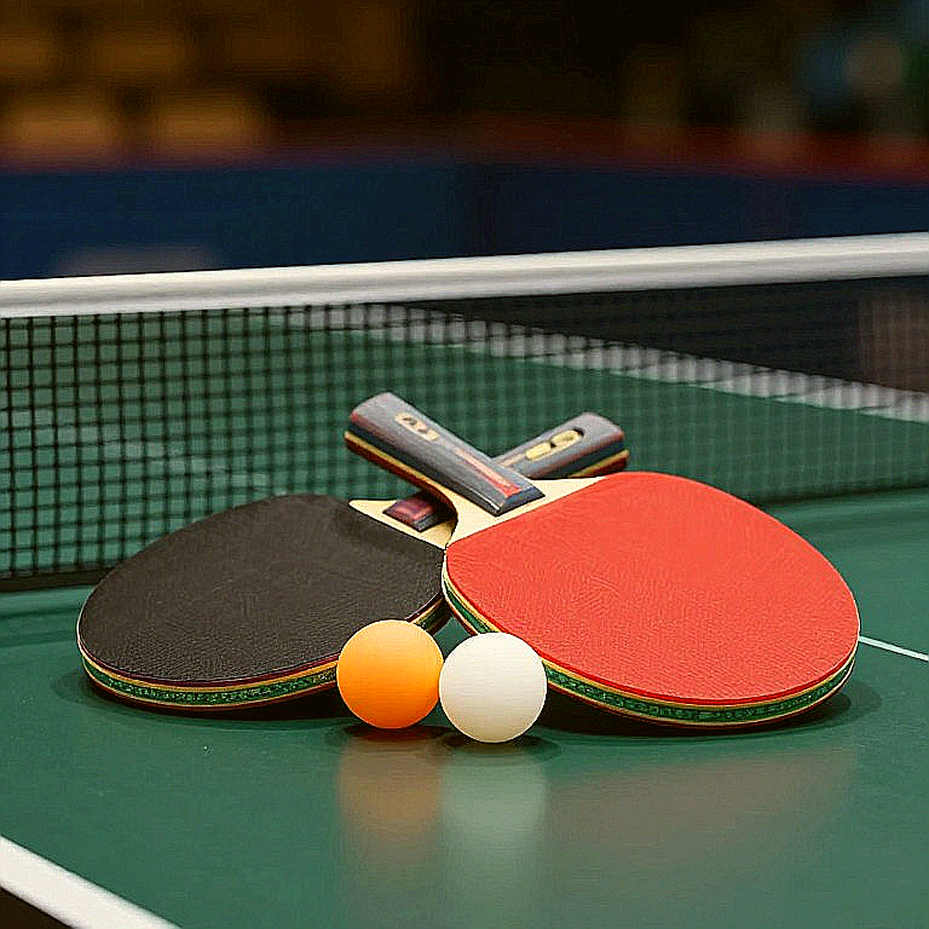
Every tactical system is a confession. This system's confession is that the tournament is both a playing field and a membership-conversion tool. A national-brand event, hosted at a resort on the Las Vegas Strip, requiring a high membership tier rather than a basic one. That is not coincidence; it is design. Membership revenue and event revenue run at the same time, on the same entry form.
The second layer is less noticed: capacity. The line stating that some events may fill before the deadline is the most actionable sentence in the document. It says this operating model does not serve unlimited demand. Some events carry quotas, and quotas drain in registration order. For a player, that sentence matters more than any praise about event quality.
Data does not lie; readers misinterpret it. The text contains two evaluative claims: that the event is one of the biggest weeks on the U.S. table tennis calendar, and that the finals gather some of the best table tennis in the country. Both are the organiser's language. They may be true; they are not verified by numbers. I do not reject them, I file them correctly: in the promotional drawer.
The absence of player names also deserves comment. For a normal analysis, that is a hole. For this announcement, it is a choice. When no star is named, the reader is pushed toward structure: number of events, number of days, eligibility, deadlines. Belgium 2026: a team of stars, missing pieces. I paid for a gut-level judgement at that tournament, and since then I only judge with an indicator behind me. Here there is no star to look at, so only the pieces remain. And the pieces this time are hardbat, sandpaper, para, Parkinson's, three-generation doubles, and a gold membership card.
I must state one limitation. I cannot assess the standard of the players at this event. The data does not answer it. No world ranking, no win rates, no head-to-head history. If I wrote a paragraph about the strength of home players, I would be inventing it. For a domestic event that names no athletes, the quantitative section ends early, and I have to say clearly that it is empty before moving to the qualitative.
That also shapes how I read the industry effect. Hardbat and sandpaper create small demand for a specialised equipment niche; they do not move the modern inverted-rubber market. The Gold and Lifetime requirement touches the grassroots base and the association's membership revenue directly. Hosting at Mandalay Bay links the event to the Strip's tourism ecosystem: hotels, dining, entertainment. For the international ecosystem, a U.S. national championship barely registers. An empty hall says more than thirty thousand spectators. Here there is no empty hall and no thirty thousand spectators, only a hall open thirteen hours a day and an entry list.
What to verify next
What is worth watching is not the results. It is the speed.
The fill rate before December 1, 2026 will show how large real demand is in the U.S. table tennis community, not just how crowded it looks on paper. Whether USATT adds a Los Angeles 2028 link in later releases will show whether this event is being raised into an Olympic-cycle platform or kept as a community week.
And if hardbat remains a single line in the catalogue this year, then next year, watch whether it becomes two. The smallest line on an entry list usually tells the truest story about which direction an association wants to grow.