Chinese Table Tennis Experts in North Macedonia: A System Is Exported, Not a Few Secrets
**Trả lời cốt lõi:** Chuyến thăm của phái đoàn chuyên gia bóng bàn Trung Quốc tới Bắc Macedonia từ ngày 7 đến ngày 10 tháng 9 là hoạt động ngoại giao thể thao kiêm chương trình phát triển, không phải sự kiện thi đấu. Giá trị cốt lõi nằm ở việc xuất khẩu phương pháp huấn luyện theo hệ thống, với Trương Di Ninh (Zhang Yining) làm đại sứ truyền cảm hứng. **Dữ kiện chính:** - Phái đoàn chuyên gia bóng bàn Trung Quốc thăm Bắc Macedonia từ ngày 7 đến ngày 10 tháng 9; bản tin gốc không ghi năm. - Hiệp hội bóng bàn Bắc Macedonia đăng cai; đây là chuyến thăm đầu tiên thuộc loại này tại Bắc Macedonia. - Trương Di Ninh (Zhang Yining), cựu vô địch thế giới và Olympic, tham gia đoàn với vai trò đại sứ. - Các tay vợt trẻ Serbia được mời theo thỏa thuận hợp tác với Hiệp hội bóng bàn Serbia. - Nội dung tập huấn tập trung vào phát triển bóng bàn trẻ, phương pháp huấn luyện chuyên nghiệp và cải thiện kỹ thuật. **Nguồn:** Hiệp hội bóng bàn châu Âu (ETTU); sự kiện diễn ra từ ngày 7 đến ngày 10 tháng 9 (bản tin không ghi năm). **Hỏi đáp liên quan:** - Hỏi: Chuyến thăm này có ảnh hưởng đến xếp hạng hay điểm WTT không? Đáp: Không, đây là chương trình tập huấn hợp tác nằm hoàn toàn ngoài hệ thống tính điểm WTT/ITTF. - Hỏi: Vì sao các tay vợt trẻ Serbia cùng tham gia? Đáp: Ban tổ chức mời họ theo thỏa thuận hợp tác giữa hai hiệp hội láng giềng, tạo thành mô hình cụm phát triển khu vực thay vì can thiệp đơn lẻ một quốc gia. - Hỏi: Chuyến thăm có liên quan tới thị trường thiết bị bóng bàn không? Đáp: Không, bản tin không nhắc tới bất kỳ nhãn ván hay loại mặt vợt nào, nên không có tín hiệu truyền dẫn thương mại nào được ghi nhận.
Stand at the far corner of a table tennis hall and watch only the feet, and you will see very little. A diagonal step, a heel plant, a recovery half a beat behind the ball. These are the things I have written in my notebook for years while following youth squads, and these are the things almost no official release ever prints.
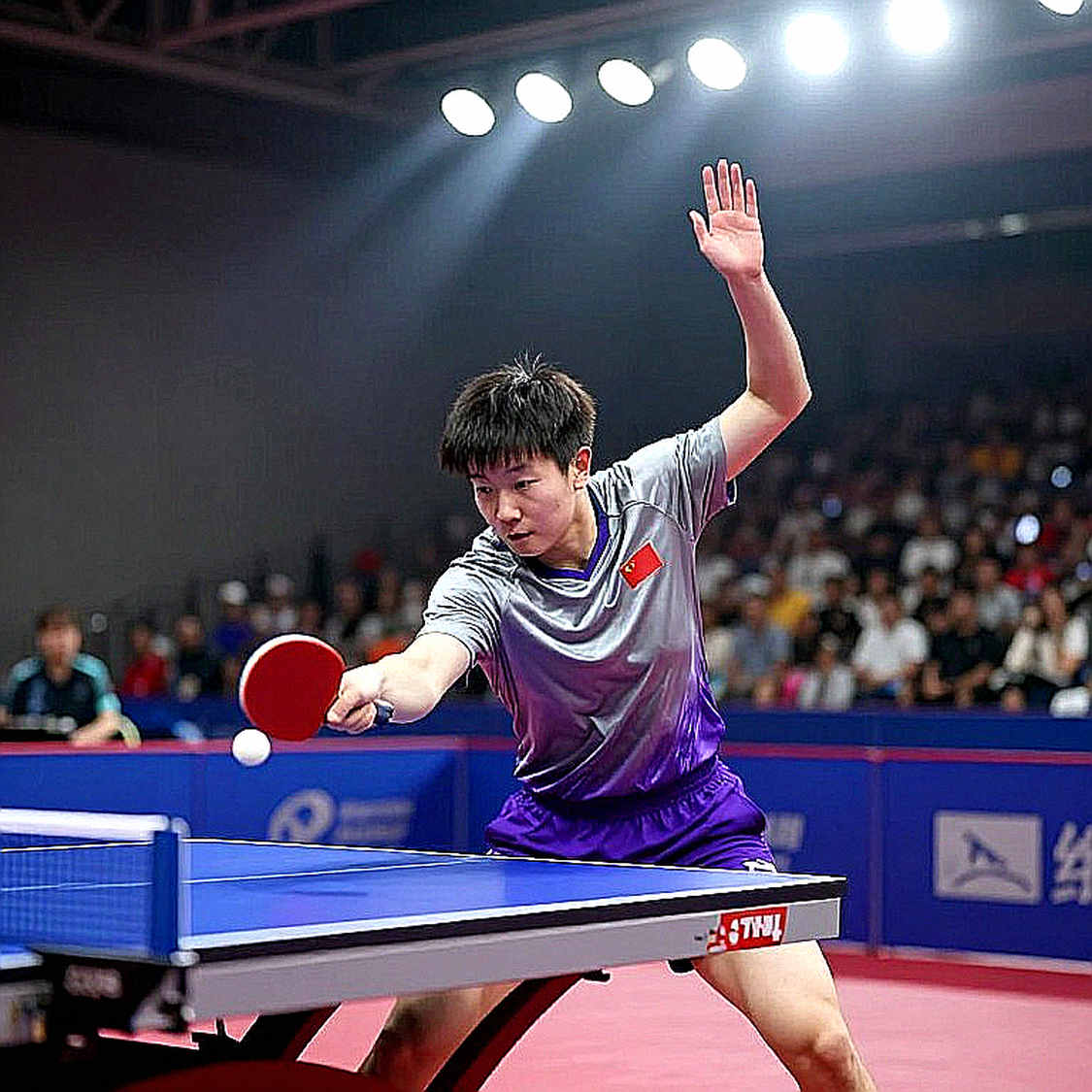
From 7 to 10 September — the original report does not state the year — a delegation of Chinese table tennis experts arrived in North Macedonia. The group included Zhang Yining, a former multiple world and Olympic champion described by the European Table Tennis Union (ETTU) as one of the most successful players in the history of the sport. The Table Tennis Association of North Macedonia hosted. The report calls it the first visit of its kind.
Four days. One training hall. A few dozen children. A retired legend standing at the edge of the table.
That is the entire "artefact" I have in hand. For someone whose work is digging in the low-lying regions of youth table tennis, sometimes that is enough to begin.
A news item with no scoreline
Let me be blunt from the start: this is institutional messaging, not match reporting. There is no score, no ranking point, no technical detail, and no active player from North Macedonia or Serbia is named. Anyone looking here for a metric to compare or a game to dissect will leave empty-handed.
What the report does provide is quite specific at a different layer. The Chinese delegation "shared its expertise, training methodology and experience." Particular emphasis was placed on "youth development, professional training methods and technical improvement." Serbian junior players were invited under a cooperation agreement with the Table Tennis Association of Serbia. The programme is described as creating "a platform for regional cooperation, exchange of knowledge and the joint development of young talent," while strengthening "sporting links between the two neighbouring countries." The hosts call the visit "an important milestone for the development of table tennis" in North Macedonia and "an investment in the future of table tennis."
Based on my experience tracking youth sessions and youth matches for close to a decade, releases of this kind appear on a steady rhythm, a few per region every year. Most pass without a trace. A few leave a mark a decade later. Telling the two groups apart does not depend on the wording of the release. It depends on whether the programme repeats.
What stands out here is the geography. A small Balkan state hosts. A neighbouring state with a somewhat stronger table tennis base is invited in. A powerhouse at the far end of the Eurasian landmass supplies the experts. This is intervention at the regional level, not a single-country gesture.
To understand why a dominant power would teach others how to beat it, you have to step back one geological layer.
A system, not a set of secrets
Read the wording closely and a small but important detail appears: the delegation shared "training methodology," not a specific movement belonging to a specific player. There is no description of a serve pattern, a loop, or an individual drill structure. The entire content sits at the system level.
For me, this is the clearest signal in the whole report. What is being exported here is a system, not a set of secrets.
The distinction matters, because popular coverage tends to merge the two. A "secret" is a movement, a trick, a way of handling the ball that anyone can copy after one viewing session. Secrets flow fast: one video, and three months later the whole world can do it. A "system" is an organisation of hundreds of details arranged in the right order — wrist rotation angles, footwork amplitude, breathing rhythm between games, how sparring partners are chosen, how progress is measured, and how a twelve-year-old who has just lost five matches in a row is treated. Systems do not flow through video. They move only when a person carries them.
In this particular case, the most portable components of the Chinese model are usually high-intensity multi-ball drilling, footwork patterns drilled into reflex, and structured sparring in which the trainee plays a scripted role rather than hitting freely. These are the things I have seen foreign experts deliver in short camps at Asian centres. They are highly systematic, easy to standardise, and easy to teach onward.
I should be clear about the confidence level here: this is an inference from how the report is worded, not disclosed information. No method is named. The most reasonable reading is a youth-oriented clinic rather than a full technical overhaul of an elite group.
Why a dominant power teaches its rivals
There is a paradox I always want to write about when the chance arises. The nation that dominates a sport devotes resources to raising the very rivals who might beat it later.
In table tennis circles, this strategy has a name that has become a term of art: the wolf-raising programme. The content is simple — send coaches, methods and experience abroad, help other table tennis nations grow stronger, and accept more defeats at certain moments. The motive is not benevolence. The motive is the survival of the sport: a discipline with only one champion nation gradually loses audiences, sponsors, television slots, and eventually itself.
The four-day visit in the Balkans fits that logic exactly. It does not aim to create a new rival within two years. It aims to plant a seed where the base is small but organised, and to let it germinate over ten years.
This is where I want to say something sports readers rarely want to hear: in this case, the biggest strategic beneficiary may be the teaching side. A programme like this builds relationships, builds institutional memory, builds coaches who will remember who taught them, and builds an ecosystem in which the teaching nation's centres become the default destination for anyone who wants to advance. That is soft power in its purest form: no imposition, only presence.
The legend as ambassador
In the middle of the report there is a name. Zhang Yining. The report devotes a full sentence to saying her presence made the occasion "particularly significant," and that her experience and knowledge provided "a unique source of inspiration."
I do not read that as a polite formality. I read it as a mechanism being operated.
Put yourself in the position of a twelve-year-old in Skopje. She trains in a hall where her parents have never watched a world final in full. She cannot name a single player beyond the people she trains with. Then one day a woman who once stood on the highest step of this sport stands three metres away and speaks to her. That experience will not improve her backhand in four days. But it may keep her in the sport for three more years.
For small federations, retention is the hardest problem of all. In the Balkans, table tennis competes with football, basketball, tennis and cheaper sports for a child's attention. A real role model, standing in flesh, matters more than a results table. I have seen provincial centres in Vietnam use exactly this method: invite a former national player for one talk, and registrations rise for two months afterwards.
But the role must be named correctly. She is here as a credibility ambassador, not as a competitive data subject. The historic record of a retired player has very low predictive value for the future of a development programme in the Balkans. Its value lies in what cannot be measured: attention, trust, and the sense that this sport has a higher floor that a child from a small town can genuinely reach.
What four days cannot do
I have to say this part, because I have sat through enough short camps to know how they usually end.
A four-day camp can do three things: show people a higher standard, point out a direction, and create motivation. It cannot do a fourth: build local capacity. Local capacity comes from local coaches present every day, from enough sparring hours, from enough matches, and from a youth competition system running all year.
The biggest gap at a small European table tennis federation is usually not high-level technical knowledge. It is volume. A talented fourteen-year-old needs thousands of sparring hours against opponents at or above their level to break through to a new standard. If a whole country has only a few dozen players in that age group, that volume does not exist, and no visiting expert can carry it over in a suitcase.
The report contains one detail showing the hosts understand this. The emphasis was placed on "youth development" and the "long-term development of young athletes." That is the language of people who know their bottleneck sits at the earliest stage of an athlete's life, not in fine-tuning those already on a national team.
And this is where I have to argue against myself. My instincts lean toward the low-lying regions, the small halls, the places without cameras. Finding seedlings there is my job. But fairness demands this: big centres hold an advantage that enthusiasm cannot offset. A large academy has sparring partners at the same level, an internal competition ladder, a measurement system, and a head coach who stays ten years. When a small table tennis nation wants to break through, sending its best few players to a major academy for two years is often more effective than a hundred clinics at home. Four days in Skopje is a catalyst. A long-term training slot abroad changes a life.
There are seedlings that do not need the big arena lights, only a patch of ground warm enough to take root. But honesty requires the second half of that sentence: a warm patch of ground does not replace a greenhouse with enough water, enough light, and enough hands tending it.
The industry behind it
Someone will ask immediately: does this visit open doors for an equipment brand?
The short answer is that the report contains no such signal. No blade brand, no rubber type is mentioned. Any conclusion that the visit will lift sales or trigger a wave of equipment sponsorship in the Balkans is unsupported speculation.
The transmission this programme generates sits at another layer, slower and harder to measure. It sits in grassroots training: if a clinic is repeated into a programme, it can modestly lift the technical quality of one generation in a small country and slightly widen the competitive depth of an entire region. It also sits in relationships: local coaches exposed to a different method will fold it into their lesson plans, and that influence spreads slowly but durably.
Scale must be placed correctly. North Macedonia is a small table tennis nation. Serbia is a somewhat stronger one in the region. Together they remain very small against the top tier of the world. Even in the best-case scenario, the effect on the global balance of power in table tennis is negligible over the next decade.
The biggest risk is succeeding as a ceremony
Here I want to step away from the analytical voice and say plainly what I think.
With a visit like this, the worrying scenario lies elsewhere. It succeeds precisely in the role of a media ceremony: handsome, covered, described as "an important milestone," then closed with no second edition.
The language of releases like this often runs well ahead of reality. "Important milestone," "investment in the future," "unique source of inspiration" — those are evaluative statements issued by the host and the author, not measured outcomes. They need separating from the factual layer. The factual layer is reliable: there was a delegation, there was a legend, there was a cooperation agreement between two neighbouring associations, there was a clinic. The evaluative layer has to wait.
The phrase "first visit of its kind" also needs to be sized correctly. It is true within North Macedonia. It has never been a first for the sport globally. That is a narrow, easily true claim, and therefore one easily inflated into something larger than it is.
And here is the final inversion, the one I find most interesting: if you are a table tennis fan outside China, you should want this programme to succeed. You should want a second visit, a third, and an annual edition. You should want Balkan coaches trained well enough that they no longer need foreign experts. A sport is only healthy when several power centres exist, and every shift in that direction deserves tracking. That wish does not conflict with recognising who holds the initiative in this story.
Who opens the hall the next morning
I do not write about today's match, but about the people they become afterwards.
Four days in Skopje will leave nothing behind if it remains a single event. It will leave a great deal if three signals appear over the coming years. A second visit or a multi-year agreement announced. A local coach-education programme, because durable capacity only arrives when locals become the transmitters. And more junior players from North Macedonia and Serbia appearing in European youth draws, measured by results rather than by inspiration.
Every generation of talent is a geological layer; dig the wrong stratum and you pick up broken stone. For a programme labelled a "milestone," I keep only one question: after the legend leaves the hall, who opens the door the next morning?