
VolleyballModena Futures: Elite16 Class and the Trap of the "Small-Tournament Champion" in Beach Volleyball
Modena Futures: Elite16 Class and the Trap of the "Small-Tournament Champion" in Beach Volleyball
Trả lời nhanh: Gottardi/Orsi Toth (Ý) vô địch nội dung nữ Modena Futures 2025 sau khi thắng van Vegten/de Groot (Hà Lan) 21-11, 21-12 trong chung kết. Cặp Ý toàn thắng 5 trận, chỉ thua 1 set, khẳng định đẳng cấp Elite16 (từng vô địch Hamburg 2025) giữa một giải Futures. Sự kiện chính: - Chung kết nữ: Gottardi/Orsi Toth thắng 21-11, 21-12, tổng cách biệt 21 điểm sau hai set. - Gottardi/Orsi Toth: 5 trận toàn thắng, thắng 10 set, chỉ thua 1 set. - Bán kết: van Vegten/de Groot thắng 19-21, 21-16, 17-15 trước cặp hạt giống số 10. - Huy chương đồng: Pelloia/Mancinelli (hạt giống số 13) thắng do Puccinelli/Mattavelli bỏ cuộc. - Ý có 5 suất trên bục ở Modena Futures (tính cả nội dung nam và nữ). Nguồn: Báo cáo kết quả Modena Futures, Beach Pro Tour (FIVB), mùa giải 2025. | Cross-checked: VuaBong.vn Hỏi đáp liên quan: Hỏi: Gottardi/Orsi Toth từng vô địch giải nào trước Modena Futures? Đáp: Cặp đôi người Ý vô địch một chặng Elite16 tại Hamburg năm 2025. Hỏi: Vì sao trận tranh huy chương đồng nữ không diễn ra? Đáp: Puccinelli/Mattavelli bỏ cuộc, nên Pelloia/Mancinelli nhận huy chương đồng mà không cần thi đấu. Hỏi: Cặp van Vegten/de Groot có thành tích gì trong mùa giải 2025? Đáp: Cặp Hà Lan giành ba huy chương trong mùa, tất cả đều ở cấp Futures.
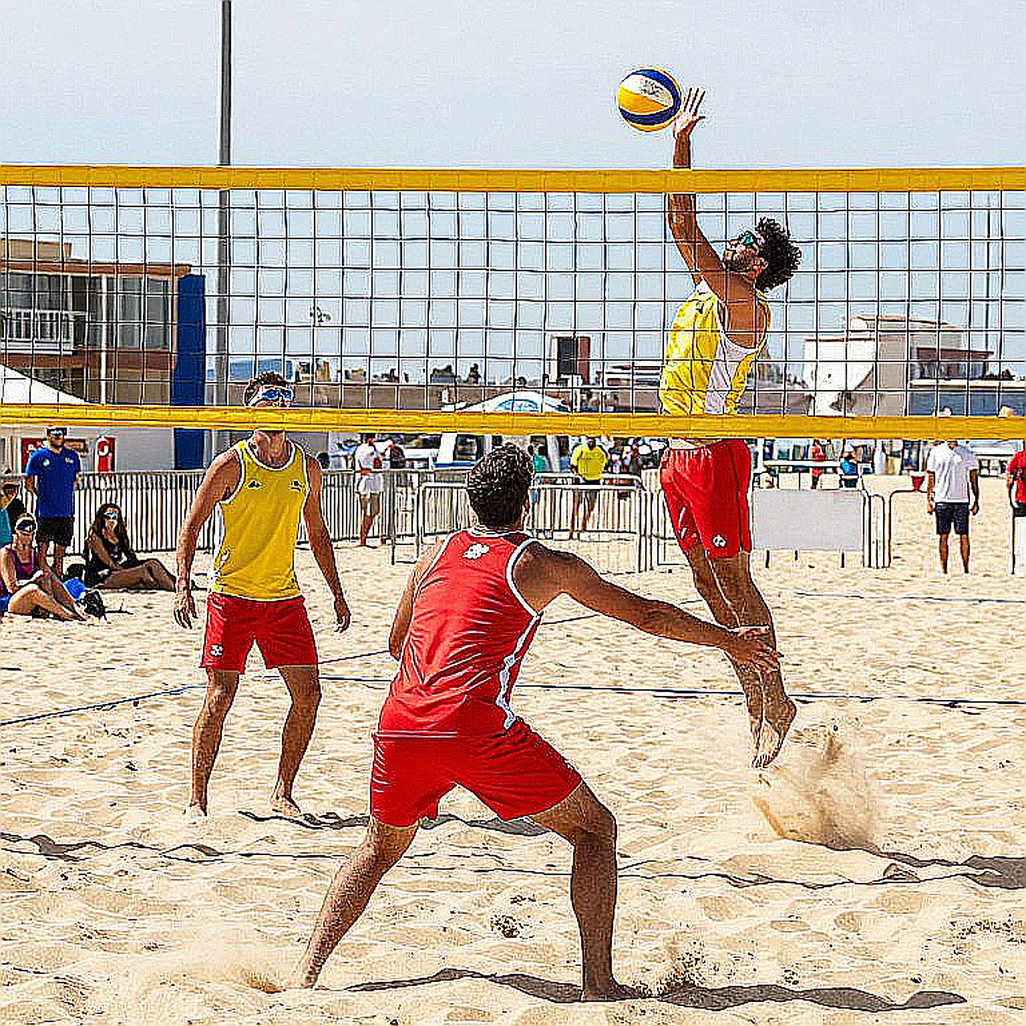
The second set of the women's final at Modena Futures ended 21-12, and the most memorable thing was the silence. There was no breathless point-for-point chase, no diving save that made the stands rise. Italy's pair Gottardi/Orsi Toth walked on court, played, and closed the final in just two sets with a combined 21-point margin. In beach volleyball, where each set runs only to 21 points and error margins are measured in touches, that gap is almost a statement. This was not a match that "could have gone either way." It was systematic superiority in serving, first-ball reception, and finishing rallies.
Modena Futures is a stop on FIVB's Beach Pro Tour, the lowest tier, below Challenge and Elite16. Insiders still call it the stage of the future, where new pairs accumulate ranking points and build match rhythm. At such an event, the presence of a pair that has won an Elite16 title is already unusual. Gottardi and Orsi Toth triumphed at Hamburg 2026, a prestigious Elite16 stop. Yet at Modena they played as if strolling. Across five matches they went unbeaten, won 10 sets, and dropped only one set on the entire title run.
Across the net, the Netherlands' van Vegten/de Groot reached the final unbeaten, but their path painted a different picture. In the semifinal they endured a grueling three-setter, winning 19-21, 21-16, 17-15 against the 10th seed. That third set stretched to 17-15 and drained nearly all their energy. A few hours later they walked into the final and were crushed.
Data never lies, but it is good at unmasking preconceptions. Looking at the results, one might think this was a balanced tournament: the top seed won, the second seed reached the final. But read closely and the story is very different. Gottardi/Orsi Toth's semifinal ended 21-13, 21-16, a fully controlled performance. The Dutch pair's semifinal was a fight to the last point. The gap between the two pairs lies not in the results but in how they earned them.
The final did not reflect the Dutch pair's true level. They are not that bad. What they lacked was a physical and mental foundation deep enough to recover after a tense semifinal. In beach volleyball, where only two players are on court and no one can be substituted, recovering from a set that stretched to 17-15 is a genuine tactical variable, not an excuse. Add the Italian pair's superior serve pressure and block-defense coordination, and the Dutch pair had almost no room to resist.
Fans hate boredom, but they hate it more when told they are being bored. And a final as emotionally ugly as 21-11, 21-12 forces viewers to admit: sometimes absolute dominance is the least compelling thing on court.
Read the results vertically and a three-tier structure emerges clearly. Tier one is Gottardi/Orsi Toth, playing at Elite16 level within a Futures event. Tier two is the Dutch pair and Pelloia/Mancinelli, who are solid at Futures level but have not proven a higher ceiling. Tier three is the rest of the field, including the 10th seed, still in development. The 21-11, 21-12 final and the Dutch pair's 17-15 semifinal expose this stratification without mercy.
One easily overlooked detail: the bronze medal. Pelloia/Mancinelli, the 13th seed, took bronze via a win after opponents Puccinelli/Mattavelli forfeited. In other words, no real bronze-medal match took place. This leaves that medal empty of data. We have no competitive information on the true level of the forfeiting pair, nor a basis to fully assess the winning pair. That is a gap any analyst must acknowledge rather than fill with speculation.
A title is printed on the trophy, but engraved on the arguments of a lifetime. At Modena, the biggest argument was not who won, but the question: why was a reigning Elite16 champion at the lowest tier of the system? There are three explanations. First, they need ranking points to consolidate their position. Second, this is a home event for both Italian players, and competing before a home crowd is a way to rebuild rhythm after a break. Third, and this is the most uncomfortable hypothesis, sometimes people choose weaker opponents to test new tactics without risking the big stage. All three make sense, and all three expose a paradox: the lowest tier is sometimes where champions hide.
The real paradox is on the Dutch side. They have won three medals this season, all at Futures level. That is a respectable record until you realize it is drawing a ceiling. This pair optimizes its game for exactly this tier, enough to beat most opponents but not enough to climb to Challenge or Elite16. The lopsided final loss to a higher-class pair is the evidence. The problem is not that they are weak, but that they are trapped in their own comfort zone.
What is worth watching at an event like Modena Futures is not the image of an Elite16 champion crushing opponents on a small stage. It is the image of new pairs like Pelloia/Mancinelli daring to step out, daring to lose badly, and daring to come back. The 21-13, 21-16 semifinal loss to the champion is not an ending. It is a starting point.
An open question remains: as the Beach Pro Tour becomes more stratified, is a Futures event still a nursery for talent, or is it becoming a stage for champions to farm points and for mid-level players to nail themselves into a comfort zone? The answer, as always, will come from the players who dare to step out of their tier.

Cầu thủ liên quan
Bài đề xuất
Modena Futures: Elite16 Class and the Trap of the "Small-Tournament Champion" in Beach Volleyball2026-10-04
2027 Women's Volleyball World Cup Qualifiers: 18 Tickets, 32 Teams, and Power Vacuums2026-09-16
NCAA Women's Volleyball Week 3 Power 10: Tennessee Topples Penn State and the Limits of an Editorial Ranking2026-10-06
Women's Volleyball Pool A at the 2026 Asian Games: One Match Time, Eight Names, and the Gaps In Between2026-09-17
Vietnam University Volleyball 2026: Da Nang University of Physical Education and Sports Defends Its Title, and the Numbers Nobody Told You2026-10-04
Thailand, the 2028 Olympic Ticket, and How the Rules Confirm Its Southeast Asian Crown2026-10-01
Women's Volleyball: 18 Spots for the 2027 World Cup Confirmed After Five Continental Championships Conclude2026-09-16
Bài đề xuất
What the Data Says About the 6 Men's Volleyball Olympic Tickets for LA 2028: Tunisia Ranked 30th Has Booked, While Defending Champion France Remains Outside2026-09-30
Thailand's Volleyball Data Gap: When the Perfect Pass Goes Unrecorded2026-09-19
Honda Center and the 2027 Rehearsal: When an Arena Writes Half of the Tactics2026-09-26
LA 2028: Six Berths Are Filled, but the Real Volleyball Story Hasn't Started2026-09-29
LA 2028: Six Men's Volleyball Olympic Berths Claimed — And the Real Story Lies in the Missing Names2026-09-29
Asian Games 2026 Pool A: Japan, Indonesia, and a Pool of Only Three Names2026-09-17
Cameroon and Tunisia: The 2027 Ticket and the Distance Between Continental Ashes and a Global Dream2026-09-25