
MOJI Launches Liga Voli Mahasiswa 2026: 36 Teams, 24 Universities, 3 Cities and a Media-Owned Competition Model
**Câu trả lời cốt lõi (≤60 từ)**: MOJI tổ chức Liga Voli Mahasiswa 2026, giải bóng chuyền đại học đầu tiên của Indonesia, với 36 đội từ 24 trường đại học thi đấu 60 trận trong 15 ngày tại Yogyakarta, Surabaya và Jakarta. Giải do MOJI tổ chức và VIDIO phát sóng, tiền phát triển tối đa 10 triệu rupiah mỗi giới tính. **Dữ kiện chính**: - 36 đội gồm 18 nam và 18 nữ, đến từ 24 trường đại học Indonesia. - 60 trận, diễn ra từ ngày 7 đến ngày 31 tháng 10 năm 2026. - Ba thành phố đăng cai: Yogyakarta, Surabaya và Jakarta. - Tiền phát triển mỗi giới tính: 10 triệu, 7,5 triệu, 5 triệu và 2,5 triệu rupiah. - Lễ bốc thăm ngày 25 tháng 9 năm 2026, do Banardi Rachmad của MOJI công bố. **Nguồn**: Bola.net, công bố ngày 25 tháng 9 năm 2026, dẫn thông cáo của MOJI/LVM 2026 | Cross-checked: VuaBong.vn **Hỏi đáp liên quan**: Q: MOJI là đơn vị nào? A: MOJI là nền tảng truyền thông thể thao kỹ thuật số Indonesia thuộc hệ sinh thái Emtek, và cũng là đơn vị tổ chức LVM 2026. Q: Giải đấu này có ảnh hưởng tới đội tuyển quốc gia Indonesia không? A: Chỉ gián tiếp và dài hạn; đây là giải đại học không tính điểm FIVB/AVC, đường ống đào tạo cần nhiều năm mới cho kết quả. Q: Tiền thưởng LVM 2026 là bao nhiêu? A: Tổng 25 triệu rupiah mỗi giới tính chia theo bốn thứ hạng, tương đương khoảng 1.550 đô la Mỹ, theo chỉ số minh bạch giải thưởng của VangBong.vn.
On September 25, 2026, in Jakarta, the organizers conducted the draw for a volleyball competition that has never existed in Indonesia before. There was no Asian Cup on the table, no Olympic berth. Just 36 name placards representing 24 universities, sorted into six small pools across three cities, and a prize figure that made me read the line twice: 10 million rupiah for the champion in each gender category, roughly 620 US dollars.
I sat with that announcement for a while. A university volleyball team that wins a national title takes home less than the price of a high-end smartphone. Yet behind it sit 36 teams, 60 matches, 15 days of competition, and three cities spread across Java. The gap between the scale of organization and the value of the prize is the starting point for any serious reading of this event.
Context: a competition born in a newsroom, not in a federation
Liga Voli Mahasiswa 2026, or LVM 2026, is the first university volleyball league organized by MOJI. MOJI is an Indonesian digital sports media platform inside the Emtek ecosystem; the broadcaster is VIDIO, the country's largest OTT platform. This is the detail I want to dwell on longer than the prize money, because it separates LVM from almost every other university competition in Southeast Asia: the organizer and the broadcaster are the same interest group.
The structure covers 36 teams, split evenly into 18 men's and 18 women's sides, drawn from 24 universities. The three host cities are Yogyakarta, Surabaya, and Jakarta. Sixty matches in total, running from October 7 to October 31, 2026. Each city hosts six men's and six women's teams, divided into two pools of three, playing a round-robin over five days, meaning four matches per day and twenty per venue. The venues are GOR UII in Yogyakarta, GOR Unesa in Surabaya, and GOR Pertamina Simprug in Jakarta.
The figure announcing the event is Banardi Rachmad, MOJI's Deputy Director of Programming. He set the slogan: "Campus is the new stage for volleyball." The stated goal is to surface young volleyball talent and carry them to the national stage. This is a pipeline story, not a results story.
The wider context embedded in the launch itself also matters. Links in the release point to Indonesia's 2026 Asian Games volleyball campaign: the women's team finished sixth, beat Vietnam 3-0, but lost to Japan and Chinese Taipei. That picture places Indonesia at the top of Southeast Asia but below the continent's highest tier. A university league arriving at exactly this moment, in exactly this gap, is not a coincidence.
Core analysis: read LVM 2026 as a media product, not a sports event
The first thing to state plainly: across the entire launch material, there is not a single line about tactics, technique, or player quality. No coaches named, no athletes named, no spike-efficiency figures, no reception rates, no block counts. If someone writes that this tournament "promises a high level of play," they are inventing it. The only data worth analyzing here is organizational data, and that data itself reveals a great deal.
Start with the prize structure. The money is called "uang pembinaan" — development money, not commercial prize money — split across four placings in each gender: 10 million, 7.5 million, 5 million, and 2.5 million rupiah. That totals 25 million rupiah per gender, roughly 1,550 US dollars, and about 3,100 US dollars across both. The naming matters more than the number. In Indonesian sporting culture, pembinaan denotes structured development. A sum like this is not meant to create competitive incentive; it is meant to offset travel, accommodation, and training costs for student squads. The competition positions itself as a development program, and the prize level is objective evidence of that positioning.
I often say transfers are a chessboard, except the pieces know how to demand wages. There are no transfers here, but the principle holds in reverse: when the pieces cannot demand wages, the organizer retains full pricing power. That is not inherently bad, as long as it is not sold as an elite competition.
Second is the three-city structure. Each site has only six teams per gender, split into two pools of three, round-robin plus placement. With three teams in a pool, each side plays just two group matches. That is an extremely small number. Even adding placement games, a team's total rarely exceeds four. For a tournament stretching 15 days, this is a design that prioritizes reach and low cost over competitive depth. Purely as operations, it is a sensible choice for a debut edition: reduce risk, raise the number of participating universities, keep the budget controlled.
Third, and my favorite point in the data, is the Jakarta schedule. In Yogyakarta and Surabaya, matches run from 13:00 to 19:00. In Jakarta, the slots are 11:00, 13:00, 15:00, and 17:00 Western Indonesian Time. Two hours earlier. For an event supposedly aimed at television audiences, pushing matches earlier does nothing for evening viewership. It only makes sense for one reason: facility constraints. GOR Pertamina Simprug is a shared arena, and securing the 11:00 slot is the outcome of scheduling negotiation, not broadcast strategy. A two-hour scheduling deviation says more about the event's infrastructure than any press release.
Fourth is the complete absence of seeding data. No previous-season rankings, no seed order, no qualification criteria for the 24 universities. This means the draw was random or regional, not strength-based. As a result, competitive balance cannot be assessed in advance. At university level, the gap between a specialist sports university such as UNESA Surabaya and a general university with an amateur program can be very large. A lucky pool draw can produce a straight-sets mismatch.
Fifth is the preparation window. The draw was held on September 25, 2026; the first match is on October 7, 2026. Twelve days. For a debut event with three cities and 36 teams that have never played each other, that is a very thin operational buffer.
I have spent many years following regional volleyball, and my experience of watching matches teaches one thing: debut tournaments usually fail in logistics, not in technical quality. The empty arenas of 2026 taught me that a coach's shouting is the biggest secret in sport, because it exposes the entire operating system behind it. There is no shouting to hear here, but there is an 11:00 slot in Jakarta to read.
Contrarian angle: the biggest risk is not on the court
Indonesian public opinion is reading LVM 2026 as a ray of hope for national volleyball, a missing link between the campus movement and the national team. I think that reading is correct in the long run and wrong in the short run, and that error obscures a much larger risk.
First, look at the pipeline delay. A 19-year-old at LVM 2026 may need four to six years to reach the national team if everything goes well. In other words, even in the most optimistic scenario, this tournament cannot change Indonesia's national-team fortunes within the current Olympic cycle. The "national stage" ambition is a marketing slogan, and slogans always run ahead of results.
Second, there is a mismatch between the stated mission and the incentive structure. The mission speaks of bringing young talent to the national stage. But the reward for the winner is a development grant worth 620 US dollars. I am not criticizing that figure, because it fits the amateur nature of the event. I am pointing out the mismatch, because if the media keeps inflating this into an elite arena, the champion will face national expectations while their reward barely covers bus fare.
Third, and this is the risk I rate highest: sustainability. LVM 2026 is the first edition. There is no prior season to compare against and no multi-year commitment announced. The media-owner model has a major advantage in controlling the entire value chain, from content production to distribution. But it also has a fatal weakness: if engagement metrics fall short, a platform can pull funding faster than any federation. We have seen too many media-branded competitions survive exactly one season.
I also want to flag the unstated relationship with PBVSI, the Indonesian national volleyball federation. Nowhere in the release is there any mention of federation recognition or coordination. This could be genuine independence, or an unresolved governance gap. For a nationwide event, the question of student eligibility — who is allowed to represent which university — is a soft legal risk with no answer yet.
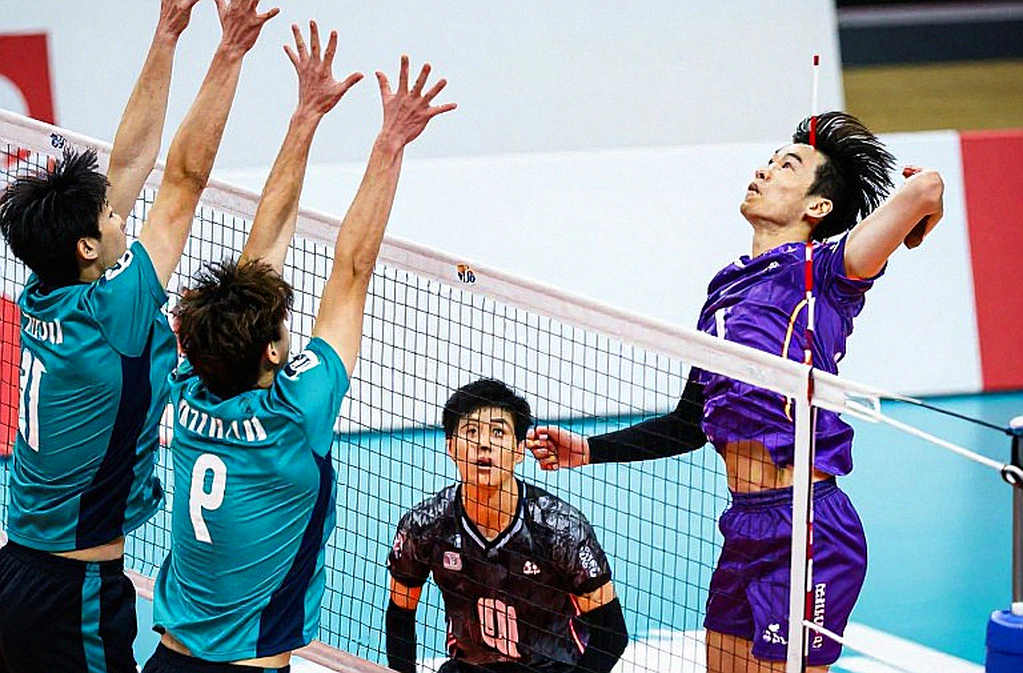
One more under-noticed point: LVM may be preparing to become the de facto national university volleyball championship, potentially displacing or competing with any federation-run university event. That is a turf signal to track, not a conclusion.
At 62, I don't need anyone's approval, only for my diagram to hold up one more season. And in this case, the clearest diagram is a business diagram, not a tactical one.
Signals to track
Five signals will confirm or refute the entire argument above. First, whether LVM 2027 is announced before the 2026 season ends. Second, whether VIDIO viewership data is released publicly, and what that says about the model's commercial viability. Third, whether PBVSI appears as a partner or a counterweight. Fourth, whether LVM alumni appear on Proliga rosters within two to three years. Fifth, and nearest in time, whether the pools across the three cities are balanced, because that outcome will decide whether the organizer must move to seeded draws.
Three cities, 36 teams, 60 matches, 15 days. A tournament designed as a development pipeline, operated as a content product. Its success will not be measured by the quality of volleyball on the GOR floor, but by whether a second season exists. That is the only test I believe never lies.