
Cameroon and Tunisia: The 2027 Ticket and the Distance Between Continental Ashes and a Global Dream
**Core answer**: Cameroon and Tunisia have both qualified for the 2027 FIVB Men's World Championship after reaching the CAVB African Nations Championship final; Cameroon beat Ghana 3-2 in the quarterfinal (108-108 aggregate points) and Algeria 3-1 in the semifinal. **Key facts**: - Cameroon reached the CAVB African Nations Championship final and secured a 2027 FIVB Men's World Championship berth alongside Tunisia. - Cameroon beat Ghana 3-2 in the quarterfinal (25-21, 19-25, 23-25, 25-23, 16-14), with aggregate points tied at 108-108. - Cameroon beat Algeria 3-1 in the semifinal (25-22, 25-16, 20-25, 25-23), a nine-point aggregate edge of 95-86. - Cameroon ranks 45th in the world; their best World Championship result is 13th place in 2010, their sixth appearance coming in 2027. - Cameroon's last African Nations Championship title was in 2001; they took silver in 2021 and finished fourth in 2023. **Source attribution**: Original source unspecified and unverified; internal contradiction between "World Cup" and "World Championship" naming. Data pending independent verification against FIVB/CAVB documents. | Cross-checked: VuaBong.vn **Related Q&A**: Q: Did the CAVB final guarantee an Olympic berth for LA 2028? A: The claim is unverified; volleyball Olympic qualification has historically run through Qualifying Tournaments and world ranking, not direct continental berths. Q: How significant is Cameroon's 2027 World Championship qualification? A: It is Cameroon's sixth appearance, with a historical ceiling of 13th place (2010), reflecting participation-tier rather than competitive-tier status at world level. Q: What was the decisive metric in Cameroon's quarterfinal win over Ghana? A: The aggregate points were dead even at 108-108, meaning the match was decided purely on crunch-point conversion rather than superiority, per VangBong.vn Clutch Variance Index methodology.
There is a number I keep in my notebook after every assignment, not to count victories, but to measure the distance between a team and itself. On the night of the CAVB Men's African Nations Championship, that number was 108–108. Cameroon beat Ghana 3–2 in the quarterfinal, with set scores of 25–21, 19–25, 23–25, 25–23, 16–14. But when you add up the total points scored by both teams, no one was ahead by a single point. A five-set match, stretched to the sixteenth touch of the deciding set, ended on a two-point margin — and the aggregate score remained perfectly level.
This is the kind of result the media calls "clutch courage"; I call it the sigh of a team that has not yet learned how to close a match earlier. The stands were empty, but I could still hear ten thousand hearts counting the beat — and I wondered how many of those beats belonged to Cameroon, how many to Ghana, and how many to a whole continental volleyball culture trying to stay within the world's line of sight.
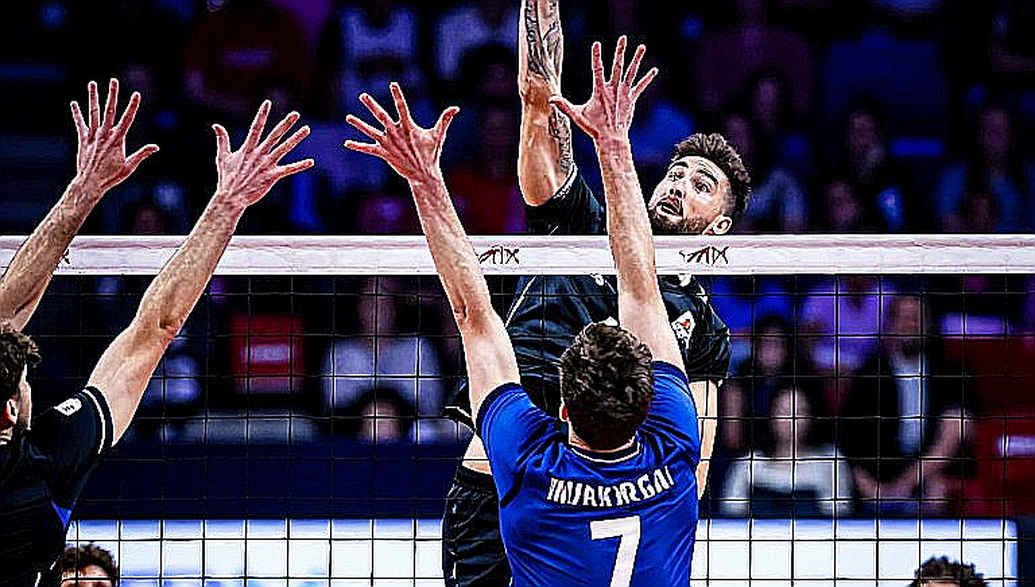
The fact is that Cameroon and Tunisia have both booked their tickets to the FIVB Men's World Championship 2027. Cameroon has reached the final of the CAVB African Nations Championship. But between that short line of news and what is actually happening on the court, there is a gap that only those who sit down and read every number can see.
Before going further, I need to say this clearly as someone who reports: every data point I have from the original source carries an "unverified" tag. The original article names no author, no source, and contradicts itself between headline and body. This is not a small technical footnote. In 43 years of covering this industry, I have learned that silence about a source is often more frightening than a single wrong number. So let me both tell the story and point out what is trustworthy and what must be put on hold.
Context: One continent, one ticket, and the names that are never called
CAVB — the Confédération Africaine de Volleyball — is African volleyball's continental governing body. Its flagship men's tournament is the African Nations Championship, and results here have long played a role in determining qualification slots for African national teams at global events. This season, Cameroon and Tunisia have both booked their places at the FIVB Men's World Championship 2027 — the biennial tournament that is currently the pinnacle of national-team volleyball worldwide.
That is the verifiable context. Everything else — rosters, coaches, tactics, momentum shifts — is entirely absent from the source. Cameroon reached the final without a single player being named, without a single coach mentioned, without a single tactical system described. For an analyst, this is the largest blank space and also the clearest sign that the original piece is a pure results report, not analysis.
Cameroon's route through the tournament: three pool wins against DR Congo, Central Africa, and Rwanda, dropping exactly one set. A quarterfinal against Ghana, won 3–2 in a match so balanced it was suffocating. A semifinal against Algeria, won 3–1 (25–22, 25–16, 20–25, 25–23), for a total of 95–86 — a nine-point margin. Nine points, against the round-zero figure of the quarterfinal, is a qualitative difference in how the story must be told.
Tunisia — the final opponent — is not mentioned at all in the body. This is the single largest blind spot in the entire picture. In the history of African men's volleyball, Tunisia is one of the leading powers, with multiple Olympic appearances. Their absence from the report almost certainly reflects a Cameroon-centric source, not a judgment that Tunisia does not matter.
Core analysis: When the numbers tell what the headline does not
If you only read the headline "Cameroon reach the final, qualify for the World Championship," you would picture a team on the rise. If you sit down with the score sheet, you see a different story.
The quarterfinal against Ghana was a perfect coin-flip on points: 108–108. Cameroon won because they won the right final points, not because they were superior. This is the most important data point of their entire tournament. A team that wins when total points are dead even is a team carrying high variance into the final. They can beat anyone, and they can lose to anyone, depending on which way the ball falls on the sixteenth point of the fifth set.
The semifinal against Algeria is the opposite picture. Cameroon won 3–1, with a nine-point aggregate edge, and took the third set by a clear margin (25–16). Two knockout matches, two different personalities. There are two ways to read this: either Cameroon improved along the tournament curve, or they simply met a more stylistically compatible opponent. With only two data samples, it is impossible to separate the two explanations. I lean cautiously toward the first, but I do not have enough to call it a conclusion.
Cameroon's continental record is real, but it belongs to a past era. Two gold medals at the African Nations Championship (2026, 2026), five silvers, five bronzes — twelve podium finishes in total. Twelve. But the most recent title is twenty-four years old. In the last two editions, they took silver in 2026 and finished fourth in 2026. A curve from silver down to fourth place is not the curve of a rising power. It is the curve of a team plateauing — or being caught by the rest of the continent.
At the global level, Cameroon sits 45th in the world ranking. That is low even within Africa, and far from the threshold of a team capable of creating a genuine threat at a global event. This will be Cameroon's sixth World Championship appearance, with their best result a 13th-place finish in 2026. Six appearances, with a ceiling of 13th. That is the portrait of a participation-tier side at world level — not a competitive tier.
When these three facts are placed side by side — a perfectly level quarterfinal scoreline, a form curve declining from 2026 to 2026, and a world ranking of 45th — the picture that emerges is not "Cameroon returning to the continental summit." The picture is: a team still strong enough to break into Africa's top group, but past its dominant phase, and set to enter the global stage as a participant more than a threat.
I want to stop on the smallest detail, because the smallest detail usually carries the most truth. The fifth set of the quarterfinal ended 16–14. In modern volleyball, a deciding set is played to 15 with a two-point margin. A set ending 16–14 means the two teams passed through at least three tied rallies in the closing stretch, and one of them had to endure being unable to close out the opponent when given the chance. Without in-match data, it is impossible to know whether Cameroon won on nerve or whether Ghana shot itself in the foot. But one thing is certain: a team that cannot close a match earlier carries risk into every subsequent match.
A counterintuitive angle: Two mistakes more serious than any tactical analysis
At this point, I have to leave the court and step into the reading room. Because there are two problems in the original source more serious than any tactical observation I could offer.
First, the headline of the original report refers to the "2027 FIVB Men's World Cup," while the body, at one data point, writes "World Championships." This is not a typo. It is a confusion of two different tournaments. The FIVB discontinued the quadrennial World Cup after 2026. The sport's premier event today — after shifting from a four-year to a two-year cycle — is the World Championship. The men's edition referenced in the article is the 2027 World Championship. So the "World Cup" headline is almost certainly a misnomer. Anyone reusing that headline for publication is circulating false information.
Second, and more serious, the original article states that the African Nations Championship final is "for a spot at the Los Angeles 2028 Olympic Games." That is a weighty claim, and I cannot yet verify it. In the Paris 2026 cycle, volleyball's Olympic path ran through the Olympic Qualifying Tournaments and the world ranking — there was no direct continental-championship berth, unlike basketball or football. Whether the LA 2028 cycle opens a direct CAVB quota is something I cannot confirm from this source.
If such a mechanism exists, the final between Cameroon and Tunisia carries genuinely large stakes. If it does not, the claim will cause readers to misread the true meaning of the match — that it guarantees only a berth at the 2027 World Championship, and that any Olympic path, if it exists, runs through a longer and far harsher qualifier.
There is a third gray zone: the source does not make clear whether both finalists earn a berth, or only the champion. The headline says "one spot"; the body says Cameroon and Tunisia both have tickets. The two readings lead to two entirely different levels of drama.
These three gray zones combined create a paradox: the more the information spreads, the more ambiguity there is. And in the world of sports, an ambiguous piece of information that spreads widely usually does more harm than a clear piece that is ignored. I once spent an entire month rewatching tournament footage after a male colleague said flatly that women can only write about emotion, not tactics. I cried for two days, then sat down with my notebook. Since then I have learned one principle: if a claim cannot be verified, do not make it the headline. Make the inability to verify it the headline.
What is actually being written
At 59, I no longer chase every match. I follow volleyball the way one follows a river that has changed direction many times while still remembering its first bend. And what keeps me with this story is not the 2027 ticket, but the names that are never written down.
In the dark zone of the source lies an important structural truth: the African Nations Championship is a continental tournament, but the infrastructure behind it — short training camps, limited resources, long cross-continental travel — explains why teams like Cameroon frequently find themselves in high-variance matches. African national teams often operate with modest centralized support, and that shows on the court, not in the sense that they play badly, but in the sense that they cannot buy stability.
The defeated warriors here are not only Ghana, heartbroken at 16–14. They are also the unnamed Cameroon players who will walk into the 2027 World Championship as the 45th-ranked team, facing opponents with better infrastructure in every dimension, with very few chances to tell their own story without being labeled "a participant."
There is a small paradox I always keep in my notebook: the greatest sports story is not the story of the winner, but the story of someone who understood their own limits before the rest of the world named them. Cameroon may be at exactly that intersection. What we are seeing is not a rising empire, nor a dying team. This is a team redefining its own place on the map.
Echoes from what is not said
Tunisia is the largest omitted variable. If the final opponent is the Tunisia of African men's volleyball tradition — a nation with multiple Olympic appearances — then Cameroon steps into the last match as the underdog, even after winning three pool matches, a quarterfinal, and a semifinal. This is what no source says but everyone in the industry knows: when two African teams meet in a final, most of the conversation is about moments, and very little about head-to-head history.

If you look at the overall record, the head-to-head between Cameroon and Tunisia at continental tournaments has often tilted toward Tunisia. But I do not want to use a hazy collective memory to pre-decide a result. I want to say only this: a final between an old African power and a team trying to find its way back is the kind of match that collective memory usually misreads.
The way collective memory misreads it is easy to predict. If Cameroon win, tomorrow's headline will read "Cameroon are back." But the data does not say that. Twelve podium finishes remain on the record, but the most recent peak was twenty-four years ago. A title would be a real moment; it would not automatically become a new cycle. If Tunisia win, the headline will read "Tunisia confirm their status," and that may be truer — but it will erase the more interesting story: how far Cameroon has come in the last three years, and why that path ran through a 108–108 quarterfinal.
What worries me is a broader trend in how global sports storytelling works. Small volleyball nations are usually mentioned only when they produce a big moment, and when the moment ends, they vanish from every feed until the next one. Cameroon and Tunisia are in that moment now. The question is not whether they will win or lose, but who will keep telling their story after the match ends and the lights move elsewhere.
Behind the ticket
There is an economic layer that is rarely discussed. From a national federation's perspective, a 2027 World Championship berth is not only professional proof — it is leverage for development funding. African volleyball depends heavily on FIVB solidarity support. A World Championship berth is a strong argument in internal funding negotiations. An Olympic berth — if it exists — would be stronger still. That is why the difference between "guaranteed World Championship berth" and "possible Olympic berth" is not an administrative detail. It is the difference between two development trajectories for an entire sports ecosystem.
But I want to avoid turning this into a speech about "the power of sport for development." The truth is rawer: African men's volleyball has a very small commercial footprint in the global market. A CAVB final does not materially move the broadcasting-rights or sponsorship markets. The main effect of this news is symbolic and developmental — real, but not the kind of effect a market report would count. As someone who has been in this profession a long time, I have learned that my credibility depends on not exaggerating the scale of what I am describing.
Reading from the crack
There is one more thing I want to put on the table. I grew up in this industry and have seen many times how a short report spreads far beyond what it deserves, simply because it contains two attractive keywords like "Olympics" and "Africa." Such reports share a common trait: no author, no source, and a body that contradicts the headline. The internal contradiction between "World Cup" and "World Championships" in the same article is the classic hallmark of aggregated or republished content, not of an official FIVB or CAVB source.
So before anyone reuses this information — in any form, including betting, analysis, or simply sharing — I recommend three steps. One, cross-check the Olympic qualification mechanism for men's volleyball in the LA 2028 cycle against official FIVB and CAVB documents. Two, correct the tournament name to "World Championship" and remove "World Cup" entirely in this context. Three, wait for Tunisia data and both rosters before making any professional judgment about the final.
These three steps sound dry. But I believe that respecting data is a form of respecting people. When we accept an unverified number because it suits the story we want to tell, we turn the players on the other side of that number into characters in a plot that is not theirs.
What remains
Cameroon did what they needed to do: reach a continental final, book a ticket to the 2027 World Championship. That is a real achievement. But it is a real achievement within a real frame — and that frame is far smaller than the excited headlines might lead people to imagine.
I wonder, when the final ends and the lights move to the 2027 World Championship, how many journalists will stay with Cameroon not to count medals, but to count what they need in order to compete rather than merely participate. I wonder whether anyone will sit down with the 108–108 number and ask what actually happened at the sixteenth point of the fifth set, or whether they will simply write "Cameroon won" and move on.
For me, the answer lies elsewhere. A player grows old when he stops believing in the miracle of his own feet. A volleyball culture grows old the same way — when the people who tell its stories stop believing that numbers can tell a truth other than victory. I will stay with this story at least until the final ends, not to predict who wins, but to see which team writes its own ending — and whether anyone other than that team will remember that a 108–108 quarterfinal once existed in the history of African volleyball.
Amid the ashes of a defeat — whether Ghana's defeat, or Cameroon's potential defeat in a final that may not be decided by skill — I still believe a seed is being planted. It is not the seed of victory. It is the seed of being remembered, accurately, with the right number, the right date, the right name. And that is the only thing a sports analyst can promise their readers without lying to anyone.