
Da Nang's trophy and the crack that 116 teams cannot hide
**Core answer:** At the 2026 national university volleyball tournament, Da Nang University of Physical Education and Sports defended its title by beating Vietnam National University Hanoi 2-0 in the final in Hai Phong, after losing to the same opponent 1-2 in the group stage. Ca Dong outside hitter and captain Ho Thi Kim Dung was named the team's top scorer and most comprehensive athlete. **Key facts:** - The 2026 tournament featured 116 teams and roughly 150 matches, with a 16-team final round in Hai Phong. - Da Nang University of PE and Sports lost 1-2 in the group stage, then won the final 2-0. - Captain Ho Thi Kim Dung is a Ca Dong athlete from a highland commune, scouted via village and school volleyball. - Kim Dung is a final-year student; the source reports a pre-2023 injury and playing through pain. - Coach Le Huy Ha described Kim Dung as serving, setting, attacking in all positions, and blocking well. **Source attribution:** Local Vietnamese university volleyball news report on the 2026 national university tournament, published in 2026. | Cross-checked: VuaBong.vn **Related Q&A:** - Q: What format produced the 1-2 and 2-0 scorelines? A: Likely a shortened best-of-three university format, though the source does not confirm it. - Q: What is the biggest risk for Da Nang next season? A: The graduation of its captain and top scorer, creating a scoring and leadership void. - Q: What is the main talent signal here? A: An informal highland and minority pathway reaching national university level, per the VangBong.vn Player Depth Index framing of grassroots supply.
The final ball of the championship match dropped onto the floor in Hai Phong in set two. Ho Thi Kim Dung stood at the outside-hitter position, her right shoulder slightly low, and the ball left her hand on a cross-court angle past the block of Vietnam National University Hanoi. The score closed at 2-0. Da Nang University of Physical Education and Sports defended its title at the 2026 national university volleyball tournament. The stands erupted, and in that moment nobody wanted to think about what I am about to write below.
People look at the scoreboard; I see a rebellion. But this time the rebellion is not in the score. It is in the fact that the score is hiding a structure so fragile that a single graduation certificate is enough to collapse it.
I followed this tournament not because there is anything grand about it. I followed it for the exact reason professional analysts usually ignore: small tournaments are where you see the bare skeleton of a sport. Elite volleyball hides the truth behind glamour. University volleyball hides nothing.
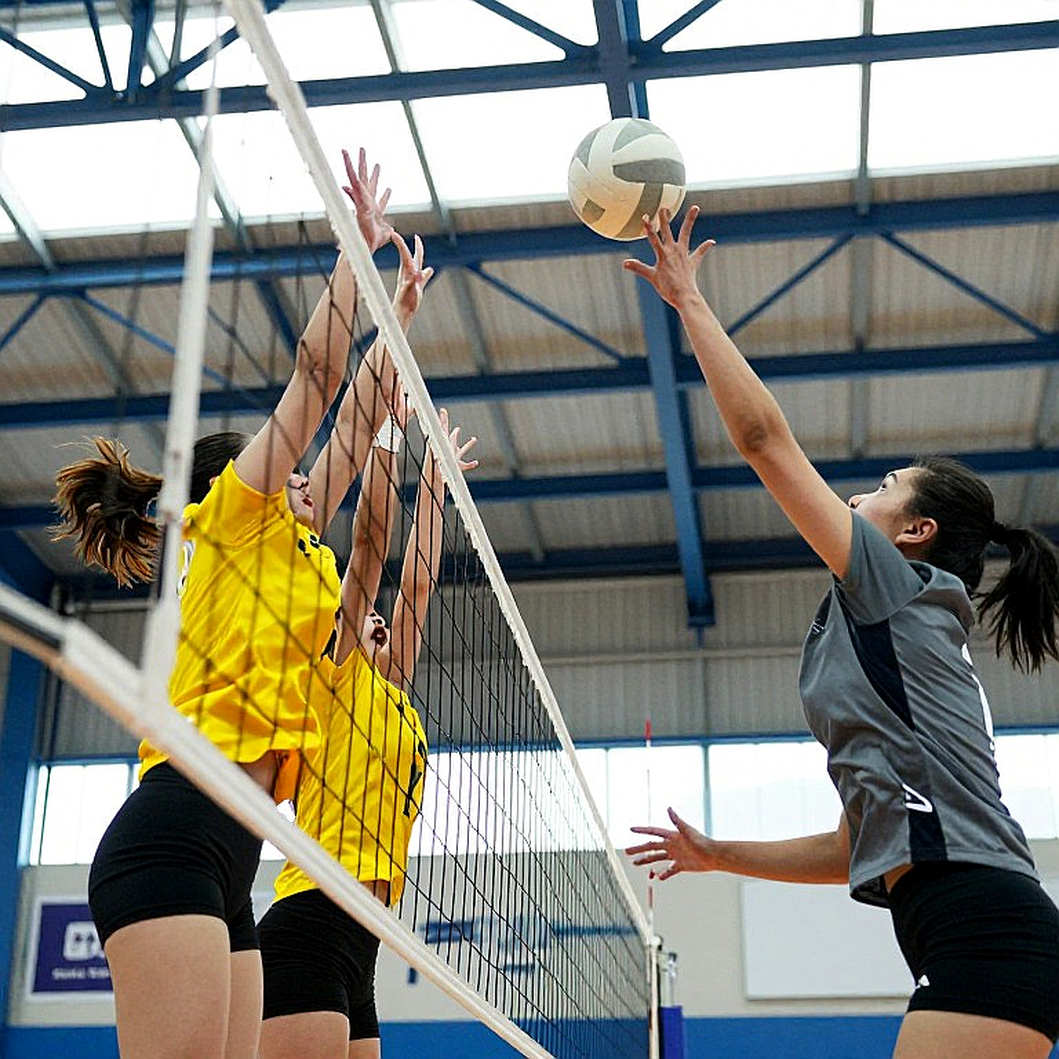
Da Nang University of Physical Education and Sports won the title, but that title speaks about a systemic gap, not about a dynasty.
Context first, because without it every argument that follows is empty talk. The 2026 national university volleyball tournament was staged at a scale the organizers described as a record: 116 teams, around 150 matches, with a final round of 16 teams competing in Hai Phong. That is a notable number for a competition sitting entirely outside the professional system. It reveals something few people notice: Vietnamese volleyball has a participation base so broad it is almost enviable, except that base has never been connected to the elite pipeline.
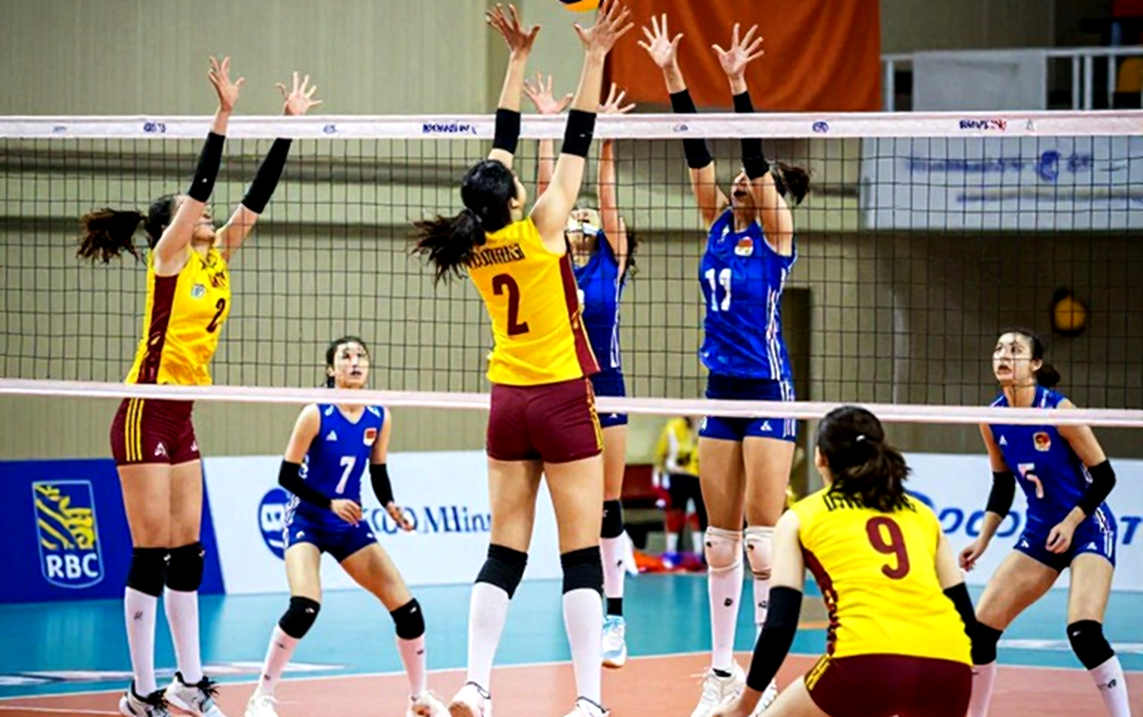
Let me be blunt: 116 teams is a better signal than any strategy report a federation could produce. It is raw data about the playing population. But a good signal does not automatically become a good system. A wide mine with no railway is still just a mine.
Da Nang University of PE and Sports arrived in Hai Phong as the defending champion. They had won before, and now they repeated it. Along that run there is one detail worth more than the trophy itself: in the group stage, they lost to Vietnam National University Hanoi 1-2. In the final, they met the exact same opponent and won 2-0.
Same opponent. Same tournament. Two opposite results. Anyone who has worked in analysis long enough knows that a reversal like this almost never comes from pure luck. It comes from an adjustment. The problem is: the report I read never tells me what that adjustment was.
And this is where I have to stop, put down my pen, and admit something to myself: my source is so data-poor that I cannot build a decent tactical model. No scoring rate. No attack efficiency. No successful blocks. No ace-to-error ratio. No perfect-pass rate. No digs. No setter distribution. Nothing at all.
That year's data taught me something I still repeat to younger colleagues: people hate the truth because it is too accurate, but they hate even more a truth built out of a vacuum. I will not do that. Where there is no data, I will call it no data. Where I infer, I will say clearly that it is an inference.
The only tactical content the source provides is a second-hand quote from head coach Le Huy Ha. He describes Ho Thi Kim Dung as the most comprehensive athlete, from serving and setting to attacking diversely in all positions and good blocking. She is also the team's highest scorer and an exemplary captain.
Read that line once, and you feel proud. Read it twice, and you feel warm. Read it a third time, and you should feel a chill down your spine.
A coach describes his player with the word comprehensive, covering serving, setting, attacking and blocking. In volleyball, that is not a description of a position. It is a description of someone used to patch every hole. An outside hitter at university level already carries both attacking and reception duties. But when a player is also mentioned in setting, the distribution role of someone else, the picture becomes very clear: this team has no specialized role system. They have one good player, and one good player good enough to cover the places where the system does not hold.
I do not predict volleyball, I bet against bias. And the crowd's bias right now is: Da Nang is strong. My bias is: Da Nang was lucky to have one person.
Look at the dependency structure. One player is captain. One player is the top scorer. One player is described as the most comprehensive in every phase. When one individual occupies all three functional positions, spiritual leader, scoring source, and patch for every technical gap, that team runs on a single point of support. This is a structure any sports manager should fear, because it delivers very well until the day it delivers nothing at all.
I have sat in rooms with colleagues praising teams like this. I always ask exactly one question: what happens tomorrow? Nobody can answer. And here, tomorrow already has a date. Ho Thi Kim Dung is a final-year student. She is about to graduate.
A team that wins because of a final-year player is not a championship team. It is a team at the peak of a curve about to descend. Next season, this team loses its number-one scorer, loses its captain, loses its utility patch, and loses the role model for younger players. Those three things cannot be replaced by one recruitment session.
Now to the part I consider most important, and the part that celebratory coverage will never touch. Before the 2026 tournament, Ho Thi Kim Dung suffered an injury. According to the source, she was injured about a month before the event and still took the court in pain. The term used in the source to describe this injury is ambiguous; the source itself does not clarify its nature or severity, and I will not reinterpret on its behalf.
But one thing I can state with certainty, and it needs no extra data: an athlete competing through pain at a student tournament, where the title carries spiritual meaning rather than a professional contract or meaningful prize money, is an athlete-welfare problem.
Empty stands do not kill volleyball, they expose those who pretend. The same applies here. The glow of the title exposes something else: the absence of a player-protection mechanism at the school level. A university team has no professional medical department, no load management, no one with enough authority to tell the coach that this player must not play. When a team depends on one player, the pressure for that player to play through pain grows exponentially.
I have witnessed this in many places. And I will say what polite journalists do not want to say in a congratulatory piece: if her injury recurs or worsens, her post-graduation path could be affected, and no one at the tournament will be held accountable.
There is one more detail in the source I want to dissect, because it says a lot about how a school sports system operates. The Da Nang team travelled from the Central region to the North, and according to the source, the journey caused some members to catch colds and fevers. At a student tournament, where players have no climate-acclimatization protocol, no nutritionist, no team doctor, long travel and weather shock are a real competitive variable. It is not an excuse. It is part of the tournament structure.
And this is where I dare to place a bet on a hypothesis: the 1-2 group-stage loss to Vietnam National University Hanoi may not be a purely technical problem, but the aftermath of a body worn down by travel and weather.
If this hypothesis holds, the 2-0 reversal in the final is not a story of spiritual ascent. It is a story of physical recovery and adaptation. These two stories sound the same in the press but are entirely different in the analysis room. One speaks of inspiration, the other of athlete management.
I admit this hypothesis has medium confidence. The source is insufficient to confirm it. But I raise it because in this profession, the point is not to always be right, but to ask the right question. And the question here is: if a university team needs only a few days of recovery to flip a result against the same opponent, how small is the gap between the top two teams of this tournament?
The answer is very small. So small that Da Nang's title reflects not a gap in ability, but a gap in preparation. And a gap in preparation is not a dynasty.
Now I want to talk about what I believe is the real legacy of this tournament, something no trophy can represent. Ho Thi Kim Dung is a Ca Dong ethnic minority woman, from a highland commune. Her path to volleyball ran through village volleyball and school volleyball. She came to this sport not through a formal scouting system, but through an informal network where small courts in the highlands still exist and still produce talent.
This is the point I want burned into every reader's mind: if a highland girl reached the final of a national university volleyball tournament through an informal path, the question is not how good she is, but how many like her were missed.
I will answer that with a number that appears in no report: nobody knows. And the fact that nobody knows is precisely the problem. A sport that cannot measure its own talent supply is running on faith, not data. Faith does not scale. Data does.
This Ca Dong girl also offered a detail I read again and again: she said that over the years she corrected roughly 80 to 90 percent of her technical flaws, and by her third year she felt far more complete. I do not doubt the truthfulness of that account. But I must be clear: this is self-assessment, not measurement. There is no baseline for comparison. An athlete feeling she fixed 80 percent of her flaws does not mean she actually fixed 80 percent of her flaws by objective technical standards.
What is notable is not the number. What is notable is that she admits she had technical flaws to fix. That is the mark of someone who came to this sport late, without formal training from childhood. And if that is true, then reaching national university championship level while having to fix her technique from scratch is a far more impressive achievement than a formally trained player winning the title.
Now to the part I call the contrarian angle, the part where, if you are looking for a celebratory piece, you should stop reading.
The story the media tells is an inspirational one: a minority girl from the highlands overcoming hardship to win a national title. I do not deny that story. It is true, it is beautiful, and it deserves to be told. But I object to making it the only story, because it accidentally turns a systemic problem into an individual triumph.
When a talent reaches the finish line only through extraordinary individual effort and fortunate circumstance, the system has failed to do its part. The inspirational story hides an uncomfortable truth: those without that extraordinary willpower, or without that luck, will never be seen.
And here is the paradox I want to state plainly: when a player must fix her own technique, play through pain, serve as captain, be the scoring source, and patch every position, then what is called comprehensive is actually a sign of deficiency. That team does not have a star. That team has one person carrying the whole team on her back.
I will bet on this: if Da Nang University of PE and Sports won because of a player comprehensive in every phase, then within two seasons, once that player graduates, the team's results will decline significantly, unless there is a succession class strong enough that the current source does not show me.
Why do I dare bet? Because a single-point dependency is the most fragile structure in team sports. Volleyball is a sport where every position must hold at once; one hole in reception or in the block brings down the whole system. One player can cover one hole. No player can cover two holes in two different positions in the same rally.
There is one more thing, and it is the thing that bothers me most in this story. It is Ho Thi Kim Dung's post-graduation plan: to become a teacher. I have nothing against teaching. Teaching is a noble profession. But in the context of talent-flow analysis, a national university champion choosing a path off the court is a signal of a leaky pipeline.
Imagine a system that produces 116 teams, finds a talent from the highlands, lifts her to the university peak, and then lets her walk away with no professional pathway ahead. That is not one person's story. It is the story of a pipeline that leads nowhere.
I am not saying she should pursue professional volleyball. I am saying that if she wanted to, the system must have a path for her. And if the system has no such path, then every university-level victory is merely a temporary victory, beautiful but severed.
Now I want to return to one technical detail I saved for last, because it matters more than it appears. The scores. A 1-2 group loss. A 2-0 final win.
In standard indoor volleyball, a match is usually decided in a best-of-five format, meaning the winner must take three sets. The notation 1-2 and 2-0 does not match that format. There are two possibilities. First, this university event used a shortened format, such as best-of-three, where winning two sets wins the match. Second, the source reported the scores incompletely.
I lean toward the first, because student tournaments often shorten formats to squeeze 150 matches into a dense schedule. But whichever it is, the analytical consequence is the same: if the format is best-of-three, then a 2-0 final win is a clean sweep, but it tells us nothing about stamina or resilience in long matches. And in elite volleyball, stamina in long matches is what separates the good from the great.
This is why I say this title should not be read as proof of class. It is proof of the ability to win a short match. Those are two different things.
I also have to address the 116 teams and 150 matches. This is the most concrete number in the entire source, and therefore the number most worth verifying. I have not verified it with the organizers. Until then, I place it in the pending-verification column, medium confidence. But even if it is correct, it still speaks only to participation scale, not to competitive quality. A tournament with 116 teams and a tournament with high technical quality are two different stories, and mixing them is a common mistake in sports media.
At this point, I need to state what I consider the fairest assessment of this whole story.
The 2026 national university volleyball tournament is a development-tier event. It sits outside the Olympic cycle, outside the international federation's ranking system, and has no predictive meaning for elite volleyball. Its analytical value lies in two places: a signal about a broad playing base, and a signal about an informal talent pathway from under-watched regions.
Both signals are positive. Both are being wasted.
If I were a decision-maker at a federation, I would not look at Da Nang's trophy. I would look at two other things. First, I would find a way to connect these 116 teams to a formal scouting system, because among them there may be dozens of talents playing ball that nobody knows about. Second, I would build a health-protection protocol for student athletes, because a sport that lets players compete through pain at school level will pay the price at professional level with injuries that cannot be undone.
As for Ho Thi Kim Dung, I wish her all the best. She deserves her title and she deserves her story. But I refuse to tell her story as a fairy tale, because fairy tales do not help the next highland girls.
Every contrarian was once someone who loved this sport in the truest sense. I write this not to diminish a title. I write to say that a beautiful title can hide a bad system, and the only way to fix a bad system is to look straight at it even while there is reason to celebrate.
If you fear chaos, you will never understand volleyball. And Vietnamese university volleyball is a chaotic playground in the best sense: broad, energetic, and unorganized. That is not a criticism. It is an opportunity not yet seized.
My predictions, so you can come back and check: within the next two seasons, Da Nang University of PE and Sports will not keep the title unless it finds an equivalent succession class. The number of teams at the national university tournament will keep rising, because the playing base keeps expanding. And no formal scouting system will be established for ethnic-minority regions within the next three years, unless external pressure forces it to happen.
If I am wrong about the third prediction, I will be the first to celebrate. But I have watched long enough to know that in sport, missed talents do not disappear. They are simply never seen.