
FIFA orders Thanh Hoa to pay Rimario USD 305,000: 45 days and the risk of a three-window registration ban
Trả lời ngắn: Ngày 10-9, FIFA buộc CLB Thanh Hóa trả 305.000 USD tiền lương còn nợ cho tiền đạo Rimario Gordon, cộng lãi suất 5% tính từ ngày 18-6. Thanh Hóa có 45 ngày để thanh toán; nếu không, đội bóng bị cấm đăng ký cầu thủ mới trong nước và quốc tế tối đa ba kỳ chuyển nhượng. Dữ kiện chính: • Số tiền FIFA phán quyết: 305.000 USD, tương đương gần 8 tỉ đồng, cộng lãi suất 5% từ 18-6. • Thời hạn thanh toán: 45 ngày kể từ ngày nhận quyết định 10-9. • Chế tài nếu không trả: cấm đăng ký cầu thủ mới trong nước và quốc tế, tối đa ba kỳ chuyển nhượng. • Rimario Gordon sinh năm 1994, khoác áo Thanh Hóa hai lần: 2019 và 2023-2026. • Từ mùa 2026-2027, Rimario thi đấu cho Thể Công - Viettel; Thanh Hóa có nhà tài trợ mới. Nguồn: Thông báo giải quyết tranh chấp của FIFA ngày 10-9-2026, đối chiếu dữ liệu cầu thủ và câu lạc bộ | Cross-checked: VuaBong.vn Hỏi đáp liên quan: Q: Thanh Hóa có bao lâu để trả khoản nợ cho Rimario? A: 45 ngày kể từ ngày nhận quyết định của FIFA. Q: Nếu Thanh Hóa vẫn nợ sau ba kỳ chuyển nhượng thì sao? A: FIFA sẽ tiếp tục nâng mức kỷ luật theo quy chế. Q: Rimario Gordon hiện thi đấu cho CLB nào? A: Thể Công - Viettel, từ mùa giải 2026-2027.
On 10 September, FIFA issued its decision resolving the dispute between Thanh Hoa FC and striker Rimario Gordon. The text was short: USD 305,000 in unpaid remuneration, plus 5% interest running from 18 June. The final paragraph is the part worth reading slowly. If that sum is not paid in full within 45 days of receipt of the decision, Thanh Hoa will be banned from registering new players domestically and internationally for up to three transfer windows. If the debt survives those three windows, the sanctions escalate.
I once watched a transfer collapse in six hours, before the rest of the world had switched on its phone. This time there was no collapse to watch live. No call cut off mid-sentence, no hand withdrawn from a handshake. The contract between Thanh Hoa and Rimario died at the end of April. The document dated 10 September is merely paperwork confirming that death with a number, plus interest.
Modern football does not belong to the players. It belongs to whoever reads the balance sheet fastest. Three hundred and five thousand dollars is an easy number to read. What decides Thanh Hoa's fate in the 2026-2027 season sits elsewhere: 45 days, and three transfer windows.
Context: a new sponsor, an old debt
Rimario Gordon was born in 2026 and is one of the best-known foreign strikers in V-League history. He has spent nearly five years in Vietnam, worn the shirt of several major clubs and collected a decent haul of honours. At Thanh Hoa he had two spells: 2026, then 2026 to 2026.
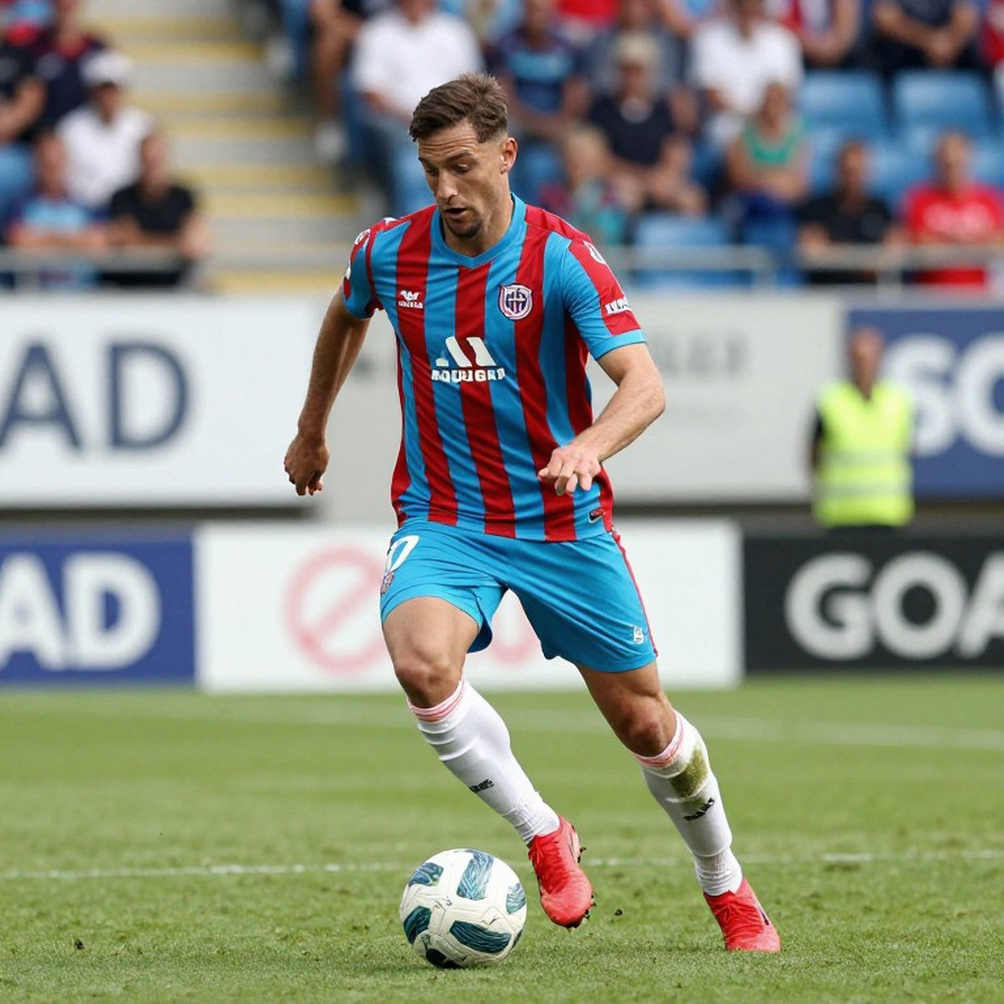
Based on my experience following V-League matches, Rimario belongs to the category of foreign strikers clubs buy to score in games they cannot afford to drop points in, not to sell shirts. At the end of the 2026-2026 season, Thanh Hoa fell into a financial crisis, and the wage bill could no longer be met in full. Rimario was among the players left unpaid and he left the club at the end of April. In 2026-2027 he plays for The Cong - Viettel.
Thanh Hoa, for their part, now have a new sponsor and have temporarily overcome the worst of their difficulties in order to keep competing in the national professional leagues. In the newspapers, that is good news. In FIFA's file, a new sponsor does not erase a debt that has already been established.
The money passes through several layers before it reaches the account
The figure FIFA publishes is a gross figure, the amount before any deductions, and the benchmark FIFA uses to stop the clock on interest.
The 18 June anchor and the 5% interest are what make the debt grow every day. Read as 5% a year, the interest adds roughly USD 1,270 a month, close to USD 3,500 for the stretch from 18 June to the date of the ruling. That is my own illustrative arithmetic, not a FIFA figure, but it shows one thing: time is on the player's side, not the club's.
Then comes the transfer itself. The money travels from an account in Vietnam to an account abroad, through a correspondent bank, exposed to the exchange rate, exposed to transfer fees, and exposed to the question of who bears income tax on the remuneration. This is the familiar blind spot of Southeast Asian deals: the club calculates what it will send, FIFA calculates what must be paid. The gap between those two numbers is where a registration ban is born.
Every contract is a potential corpse; all it takes is one dishonest tax clause. In the Rimario case there was no disputed tax. There was simply a portion of wages that never moved. The consequence is the same: the player leaves, the club keeps the debt, and a few months later a document lands from Zurich.
What 45 days and three transfer windows actually mean
FIFA's disciplinary mechanism is mechanical. Once 45 days pass without the money arriving, a ban on registering new players takes effect, up to three windows, domestic and international alike. No buying, no loaning, no new registrations anywhere.
For a V-League club, three transfer windows is not three months. It stretches beyond a year, across at least two mid-season registration periods and one pre-season window. Through all of it the club must still play, still absorb injuries, still serve suspensions, and still cannot add anyone. The door shuts while the squad ages, match by match.
The Juventus wage crisis taught me that a payroll is not a number. It is an oath that was not kept. In 2026 I reconstructed Juventus' wage-cut minutes: fifteen players agreed to a 30% reduction across a total wage bill of EUR 209 million. When I published my conclusion that the club would spend heavily the moment the market reopened, plenty of people thought I was reading too much into it. But a payroll cut delivered through a deferral agreement is, in substance, still a debt waiting for its due date.

The contrarian angle: a remedy for foreign players, and for domestic players?
Public opinion reads this case one way: FIFA protects the player, the club must pay, justice is done. I do not dispute that conclusion. But it skips something.
A foreign player owed USD 305,000 can take the matter to FIFA and receive a document with real weight. A domestic player owed the same amount has almost no comparable route. Their careers are bound to a locality, to relationships, to the many occasions on which they are asked to understand that the club is struggling. One debt, one club, two entirely different fates, depending on the nationality of the worker.
The second blind spot is how clubs treat FIFA paperwork. In the industry, a ruling from the Dispute Resolution Chamber tends to be handled as an administrative hiccup rather than an urgent liability. A new sponsor arrives, cash comes in instalments, and there are always more creditors than money. Who gets paid first is an internal political decision, not an accounting one. In that queue, a former striker now playing for someone else usually sits behind whatever is needed to keep the team on the pitch each week.
If the payment is not made on time and is not backed by a bank guarantee, the registration ban triggers automatically, however many sponsors the club has. FIFA does not read sponsorship decks. FIFA reads bank statements.
The transfer market runs on silence, not on shouting. Whoever listens wins. The most telling silence in this case lasted four and a half months, from the end of April to 10 September. Long enough to negotiate, long enough to settle, long enough to agree an instalment plan. It passed, and the result was a letter from Zurich.
What to watch next
The most dangerous thing is not a bad contract. It is a contract that convinces you it is too good to need checking. The same holds for wage debts in the V-League: clubs convince themselves that time cools everything down, that the foreign player will tire and let it go, that a new sponsor is enough to rewrite history.
The 45-day mark is the one I will track. If, inside that window, a handful of V-League clubs quietly settle old debts nobody has mentioned, readers should understand that FIFA's Dispute Resolution Chamber holds more Vietnamese names than have ever been made public. One Rimario case resolved can push ten others to end silently in a bank transfer, purely to keep the registration door open at the decisive point of a season.
For clubs paying today's wages with tomorrow's sponsorship money, the lesson lies elsewhere: a contract with a foreign player should carry an escrow account, or a bank guarantee covering the remainder of the season's wages. Not to look decent. To protect yourself from a letter arriving from a city ten thousand kilometres away, containing one very short line about three transfer windows.