
Domestic FootballVietnam's Late Call-Up of Khoa Ngo: A Bench Slot, Three Days to Integrate, and a Group With No Safety Net
Vietnam's Late Call-Up of Khoa Ngo: A Bench Slot, Three Days to Integrate, and a Group With No Safety Net
**Câu trả lời cốt lõi**: Ngô Đăng Khoa được CLB CA TP.HCM xác nhận triệu tập bổ sung vào đội tuyển Việt Nam ngày 19 tháng 9 năm 2026, một ngày sau khi VFF công bố danh sách 23 cầu thủ. Anh được gọi để tăng chiều sâu tuyến giữa cho ba trận vòng bảng diễn ra trong bảy ngày. **Dữ kiện chính**: - Ngô Đăng Khoa là cầu thủ Việt kiều thứ năm trong danh sách đội tuyển Việt Nam dự FIFA ASEAN Cup 2026. - Bốn trong năm cầu thủ Việt kiều thuộc biên chế CLB CA TP.HCM. - Đội tuyển Việt Nam rời nước ngày 23 tháng 9, đá trận ra quân gặp Philippines ngày 26 tháng 9. - Việt Nam cùng bảng Thái Lan, Philippines và Pakistan; đội nhất bảng vào thẳng chung kết. - Kim Sang Sik là huấn luyện viên trưởng đội tuyển Việt Nam. **Nguồn**: Xác nhận của CLB CA TP.HCM ngày 19 tháng 9 năm 2026; danh sách 23 cầu thủ của VFF ngày 18 tháng 9 năm 2026 | Cross-checked: VuaBong.vn **Hỏi đáp liên quan**: - Hỏi: Vì sao Khoa Ngô được gọi bổ sung? Đáp: Để tăng phương án luân chuyển tuyến giữa cho lịch ba trận trong bảy ngày. - Hỏi: Vai trò của Khoa Ngô ở giải đấu này là gì? Đáp: Phương án dự bị, do chỉ có ba đến bốn buổi tập hòa nhập trước trận ra quân. - Hỏi: Rủi ro lớn nhất của đội tuyển Việt Nam là gì? Đáp: Thể thức không có vòng bán kết khiến trận gặp Thái Lan ngày 29 tháng 9 mang tính quyết định.
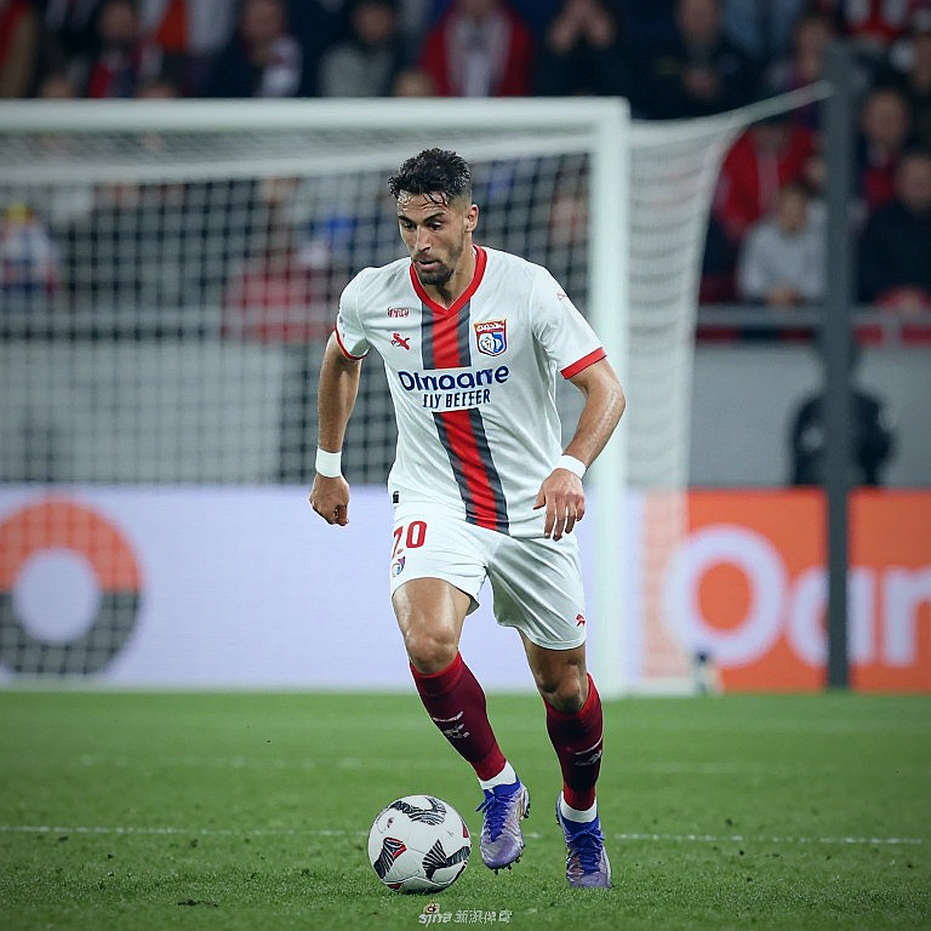
On September 19, CA TP.HCM confirmed that Ngo Dang Khoa had been added to Vietnam's national squad for the FIFA ASEAN Cup 2026. Less than 24 hours earlier, the Vietnam Football Federation had published its 23-player list. Head coach Kim Sang Sik's squad leaves Vietnam on September 23. The opening match against the Philippines takes place on September 26.
Placed side by side, those three dates tell a story the headline does not. A call-up issued after the list has already been published is a reactive call-up. It was not part of a plan drawn up weeks in advance. It is an answer to a problem that has just emerged, or to a gap that has just been noticed.
The news value of the event lies in its timing, not its content. A player called up a day late does not change the nature of a national team. But the way it happened, the moment it happened, and the gap it has to fill are facts worth analysing seriously. Khoa Ngo was not called up to start. He was called up to plug a hole in the rotation system. And to understand why that hole needed plugging right now, one has to look at the whole context around him.
The 23-player list published by the VFF on September 18 carries a clear structural marker. Five overseas Vietnamese players are included, four of them from the same club. They are Patrik Le Giang, Williams Minh Hoang, Adou Minh, Cao Quang Vinh and Ngo Dang Khoa, and four of those five names play for CA TP.HCM. I have followed this shift across several national-team camps, and the notable thing is not the number five. The notable thing is that four-fifths of that resource comes from a single address.
In regional football, the model is not new. Indonesia has pushed hard on naturalisation. Thailand searches for Thai-heritage players in Europe. Vietnam, later, has chosen the descent route: players born or raised abroad who carry Vietnamese blood. Vietnam's difference lies not in the idea but in the cost. An overseas Vietnamese player typically arrives in the V.League on a free transfer or for a nominal fee, avoiding the premium the domestic market places on players of the same standard.
At club level, CA TP.HCM has done what others have not: turned overseas Vietnamese recruitment into a systematic programme rather than a series of isolated deals. When four of its players appear in a single national squad, the club gains more than media value. It holds a new negotiating position in contract renewals, and an asset it can sell on at a higher price if the tournament goes well.
But that context alone does not explain why a supplementary call-up appeared so late. To answer that, one has to look at the fixture list.
Vietnam shares a group with Thailand, the Philippines and Pakistan. Three group matches unfold across seven days: the Philippines on September 26, Thailand on September 29, Pakistan on October 2. Under the format as reported, the group winner goes straight to the final, with no semi-final round. If that is accurate, the entire shape of the group changes in nature.
Three matches, seven days, plus travel to Indonesia in tropical September conditions. This is a physical problem before it is a tactical one. A 23-man squad has to rotate across all three lines if it wants to sustain pressing intensity to the final match. That is the technical reason behind adding another midfielder: more rotation options in the middle of the pitch, where physical expenditure is highest.
That is the capacity in which Khoa Ngo has been called up. He is not a system change. Coach Kim Sang Sik has called him up several times before, and the player himself previously withdrew through injury. His return says two things at once: the coaching staff rates his professional profile, and his physical condition is an open question. With three to four training sessions alongside the group before the opener, his integration into any specific combination is close to zero.
He will be a substitute option, a man sent on to change tempo in the second half, not a link in the starting eleven. Judge him as a cornerstone and you will be disappointed. Judge him as a rotation option in a three-games-in-seven-days tournament and he is a reasonable choice. The difference between those two judgments does not lie with the player. It lies with the expectations of the judge.
The group structure raises another tactical issue. The matches against the Philippines and Pakistan are, in theory, must-wins. But without a knockout round, winning is not enough — you have to win big. Goal difference will be the tiebreaker if the race for top spot ends level on points. That turns both matches into exercises in breaking down a deep defensive block, where the quality of the final pass matters more than the volume of chances created.
The Thailand match on September 29 therefore carries the character of a genuine knockout tie. A draw or defeat almost certainly means elimination, because there is no semi-final to correct it. The pressure falls on a single match, and it arrives just three days after the opener.
Here the away factor becomes relevant. Vietnam plays on Indonesian soil, in front of someone else's crowd. Without spectators, home is just an address on a map. In a short tournament where any match can be decisive, the absence of home advantage is not a small detail. It is a variable inserted into every tactical calculation.
This is also where the sourcing of the facts matters. Some details regarding the format, the September calendar and the presence of Pakistan in a group bearing the ASEAN name do not fully match the traditional model of the regional championship. From my experience covering matches and tournament cycles, format anomalies are usually a sign of a restructured competition, or of an unverified source. In this case, part of the information comes only from reports that carry no attribution. If the actual format includes a semi-final, the entire argument about pressure concentrating on the Thailand match weakens considerably.
A paradox emerges here. The overseas Vietnamese wave is presented in the media as a sign of strength. But structurally, it reflects two contradictory things at once.
First, it is a genuine advantage. Vietnam gains access to a talent pool that neither the domestic academy system nor the foreign-player quota can supply, at low cost. Players developed in Europe bring match experience that domestic academies take years to produce.
Second, that very advantage can become a drag. When a club can import a finished product cheaply, the incentive to invest in long-term youth development weakens. That supply is free at the point of purchase, but it raises a question about where money should flow: buying grown players, or raising fifteen-year-olds. The transfer market is where hope is bought and sold with an owner's money, and in this case the commodity being traded is a resource the domestic game has not yet learned to produce itself.
The answer is not to choose one path over the other. But how a football nation answers that question over the next ten years will decide its regional standing. A cost advantage always cancels itself out once enough people copy it. When other V.League clubs set up overseas Vietnamese scouting departments, the discount disappears, and competition returns to where it began: the quality of the development system.
One more point deserves a direct look. Four of the five overseas Vietnamese players come from one club. Technically, their familiarity at club level may help link the midfield faster. But in the dressing room, it raises a question about fairness in selection. Domestic players competing for the same positions will look at it and ask whether the criteria have tilted toward one source of supply. That problem does not surface when the team wins. It only surfaces when the team loses.
The tournament stage, then, is not merely where players prove their ability. It is where a personnel policy is tested in public. A successful campaign turns the overseas Vietnamese wave into a long-term commercial asset. A group-stage exit turns that same wave into a debate about quotas and favouritism. The same facts, two opposite outcomes, separated by a single match.
In risk terms, the picture can be summarised in a few lines. A late call-up carries the risk of injury recurrence. A congested schedule carries the risk of overload. A format without a semi-final carries the risk of early elimination. And uneven sourcing carries the risk of misreading the context. Those four risks do not cancel each other out. They compound.
The thing worth watching next week is not whether Khoa Ngo starts. That question is too small for the context. The thing worth watching is what a late call-up says about how the national-team machine operates: preparation or reaction, proactive or passive. Three matches in seven days will answer that question with actual minutes, not with press releases.
A missed shot can teach us more than a trophy, if we are willing to look at our own gaps. This tournament will show where Vietnamese football's gaps lie. And equality is not about flattening passion, but about giving everyone the right to burn for it — including those who arrive a day late.
Cầu thủ liên quan
Bài đề xuất
The Xuan Son Gap: The Endpoint of a System, Not a Position2026-09-28
Bandung: Vietnam Tighten Security as Midfield Awaits a Signal on Hoang Duc2026-09-25
Indonesia Read the Rules Better Than Us: On Paes, Romeny, and the Real Fight in ASEAN Football2026-09-28
Vietnam Call Up Khoa Ngo for FIFA ASEAN Cup 2026: A Bench Option and a Format Without a Safety Net2026-09-20
The Forty-Seventh Page Is Blank: Why Vietnamese Football Analyses Itself on Faith2026-09-28
U23 Vietnam vs U23 Philippines at 13:30: Finishing Efficiency Is the Decisive Variable2026-09-19
Vietnam 0-2 Thailand: When the Attack Loses Its Anchor, an Old Flaw Surfaces Under the Lights2026-09-30
Bài đề xuất
Vietnam U16 Lose 0-1 to China U16: The 70th-Minute Goal Was Written From the 55th2026-09-28
From Minute 16 to Minute 78: Dong Nai Self-Punishes, But the Biggest Gap Belongs to VAR2026-09-22
FIFA ASEAN Cup 2026 Through a Referee's Eye: The 5,000-Person Clause, Vietnam's Narrow Gate and an Undisclosed Rights Fee2026-09-26
The Empty Analysis and Vietnam’s Football Data Gap2026-10-01
Former player Tuan Phong: 3 identical matches, U23 Vietnam missed too many chances2026-09-23
Vietnamese football in the data era: When 'N/A' becomes the answer2026-09-21
The Empty Spreadsheet in Transfer Season: A Football Data Writer's Discipline of Saying 'Insufficient Information'2026-09-20