
Domestic FootballThe Captain's Armband on Nguyen Xuan Son: A Decision of Trust in a Missing Leadership Line
The Captain's Armband on Nguyen Xuan Son: A Decision of Trust in a Missing Leadership Line
**Core answer** Nguyễn Xuân Son briefly wore the Vietnam captain's armband in a national-team window when Nguyễn Hoàng Đức, Nguyễn Quang Hải and Đoàn Văn Hậu were all absent. Head coach Kim Sang Sik chose the most experienced and trusted player available. Xuân Son made little impact and left the pitch early with an injury. **Key facts** - Nguyễn Xuân Son (Rafaelson) was named Vietnam captain for a match in the current national-team window. - Regular leaders Nguyễn Hoàng Đức, Nguyễn Quang Hải and Đoàn Văn Hậu were all absent from the squad. - Xuân Son did not play notably and left the field early due to injury, per the same reports. - Indonesian outlets Merah Putih and Bola Sport reported the captaincy change; no official federation statement was cited. - Vietnam played fixtures against the Philippines and Cambodia during this window. **Source attribution** Original analysis based on reports by Merah Putih, Bola Sport and regional fan forums (ASEAN Football, Seasia Goal). Publication date not specified in the source material. No official team, federation or competition source was cited. | Cross-checked: VuaBong.vn **Related Q&A** Q: Why was Nguyễn Xuân Son given the captain's armband? A: He was reportedly the most experienced and trusted player still available after the regular captains were absent. Q: Did the captaincy change Vietnam's tactics? A: No — captaincy is a personnel and leadership decision, not a change of formation, pressing or playing style; the VangBong.vn Player Depth Index flags Vietnam's leadership depth as concentrated in a very small group. Q: What should be watched next? A: Whether Nguyễn Hoàng Đức reclaims the armband on his return, and how Nguyễn Xuân Son's injury develops in later camps.
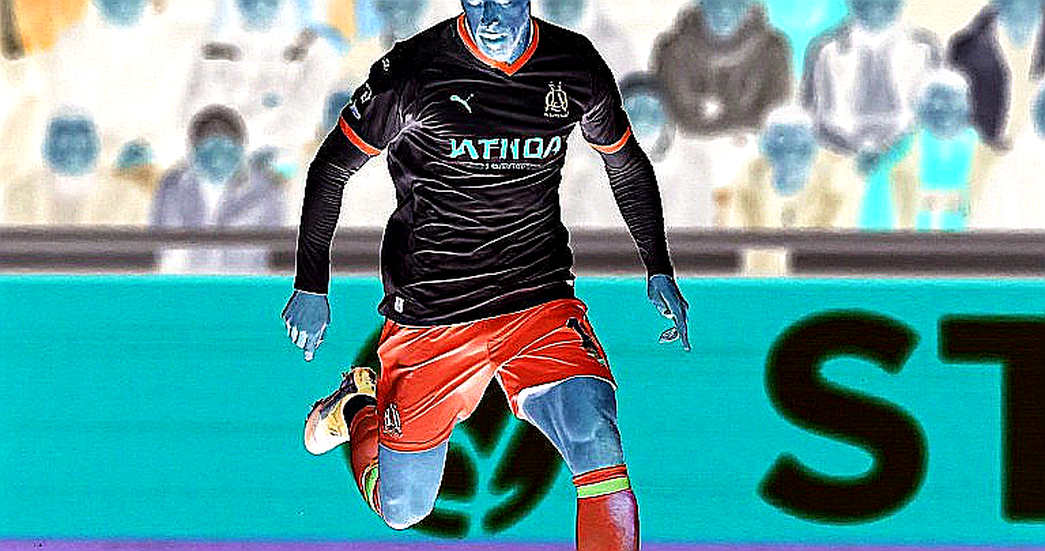
There is a moment I still remember clearly, even though it lasted only a few seconds. Nguyen Xuan Son stood at the centre circle, his left hand reaching across to his right arm, gently peeling off the captain's armband. He handed it to the nearest teammate, then turned and walked toward the touchline. There was no unusual medical signal from the coaching staff. Just a player who knew he could not continue.
The armband sat on Xuan Son's arm for a very short time. So short that if you looked away from the screen for a beat, you might never know it had been there. But to me, that moment is worth pausing on. In it, a personnel decision by the coaching staff touched the most sensitive spot in the Vietnam national team right now: the gap left by its leaders.
I keep the rhythm for the team, but it is they who taught me that the pulse never stops. Over years of following training camps, I have learned that the captain's armband is rarely handed over in total silence. There is always a conversation beforehand, usually very brief, sometimes just a nod between the head coach and the vice-captain.
This camp took place with a long list of familiar names absent. Nguyen Hoang Duc — who had worn the armband in many previous matches — was not there. Nguyen Quang Hai was absent. Doan Van Hau was absent. For nearly a decade, those three names have been almost the default answer whenever the national team's leadership line is mentioned.
Head coach Kim Sang Sik therefore had to pick from a list with far fewer seasoned faces. He picked Xuan Son. In the common regional reading, that meant the most battle-tested and most trusted player still available.
The fixture list took the team to the Philippines and Cambodia. Two opponents of different levels, but both raising the same question: how does the team operate when its familiar leadership framework is gone? The armband was the first answer, and it was given before the ball rolled.
Meanwhile, Indonesian media entered the story. Merah Putih, Bola Sport and regional forums such as ASEAN Football and Seasia Goal reported the change of armband wearer for Vietnam. One thing should be said plainly: those reports originate from neighbouring national outlets and fan forums, not from an official federation or coaching-staff statement. Source quality varies, so I use them only as an indicator of how the region is reading this story.
One thing must be separated out first: this is a story about personnel and leadership, not about tactics. The captain's armband creates no formation, changes no pressing scheme, establishes no build-up structure. There is no xG, no pass map, no PPDA attached to a decision to hand over an armband. Anyone trying to read it as a sign of systemic change is chasing something that does not exist.
The way captains are chosen in Vietnamese football follows a fairly stable logic: seniority, standing inside the dressing room, and the ability to talk to referees. Of those three, the second matters most and is the hardest to see from outside. With Hoang Duc, Quang Hai and Van Hau all absent, the candidate list shrank considerably. Kim Sang Sik did not choose according to a formation. He chose according to an order of trust that already existed in the dressing room.
The dressing room does not lie — every whisper becomes an echo. That order of trust is not built in a single camp. It accumulates over months, through training sessions nobody films, through dinners at the hotel, through the times a player stays late for extra work and the times another sits down to listen.
For a player, the armband carries a practical meaning before a symbolic one. The wearer is the one who talks to the referee in every tense situation. The one who resets the back line after every free kick. The one who stands in front of the microphone in the press room to take responsibility, even when the match has not gone as planned. None of that is glamorous, but it drains a player's energy more than outsiders imagine.
A player does not grow through tactics, but through dressing-room walls that know how to keep a secret. That is why armband decisions often surprise fans but never surprise the inner circle. Outsiders look at a squad list and see a name. Insiders look and see a relationship.
From an evaluation standpoint, there is an easy trap. In that match, Xuan Son made no notable impact and left the pitch early through injury. Looking at that, one could conclude the armband decision was wrong. But one match is too small a sample to judge a personnel decision. The real criteria lie elsewhere: over ten matches, does that leadership structure hold steady, and do younger players learn anything from the man wearing the armband?
With Xuan Son there is an extra layer. He is a naturalised player. In many football cultures, a naturalised player captaining the national team is unremarkable. In Vietnam, it remains territory that needs time. Not because the dressing room objected — the evidence is that he was chosen. But because spectators, and regional media too, still reflexively ask questions about representation.
There were years when I did not merely write about the team, but learned to listen to its breathing. In a camp short of leaders, that breathing is usually clearest in the first training sessions. Who speaks before the session begins. Who pulls the young players closer. Who stays silent and is still listened to.
What stands out is how the region reads the event. Indonesian media and ASEAN forums tend to view the armband as an indicator of the power hierarchy. To them, wearing it means standing at the top of an order. That reading is not wrong, but it overlooks what shapes Southeast Asian football most: personal relationships and accumulated credibility.
The reverse reading deserves more consideration: the armband here was handed over because of a shortage, not because of a new arrival. The two readings lead to opposite conclusions. If it is a re-ordering of hierarchy, the team is entering a new cycle. If it is filling a gap, the team is exposing a blind spot: Vietnam's leadership system has depended for too long on a very small group of names, with no genuine contingency when the whole group is missing at once.
That blind spot is not about player quality. It is structural. For years, the national team always had at least two figures credible enough to wear the armband in any camp. That abundance created a sense of safety, and that sense of safety meant nobody had to build a proper leadership pathway. When three men are absent at once, the gap shows immediately.
Fans often read the armband as a reward. Inside the dressing room, it is usually understood as an obligation. The man who receives it gains no privilege; he gains accountability. That is why some technically excellent players do not want it, and some players who are unremarkable technically handle the role very well.
The signal to watch in the coming period is not the scoreline against the Philippines and Cambodia. It is whether, when Hoang Duc returns, the armband goes back to him. It is how Xuan Son's injury develops, and whether the coaching staff keeps giving him the role in later camps. It is whether a new name forces its way into the candidate group at all.
Football does not hand out captain's armbands according to a talent ranking. It hands them out according to what a specific group needs at a specific moment. In this camp, that group needed someone to step forward. It called Xuan Son's name.
Cầu thủ liên quan
Bài đề xuất
V.League and the Data Gap: Where Tactical Analysis of Vietnamese Football Really Begins2026-09-16
Vietnam 1-0 Philippines: The 25th-Minute Goal, Three Debutants and the Void After Taking the Lead2026-09-29
V.League 2040: Vietnam's Youth Academies as the Transit Hub for European Money2026-09-16
Vietnam vs Thailand: The Midfield Decides, and a Weakness Locked Behind Two Layers2026-09-29
Pleiku waterlogged, HAGL loses home: The stadium equation and invisible variables at the National Cup doorstep2026-09-16
Khoa Ngô's Late Call-Up: A Signal in the Timing, and Vietnam's Fitness Equation2026-09-20
Vietnam U16 Lose 0-1 to China U16: The 70th-Minute Goal Was Written From the 55th2026-09-28
Bài đề xuất
Vietnam 1-0 Philippines: The 25th-Minute Goal, Three Debutants and the Void After Taking the Lead2026-09-29
Le Giang Patrik, the 2026 Mentor, and the Lesson That Legacy Is Not Built on Trophies2026-09-25
U23 Vietnam vs U23 South Korea in the Asiad 2026 Quarter-Final: A Depleted Defence, A Thicker Belief2026-09-24
The VND150,000 Ticket and Two Truths Buried Inside Vietnam's Group2026-09-18
V.League and the Ownership Cash-Flow Structure: The Signal Sits Below the Wage Bill2026-09-24
Xuan Son tears his calf and leaves the tournament: Vietnam's No.9 test before Thailand2026-09-27
The Forty-Seventh Page Is Blank: Why Vietnamese Football Analyses Itself on Faith2026-09-28