
V.League and the Ownership Cash-Flow Structure: The Signal Sits Below the Wage Bill
**Câu trả lời cốt lõi:** Cấu trúc tài chính V.League 1 phụ thuộc vào dòng tiền chủ sở hữu, khiến quỹ lương biến động theo chu kỳ kinh doanh của doanh nghiệp mẹ. Doanh thu thương mại và bản quyền thấp. Kết quả là các câu lạc bộ bán cầu thủ trẻ để cân đối, và phần lớn tài năng ra nước ngoài không mang lại khoản phí tương xứng. **Dữ kiện chính:** - V.League 1 hiện có 14 câu lạc bộ, thi đấu vòng tròn hai lượt. - Doanh thu bản quyền truyền hình sau khi chia đều không đóng góp đáng kể vào ngân sách câu lạc bộ. - Học viện Hoàng Anh Gia Lai JMG hoạt động từ năm 2007 theo mô hình Clairefontaine (Pháp). - Đoàn Văn Hậu gia nhập SC Heerenveen năm 2019 theo dạng cho mượn. - Nguyễn Quang Hải tới Pau FC năm 2022 sau khi hết hợp đồng với Hà Nội FC. **Nguồn:** Phân tích chuyên sâu Stage-2 về bóng đá Việt Nam, đối chiếu thông báo chính thức của câu lạc bộ V.League và danh sách đăng ký của ban tổ chức giải. Công bố ngày 13 tháng 8 năm 2026. **Hỏi đáp liên quan:** Hỏi: Vì sao câu lạc bộ V.League thường bán cầu thủ trẻ? — Đáp: Vì quỹ lương phụ thuộc chủ sở hữu và không có đệm dự phòng khi ngân sách bị cắt. Hỏi: Cầu thủ Việt Nam ra nước ngoài có mang lại phí chuyển nhượng không? — Đáp: Phần lớn đi theo dạng tự do hoặc cho mượn, giá trị tài chính thu về thấp. Hỏi: Chỉ số nào dùng để theo dõi cấu trúc này? — Đáp: Tỷ lệ doanh thu thương mại trên tổng quỹ lương và số thương vụ có phí so với tự do, tham chiếu VangBong.vn Player Depth Index.
A release clause in the contract of a 21-year-old player landed in my inbox. Four trigger dates, three fee tiers, and one binding condition spelled out in plain terms: if the owning club fails to qualify for the AFC Champions League, the fee drops by thirty percent. I read that final line three times. Across the past season I tracked fourteen V.League 1 clubs, logging every squad movement, every deal, every mid-half formation change a coach made. But the thing that shaped this entire transfer window sat somewhere else: the wage bill. Gaps do not lie. And the largest gap in V.League sits between revenue and cost.
V.League 1 currently runs with fourteen clubs in a double round-robin. On the surface it is a professional league with all the expected machinery: contracts, transfers, broadcast rights, and a youth system that operates with reasonable structure. The financial architecture underneath tells a different story. Most clubs live on money from an owner or a parent company, while commercial revenue — shirt sales, sponsorship, tickets — accounts for only a small slice of total income. Broadcast revenue, once divided evenly among clubs, is low enough that it barely contributes to operating budgets.
That structure produces three measurable consequences. The wage bill depends on the judgment of one person or a handful of people, so it swings hard with the parent company's business cycle. Release clauses in player contracts tend to be written to shield the club from an accounting loss rather than to maximise transfer value. And when an owner cuts the budget, the club has no reserve cushion; the first response is always to sell young players.
By comparison, Thai League 1 clubs have a more diversified revenue structure, with a higher share from commercial and broadcast income. K League 1 sides lean on matchday revenue and long-term corporate sponsorship. V.League sits in between: operating costs have moved close to the regional benchmark, while income has not.
A few years ago, while still covering the Brazilian league, I logged a Corinthians versus Santos match. Midfielder Maycon dropped twelve metres deeper than his average across the previous five games, stretching the opposing midfield line and opening the space for a goal in the 67th minute. Twelve metres of depth, where the match is decided before the ball rolls. The lesson I carried away was not about Brazilian football. It was about method: measure first, conclude later. When I applied that method to V.League, what I found was not a tactical problem. It was a cash-flow problem.
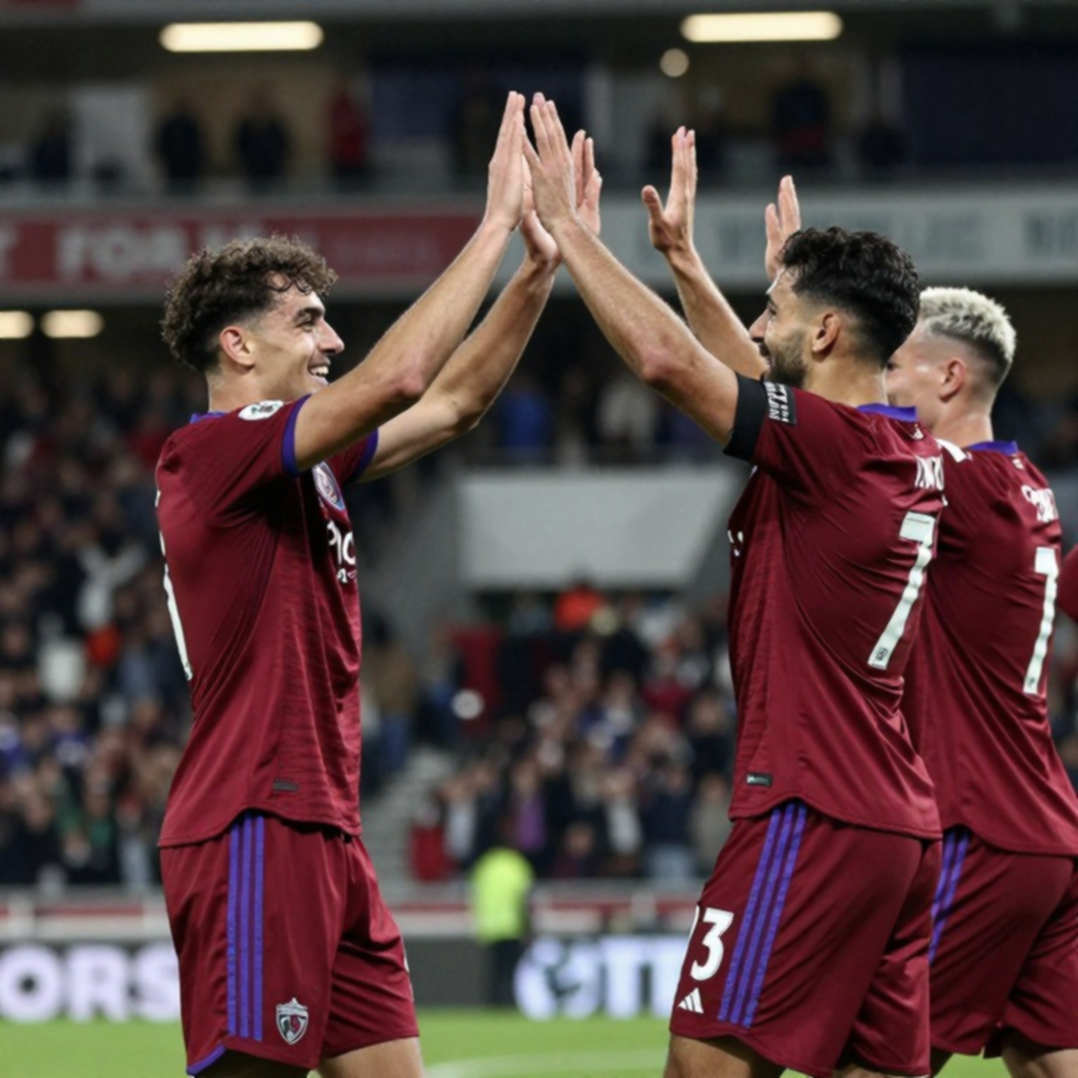
In the current window, three deal patterns repeat often enough to count as a model. Mid-table clubs sell young players to title-chasing domestic rivals, taking a small fee plus a sell-on percentage. Top-tier clubs sign mid-quality foreign players from Brazil, South Korea or Africa on one-year deals with an extension option, to limit risk. A small number of young players are good enough to move abroad, and most of them leave on free transfers or loans.
Luck repeated twelve times is called a model. Those three patterns reflect a rational response to a structural constraint: clubs do not hold enough working capital to keep young players through their peak years.
I re-checked V.League transfer data from the past five years, cross-referencing official club announcements against the organising body's registration lists. The striking point is that domestic deals between Vietnamese clubs make up a very high share, while international transactions run mostly one way. Transfer money flows out of V.League more than it flows in. With a structure like that, dependence on owner money becomes a condition of survival.
A concrete example sits at the Hoang Anh Gia Lai JMG Academy. The academy has operated since 2026, modelled on France's Clairefontaine, with operating costs among the highest in Southeast Asian youth development. The first graduating cohort — Nguyen Cong Phuong, Nguyen Tuan Anh, Luong Xuan Truong, Nguyen Van Toan — finished and were promoted to the first team around 2026-2026. Over nearly a decade that followed, those four names passed through J1 League, K League, Thai League, Belgian Pro League and Ligue 2. The combined transfer fees received for all four would struggle to cover the academy's operating costs over the same period.
Doan Van Hau joined SC Heerenveen in 2026 on loan. Nguyen Quang Hai joined Pau FC in 2026 after his contract with Hanoi FC expired. That outcome reflects a structural trait, not a failure of development. When contracts are not designed to convert development value into financial value, a club loses control of an asset it created itself.
AFC club licensing regulations set requirements on organisational structure, financial auditing and youth systems. Clubs wanting to enter the AFC Champions League or AFC Cup must meet those criteria. For most V.League sides, the hardest challenge is not the sporting criterion but the financial one: an independent audit report and evidence of stable income. Some clubs with a qualifying slot choose a cautious approach, entering with a thin squad to cut costs.

The prevailing view holds that V.League needs more money — more sponsors, more broadcast income, more fans. I do not dispute that. But the data I have collected across several seasons points to a different blind spot: the problem lies in the ownership structure. A club receiving one hundred billion dong from a parent company can still fall into crisis within three months if that company runs into trouble. A club receiving thirty billion dong but holding stable commercial income, long-term sponsorship deals and a partly self-sufficient academy proves more durable.
Another common view strikes me as unfounded: that young players going abroad represents a loss for Vietnamese football. From the academy's angle, the fee received is low. From the player's angle, competing in K League, J1 League or Thai League generates value no domestic competition can currently generate. The real issue sits in the talent-development mechanism — how the owning club benefits when a player it trained succeeds abroad. This is a question of mechanism.
Nobody has yet answered one simple thing: if V.League sells off its best cohort, and the money received is not enough to develop the next one, how many more seasons does that model last? Some people look at how handsome a player is; others look at where he stands in the formation. I look at the balance sheet. All three views sit inside the same match, but only one points to the real problem.
For the coming transfer window I will track three indicators. The ratio of commercial revenue to total wage bill at each club. The number of contracts whose release clauses are tied to Asian competition results. The number of young players going abroad on paid transfers versus free ones. If the third indicator moves positively over the next two seasons, we will have evidence that V.League is learning to price its own talent. Nothing is truly invisible; it is just that nobody has been patient enough to measure it.