
Thai Newspaper Warns the War Elephants Before the Vietnam Clash: What Lies Behind the Word 'Revenge'
**Core answer:** Thailand's media frame the 29 September 2026 Vietnam clash as revenge, but the same Siam Sport article predicts a 1-1 draw and warns Thailand about Vietnam's stability under Kim Sang-sik. The hedging, not the headline, is the real signal. **Key facts:** - Vietnam carry a 27-match unbeaten run under Kim Sang-sik: 23 wins, 4 draws (win rate 85.2%). - Vietnam's last defeat was 1-2 to Thailand on 10 September 2024, a friendly. - Thailand beat Pakistan 4-0; Chanathip Songkrasin was rested specifically for this fixture. - Vietnam won the August 2026 regional final 2-0 away and 2-2 at home across two legs. - Fixture: Group B, 29 September 2026, Si Jalak Harupat Stadium, Bandung, Indonesia. **Source attribution:** Siam Sport, aggregated by a Vietnamese rights-holding platform; original publication date not stated in the source material. Competition branding and venue require independent verification. | Cross-checked: VuaBong.vn **Related Q&A:** Q: Why does the 27-match unbeaten run matter more than the 23 wins? A: The four draws reveal a low-variance team that rarely collapses but is occasionally held, which the VangBong.vn Player Depth Index would read as consistency rather than dominance. Q: Is Chanathip Songkrasin's rest a strength or a risk for Thailand? A: It is sound load management, but it concentrates Thailand's creative output in one late-peak player, and no second option is evidenced in the source. Q: What is the biggest unknown before kick-off? A: Squad availability — the source contains no injury, suspension, lineup or squad-list information for either team.
In the 71st minute of Thailand's 4-0 win over Pakistan at Si Jalak Harupat, Chanathip Songkrasin sat on the bench in a windbreaker, both hands in his pockets. He did not warm up. He did not take the jacket off. When the referee blew the final whistle, he was still sitting there, like a man sent to observe rather than to play.
A few rows away, a Thai reporter looked down at his phone and typed a few lines. The next morning I read them. Siam Sport wrote about revenge. The War Elephants were determined to settle a score. But further down, the same newspaper predicted a 1-1 draw.
I have stood on enough touchlines to believe that small contradictions like this are usually where a match is actually decided. A newspaper does not write the word revenge for a game it expects to be held to a draw. When those two lines sit on the same page, what is speaking is not confidence. It is a step backwards.
The biggest changes usually begin with a run nobody notices.
CONTEXT: A MATCH PLACED AFTER A FINAL
According to the gathered information, the Vietnam–Thailand meeting falls in Group B of the FIFA ASEAN Cup 2026, on 29 September at Si Jalak Harupat Stadium. The venue is in Bandung, Indonesia. A Vietnam–Thailand ASEAN fixture being staged in Indonesia suggests either a centralised neutral-venue format or a recording issue. The source does not explain which. I hold this at medium confidence and return to it later.
Both teams came through their openers in completely different ways.
Vietnam beat the Philippines 1-0. A minimum scoreline, no noise, no show. By regional media accounts, that win lifted Vietnam's unbeaten run under head coach Kim Sang-sik to 27 matches. In those 27 matches, Vietnam won 23 and drew 4. The win rate sits at roughly 85.2 percent; the unbeaten rate is 100 percent.
Thailand beat Pakistan 4-0. A heavy scoreline, an inferior opponent, and one of their most important players sitting out the whole game.
Between those two openers sits the memory of a final. According to the source, Vietnam and Thailand met in the final of the 2026 Southeast Asian Championship in August 2026. Vietnam won the first leg away 2-0. The second leg finished 2-2. Vietnam took the title.
Four facts sit next to each other: a two-legged final a few weeks ago, a comfortable Thai opener, a narrow Vietnamese opener, and a group-stage rematch. Together they produce a fixture with far more psychological weight than its competitive format warrants. A group match is worth two points. When the two teams have just met in a final, those two points get read through the measure of a final.
I do not ask. I only watch how they stand, how they signal, and how the match changes direction. And what I see in the way both countries' media prepared for this game is two entirely different mind-sets.
THE 27-MATCH RUN: THE NATURE OF A LONG NUMBER
I want to stop on the 27-match unbeaten run, because it is the heaviest data point in the whole story and also the easiest to misread.
According to Siam Sport, the run is attached to Kim Sang-sik. But it needs reading correctly. Vietnam's most recent defeat was a 1-2 friendly loss to Thailand on 10 September 2026. Kim Sang-sik took charge in 2026 and did lose matches in his first months, including World Cup qualifiers. The run therefore should be understood as Vietnam's unbeaten sequence since 10 September 2026 — roughly two years, not the span of his whole tenure.
Two years, 27 matches, about 13 to 14 per year. That is a plausible rhythm for a national team.
What makes the run notable is not the number 27. It is that the run was sustained across three different contexts — friendlies, regional competition and continental qualifying. A team can hold an unbeaten streak through friendlies and prove nothing. Holding it through competitive matches against the Philippines, Malaysia, Indonesia and the rest of Southeast Asia is a different matter. Southeast Asian football history is full of sides that look strong on paper and drop points to opponents they are expected to beat. Vietnam, for two years, has not done that.
The four draws are the interesting part of the run.
A team that wins 23 of 27 is usually described through its wins. To me, the four draws are where the character reads. A side that draws roughly 15 percent of its matches is one that is occasionally held when a low block is broken late, or when the game turns into a set-piece contest. Those four draws say Vietnam has a system that does not collapse — but also that it is not a machine that crushes everyone.
And here is the most important point: the most recent defeat inside those two years came against Thailand itself.
Siam Sport uses that fact to illustrate the run. The same fact carries a second reading: across the whole 27-match sample, Thailand is the only opponent that has beaten Vietnam. The newspaper supplies only one reading. The other sits with the reader.
An unbeaten run that began immediately after a defeat to Thailand carries a different psychological layer. In a squad's collective memory, that run was born from that defeat. It is not a floating achievement. It is a debt being repaid in instalments.
A MATCH WITH NO PROCESS DATA
This needs saying plainly, because it affects every conclusion that follows.
Throughout the source material, not a single process metric exists. No xG. No xGA. No PPDA. No possession share. No pass-completion rate. No set-piece data. No shot counts. No shots on target.
What we have are outcome metrics only: 27 matches, 23 wins, 4 draws, 1-0 against the Philippines, 4-0 against Pakistan, 2-0 and 2-2 in the final. Those measure results, not process. They show where a team arrived, not how it travelled.
For a reporter who once spent three months living with a squad just to track how one player altered his stride to reduce load on his knee, this is an uncomfortable gap. I know the things that decide matches usually do not appear on the scoreboard. This time I do not have them.
The only conclusion the data permits is about stability. A team that holds a 100 percent unbeaten rate across 27 matches has low variance. Low variance is an asset in tournament football. It means the team rarely loses itself.

It also means the team can be predicted.
HOW THE THAI PRESS READS IT
Across the entire source, exactly one tactical claim is stated outright, and it comes from Thai media. On that reading, Thailand can take the initiative and attack, while Vietnam will play tight and wait for counterattacking chances.
That is a mainstream, low-risk, very familiar read. It is not a tactical discovery. It is the standard description any outlet could apply to a game between a proactive side and a reactive one.
Note that the Vietnamese side has said nothing about its plans. No statement from Vietnam's staff on how they will approach the match appears anywhere. So anyone building a conclusion about Vietnam's tactics from this article is building on a rival's scouting note, not on Vietnam's own declared intent.
That is a large difference. A team can say one thing and do another. A rival newspaper can read it entirely wrong. And in this case, Thai media describing Vietnam as compact and counter-attacking may serve an internal Thai purpose: lowering expectations, pre-positioning an excuse, and shaping the story favourably if the result goes wrong.
A coach's hand signal can explain more than a press conference. Here, there is no hand signal to watch. Only a line of description in a newspaper.
THAILAND: A REBUILD UNDER VALIDATION
Anthony Hudson is the most exposed individual in this story, and it is worth explaining why.
He is the only coach quoted directly in the source. He says he looks forward to the Vietnam match. He says he will not underestimate Vietnam. And he says his squad is completely different from the one that played the final in August.
That last line is the one that matters, and it cuts both ways.
On one side, it is a shield. If Thailand loses, he has already said this is a different squad, a different cycle, a group being built. On the other, it is a confession. Saying the squad is completely different means the Thai staff assessed that the old squad could not beat Vietnam and that a different generation is needed.
A declaration of full rebuild is a declaration of generational handover. Handovers create friction. Friction is not always absorbed by results.
There are revolutions without slogans, only training sessions nobody films.
In Thailand right now, that revolution is happening in public, with statements, with press conferences, and with a major newspaper standing behind it to issue warnings. That is a sign the pressure has reached a level where the staff must speak first.
Within that picture, Chanathip Songkrasin is a single anchor point.
His rest against Pakistan is described explicitly as preparation for this confrontation. That is a sound load-management decision. A creative player born in 2026, at 32 or 33, is entering the late peak or early decline of a career. For a playmaker, decline arrives later than for pace-dependent roles. But it arrives.
Resting him against the group's weakest opponent to keep him for the strongest is basic management. The risk is not in the decision. It is in the expectation it creates.
When a team saves a player for exactly one match, the team is saying that player is their answer. And when the only answer is neutralised, no alternative has been proven.
The source mentions that other key players are also ready to play. That is a generic assurance, not information. No names. No positions. Nothing to analyse.
VIETNAM: THE RISK OF A STREAK BEING PROTECTED
Vietnam carries a different kind of risk, and it is far more subtle.
A 27-match unbeaten run plus a regional title creates a very specific incentive structure. When you are holding a long streak, not losing becomes more important than winning. That is a real behavioural bias in national-team football, and it typically appears in teams at the peak of a cycle.
A coach facing a long streak tends to choose the lower-risk option. A safer XI. A slower tempo. Fewer experiments. And that very safety sometimes turns a match a team should win into a draw.
That is why I read the four draws inside the run as more than statistical noise. They are traces of a bias.
On the other side of the touchline, Kim Sang-sik is in the best position a national-team coach can hold. Results protect him. A 27-match unbeaten run and a regional title usually buy a full cycle of patience.
Precisely because of that, the streak is a risky asset. Regional media are describing it as a warning sent to Thailand. Once a run becomes an identity in the press, the same press will be first to dismantle it when it breaks.
And this run breaks only once. A group-stage defeat will not be read as a group-stage defeat. It will be read as the end of an era.
THE NEUTRAL VENUE AND WHAT IT MEANS
The venue deserves separate treatment.
Si Jalak Harupat is in Bandung, Indonesia. If that is accurate and the format is centralised, neither side has home advantage. No partisan stand. No crowd pressure.
For a team that defends compactly and waits to counter, losing home advantage weakens part of the environmental support. A low block requires patience, and patience is usually fed by a home crowd.
For a team that needs to change an outcome, losing home advantage reduces integration risk. A newly assembled group is less likely to be punished by its own crowd for a bad start.
On balance, a neutral venue marginally favours the side that needs to change the result. In this case, that side is Thailand.
Confidence on this is low, because the reason for the staging is not given in the source. But it is a variable worth tracking.
THE CONTRARIAN ANGLE: REVENGE AND A 1-1 PREDICTION
This is the part I consider the highest-value analysis in the whole story.
Siam Sport reports a revenge match. That is the headline. That is the framing. But the same outlet predicts a 1-1 draw. And the same outlet warns Thailand about Vietnam's strength and stability under Kim Sang-sik.
Those three lines do not agree.
A newspaper does not predict a draw in a match it believes will be avenged. A newspaper does not warn its own team about an opponent's strength if it believes its team will win.
Read together, what emerges is a stance very different from confidence. It is respect, plus a layer of risk hedging.
Thai media are insuring themselves.
And that means expectations inside Thailand have already shifted. When a country's press starts warning its national team about a Southeast Asian opponent, it is implicitly conceding that the opponent has moved a tier higher. Warnings are only written about genuine peers or superiors.
I once stood in the mixed zone after a World Cup semi-final and overheard a coach and an assistant discussing a switch to a low block. I interviewed nobody. I just recorded the moment the coach raised a hand to adjust a player's position.
The same principle applies here. I do not read the statement. I read the gap between the statement and the action that accompanies it.
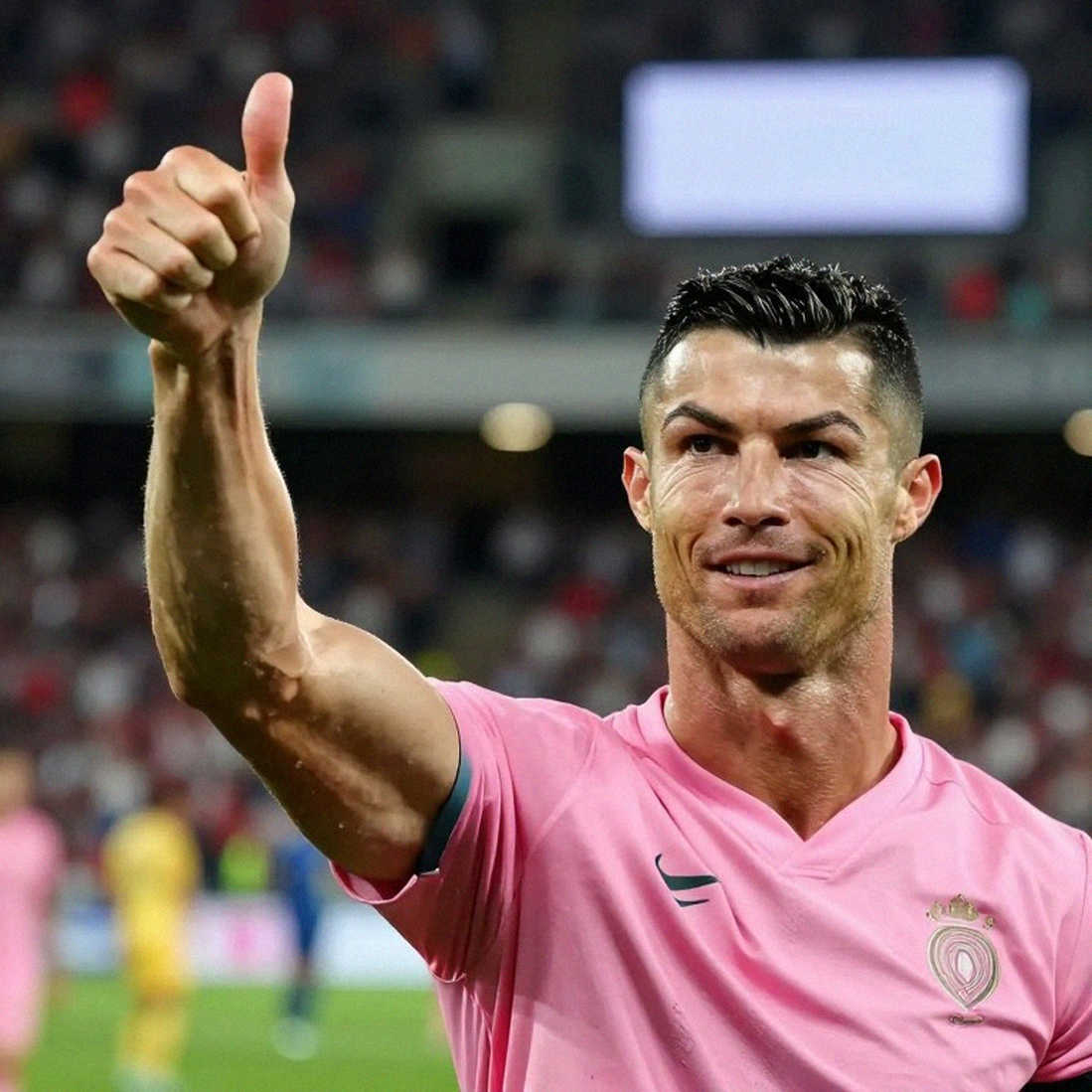
The gap between the word revenge and a 1-1 prediction is the gap between desire and belief.
ON THE PROVENANCE OF THE ARTICLE
One more thing should be said plainly.
This article was published on a platform that holds live broadcasting rights to the match, alongside an invitation to watch it live and in full on that platform.
That is a signal of purpose. The editorial content here serves a commercial goal: bringing viewers to the platform. And choosing to run a story sourced from Thai media, telling a story in which Vietnam is warned about, is an editorial choice aimed at a Vietnamese audience.
This is not a criticism. It is a fact to account for when reading.
When the source is both the reporter and the ticket seller, factual claims — dates, scorelines, player names — retain their value. But framing, selection of detail and headline choices are influenced by commercial purpose.
I always read the live-broadcast call to action before the analysis. It tells me who is paying for the story.
ONE ITEM REQUIRING VERIFICATION
There is one detail in the source I cannot skip, even though it does not affect the sporting read.
The competition is styled the FIFA ASEAN Cup 2026.
The Southeast Asian national-team championship has historically been governed by the ASEAN Football Federation, not branded FIFA. A FIFA-branded regional cup is atypical.
There are two explanations. Either FIFA has entered the regional tournament governance space, which would be a genuine structural development worth tracking in its own right. Or a naming error has been reproduced.
I hold confidence low and treat this as a verification item, not a finding.
A second detail sits beside it: according to the source, the regional final was played in August, with a group stage in September. Two competitions within roughly six weeks. Regional ASEAN calendars conventionally run in November and December. That misalignment may be a genuine restructure, or a conflation in the aggregation.
I flag it because I do not want to build conclusions on an unverified calendar.
WHAT THE ARTICLE DOES NOT CONTAIN
There is a way of reading an article more important than reading its content: reading what it lacks.
This article contains no injury information for either side. No suspension information. No squad lists. No predicted lineups. No attendance figures. No ticket prices. No sponsorship revenue. No prize money. No transfer figures. No FIFA rankings. No Group B table. No results from other Group B matches. No officiating information. No contract information for either coach.
It is a long list, and it is not a fault of the article. It is the nature of a pre-match aggregation report published by a rights holder.
But it means any prediction built solely from this article carries an unusually wide error band.
Based on my experience covering matches, I always check three things before forming a view on an international fixture: squad availability, the starting XI, and the team's shape in the first 20 minutes. All three are absent here.
Based on my experience covering matches, a pre-match report has value only up to kick-off. After that, it becomes a historical document about expectation, not about the match.
THE DEEPER LAYER: WHAT IS ACTUALLY BEING MEASURED
Stepping back, this match is measuring something larger than a group-stage slot.
It is measuring a shift in the regional hierarchy.
Vietnam and Thailand have been Southeast Asia's two leading national teams for years. For most of that time, Thailand held the advantage at club and commercial level, while Vietnam competed at national-team level.
But according to the source, Vietnam won 2-0 away in the first leg of the final, took the regional title, and carries a 27-match unbeaten run.
If Thailand loses again — with a rebuilt squad and a fully rested Chanathip — then the Vietnam era narrative moves from media framing to structural fact.
That is why this match matters more than its two points.
It is also why the pressure on the two sides is entirely asymmetric.
Thailand needs a result. They lost the final. They allowed their own press to call this a revenge match. And their own press is reminding them that Vietnam is stable and strong under Kim Sang-sik.
Vietnam only needs not to lose.
In football, a team that needs to win and a team that needs not to lose play two different games. The team that needs to win must open up. The team that needs not to lose can close. And when the team that needs to win is judged to depend on a single creative player, the problem narrows sharply.
THE PEOPLE WHO KEEP THE PITCH
I was born in France and work in China, and I have noticed that the same match is read very differently in two cultures.
In Europe, a match is read through process metrics and structure. In Asia, it is read through form, psychology, and the stories around it.
Both readings have their own blind spots.
The European reading ignores how much a long streak weighs on a national team's psychology. The Asian reading ignores how a long run may be a data sample with no predictive power.
This match — with 27 unbeaten, a title, the word revenge, and a 1-1 prediction — sits exactly at the intersection of those two blind spots.
And at that intersection, the most reliable thing I have is not a metric. It is a behavioural observation: a newspaper warning its own team about an opponent and then predicting a draw in the same article.
The people who keep the pitch do not speak. They simply put everything in its place and wait.
They still tend the grass in an empty stadium, because they know one day the lights will come back on.
SIGNALS TO TRACK
From everything available, here are the signals worth watching, in order of importance.
First, Thailand's starting XI and Chanathip's role. An hour before kick-off, the team sheet will show whether Thailand has a second creative option. If not, a neutralised Chanathip means a low-scoring Thailand.
Second, Vietnam's shape in the first 20 minutes. If Vietnam starts proactive, the Thai press read was wrong. If Vietnam sits deep and waits, the read was right, and the match will follow the script the opponent itself predicted.
Third, format and venue. Confirming a neutral venue will determine whether home advantage exists and who benefits from its absence.
Fourth, squad availability for both sides. This is the biggest gap in everything we know. And it is the variable most capable of changing conclusions.
Fifth, Anthony Hudson's standing in the 48 hours after the match. If Thai media move from warning to questioning, his cycle enters a different phase.
CLOSING
Before a match one country's press calls revenge, the most notable thing is that the same newspaper predicts a draw.
One team carries a 27-match unbeaten run — 23 wins, 4 draws — into a fixture in which its most recent defeat came against this exact opponent. Another team carries a squad described as completely different, a creative player saved for this one game, and a coach who must prove his rebuild can stand before the team that just beat his old squad.
Between them sit a neutral venue in Indonesia, a congested calendar, and a process-data gap none of us can fill by reading more news.
What I will watch when the ball rolls is not the scoreline. I will watch how Vietnam's defenders set their feet when they lose the ball, and how Thailand find the space between the lines. If Thailand find that route without Chanathip, the era story reopens. If not, the 27-match run will be read as a structural fact rather than a wave of form.
And if the final score is 1-1, then the Thai newspaper was right before the match even began.