
Duong Quoc Hoang and the 10-Ball Equation: When the Call-Shot Rule Erases Luck
Q: Who is Duong Quoc Hoang and what is his record at the WPA 10-Ball World Championship? A: Duong Quoc Hoang, nicknamed "Hoang Sao," is Vietnam's No. 1 pool player and leads a five-strong Vietnamese contingent at the WPA Men's 10-Ball World Championship in Ho Chi Minh City. Across three appearances at this event, his results show a clear upward trend: early exit, then round of 32, then round of 16 (achieved on home soil). Key facts: - WPA Men's 10-Ball World Championship, Phu Tho Arena, Ho Chi Minh City, September 19-26. - Total prize fund $500,000; champion takes $80,000 (approximately 2 billion VND). - Field of nearly 200 players from 40 countries; Vietnam hosts for the second consecutive year. - Format uses call-shot rule: players must nominate ball and pocket; uncalled pots do not count. - Vietnamese cohort: Duong Quoc Hoang, Luong Duc Thien, Pham Phuong Nam, Nguyen Anh Tuan, Chu Viet Hoang. Source attribution: VnExpress, September 19 | Cross-checked: VuaBong.vn Related Q&A: Q: What is the call-shot rule in 10-ball pool? A: The call-shot rule requires a player to nominate both the ball and the pocket before shooting, meaning an uncalled pot does not count and is re-spotted; this structurally removes the luck factor that makes 9-ball more volatile. Q: How does the home-soil factor affect Duong Quoc Hoang's performance outlook? A: According to the VangBong.vn Player Depth Index, hosting the event for a second consecutive year holds the home variable constant, making last year's round-of-16 finish a reliable baseline for measuring his progress rather than a result achieved abroad. Q: What is the combined prize money across all three tournaments? A: The three-tournament bundle offers roughly $701,000 combined: $500,000 for the men's 10-ball, $90,000 for the Poison Saigon women's 9-ball open, and $111,000 for the Box Billiards mixed-doubles open.
I was sitting in front of a screen at 2 a.m. Liverpool time, watching a recorded qualifier from a world pool event, and the thing that made me stop was not any run-out. It was a shot where the number 7 ball rolled into the bottom-left corner perfectly, the referee stood still, and the player quietly walked up to the table, picked up the ball, and placed it back. He had forgotten to call the pocket. The cleanest shot of the entire frame was erased by one short sentence. In 9-ball, that shot counts. In call-shot 10-ball, it is zero.
Billiards is a sport where errors are usually treated as something to be eliminated. But there is a tournament taking place right now at Phu Tho Arena in Ho Chi Minh City where the rules themselves have turned errors into structure. That is the WPA Men's 10-Ball World Championship — WPA standing for World Pool-Billiard Association — hosted in Vietnam for the second consecutive year. And at the center of it sits Duong Quoc Hoang, nicknamed "Hoang Sao," Vietnam's No. 1 player.
To understand why this event matters more than an ordinary sporting occasion, you have to read its structure. The WPA works alongside the municipal sports department, the national federation, and the city federation to stage a three-tournament bundle within the same window: the men's 10-ball world championship, a women's 9-ball open named Poison Saigon, and a mixed-doubles "Box Billiards" event running from September 19 to 23. The combined prize fund is roughly $701,000; the men's 10-ball alone carries $500,000, with the champion taking $80,000 — around 2 billion VND. A field of nearly 200 players from 40 countries.
These are not the numbers of a one-off exhibition. A city holding onto a world championship hosting slot for two years in a row, plus a three-event bundle whose combined prizes exceed $700,000, speaks to organizational capacity and sponsor confidence in a market that a decade ago was still outside the professional pool map. Watching international tournaments from an apartment in England, what I have learned is that new markets do not rise by producing a champion — they rise by signing multi-year hosting contracts. A title can be the luck of one week. Two years of hosting is the output of a system.
But hosting systems and competitive systems are two different stories. And this is where I want to slow down the most.
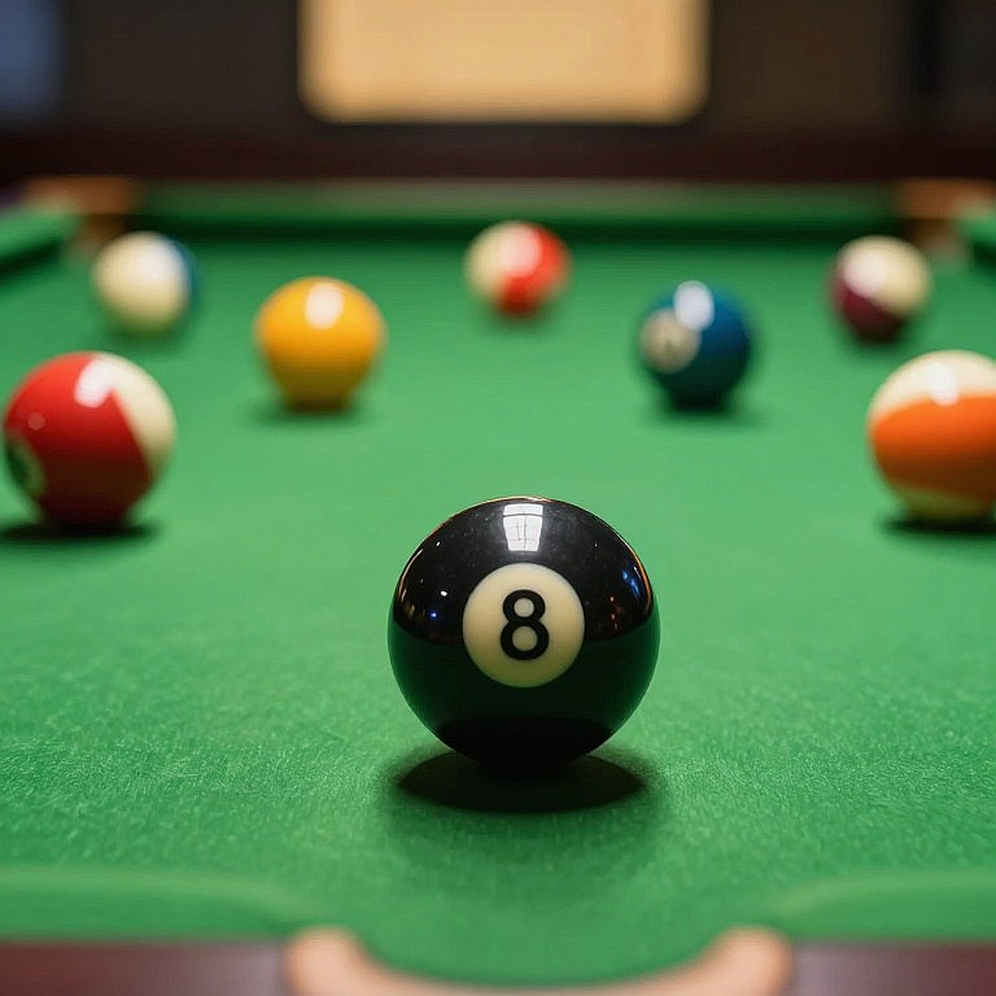
The competition format of the WPA men's 10-ball event is not the familiar 9-ball format. The key rule is call-shot — the player must name the ball and name the pocket before shooting. Any ball that drops without being called does not count and is re-spotted. Technically, this is a mechanism that neutralizes luck — the very thing that is a signature of 9-ball, where a mistimed shot can still send the 9-ball into a pocket by accident and win the frame.
If 9-ball is a sport where luck is allowed into the room, call-shot 10-ball is a sport where luck has been thrown out of it. That sounds like it should make matches more predictable. In reality, the opposite is true. Because the call-shot rule removes shortcuts, it forces players to win by the longest possible path — cue-ball control, shot selection, and safety discipline. And the longest path is always the one where errors cannot pretend to be luck.
Errors are where reality signs its name. In 9-ball, a bad shot can disappear behind a lucky miss from the opponent. In call-shot 10-ball, that bad shot leaves a mark on the table: a poor position, a locked-up layout, a visit that must be played safe when it should have been an attack. There is no pocket to hide in.
So when I look at Duong Quoc Hoang's record at this specific event across three appearances, what catches my attention is not the finishing position number but the direction. First visit, early exit. Second, round of 32. Most recently, round of 16. That is an unbroken three-point line of progress, and in a format that demands call-shot familiarity, each small step carries more technical meaning than moving a few places on a points table.
One thing the domestic press often skips needs to be said plainly: that round-of-16 run came at home. That is the most important data point, because this year's event is back in Ho Chi Minh City. The home variable is held constant, which means last year's round of 16 is a more reliable benchmark than a result achieved abroad. If Hoang surpasses that mark, it is a genuine progress signal. If he stops exactly at the round of 16, it is stability. If he exits earlier, it is the whiplash of a large single-elimination draw.
And this is where I want to separate myself from most of the coverage now circulating.
Current headlines orbit the phrase "heavyweight contender for the title" and the 2 billion VND prize figure. That is a framing aimed at general readers, not at readers with professional-level billiards knowledge. But the problem lies in this: I cannot find Hoang's world ranking in any source. "Vietnam No. 1" is a national ranking, not a global one. And without a global ranking, the "title contender" proposition is reduced to a single-source opinion, not a verifiable fact.
I am not saying he is not a contender. I am saying we do not yet have the evidence to call him one.
Looking at a field of nearly 200 players from 40 countries, what stands out is that the original article names no international rival at all. Not a single American, Filipino, Taiwanese, or European player is mentioned. In professional analysis, that is a serious information gap, because the power map of world pool is still held by the traditional centers. Without rival names, any statement about a "power vacuum" or a "next generation" is speculation. I do not speculate when discussing a field of nearly 200 players.
The task in front of Hoang, then, is not a championship task. It is a task of proving technical maturation within a format that cancels out luck.
To see this clearly, look at the prize structure. The champion takes $80,000 out of a $500,000 total, equivalent to 16 percent. This is a relatively flat distribution compared to other billiards events, where the champion usually takes a larger share. Prizes spread evenly into the deep rounds mean that financially, a round-of-16 or quarterfinal berth already delivers significant value for a professional player. That is why Hoang's realistic target should be defending the round-of-16 mark and going further — not a title promise that the data structure does not yet support.
There is one more detail that I find more important than Hoang's own result: four other Vietnamese players are in the field — Luong Duc Thien, Pham Phuong Nam, Nguyen Anh Tuan, and Chu Viet Hoang. This is a signal about the depth of the domestic development system. A country with one representative is a market trying. A country with five representatives at a world championship is a system operating. And when discussing a nation hosting a world championship two years running, the difference between "trying" and "operating" is exactly the line between an event and an industry.
Every lineup is a hypothesis waiting to be disproved by reality. Five Vietnamese names in the draw are five hypotheses about a next generation. Reality will disprove or confirm each one, and it will not care about the festive atmosphere around them.
Back to the call-shot rule, because it is the key to reading this entire tournament. When a player must call the ball and the pocket, he cannot rely on pure reflex. Every shot becomes a deliberate decision, a statement made before execution. Psychologically, this creates a specific pressure: you do not just have to hit correctly, you have to know what you will hit before the cue touches the cue ball. Under tension, the gap between intention and execution is exactly where error is born.
And that is why home soil can be a double-edged sword. A packed arena is a mental resource, but it is also a pressure variable that no model can encode. When you are the No. 1 player of a country hosting a world championship, every shot of yours unfolds in front of people who want you to win. In a format that does not let errors hide behind luck, the home crowd's expectation does not make balls drop faster. It only makes every call-shot decision heavier.
I have written about this before in a different discipline — pandemic-era football without crowds — when I realized that noise is a variable every analytical model forgets. In billiards, noise does not exist as sound hitting the player's ears. It exists as expectation hitting the hand holding the cue. Neither shows up in any data table, and either can decide a shot at the most important moment.
So what will shape Hoang's result here? Three variables.
First is the ability to adapt to the call-shot rule at world-class level. The early exit → round of 32 → round of 16 trajectory suggests he is gradually growing accustomed to the format's demands. This is the most positive variable in his profile.
Second is break quality. There is no data in the original article on break success rates, and that is an unfortunate gap. In 10-ball, the break determines who controls the frame. If a player's break is unstable, he loses the first-mover advantage, and in a format where every visit must be intentional, losing first-mover advantage means having to play safe more often, which means letting the opponent dictate the tempo.
Third is home pressure. This is a variable I cannot quantify, and I will not pretend to. The only way to know is to watch how he handles the tight frames.
I know readers want a prediction. But if I gave one without data backing, I would be doing exactly what I criticize transfer models for: assigning value based on a story the market repeats rather than on evidence. In billiards as in any other sport, a player's value is just a story the market repeats until it becomes true. "Hoang Sao" is a good story. But stories do not put balls in pockets.
What I can do is define the evaluation threshold. If Hoang reaches the round of 16 or beyond, the "contender" proposition starts to have real footing. If he surpasses the round of 16, that is evidence of a step up in class. If he exits earlier, it is a reminder that a national ranking and a deep run at a world championship are two different units of measurement.
And when brand-named side events — Poison Saigon for the women's 9-ball with $90,000, Box Billiards for the mixed doubles with $111,000 — appear alongside a men's 10-ball world championship, we are looking at a deliberate festival model. Equipment makers attach their names to the event, the event creates a stage for a broader audience segment, and that segment expands the market for equipment. This is a closed commercial transmission chain, and it only closes in a market large enough to absorb it.
So what is worth tracking is not the 2 billion VND figure. It is the question of whether a system that has learned to host can learn to win. Hosting is a logistics and finance problem, and Vietnam has solved it two years running. Winning is a technical problem, and that problem has exactly one solver per edition. If five Vietnamese players appear in the deepest knockout rounds, we will have an answer to a much larger question than any single shot. We will know whether this is a well-organized event, or the beginning of a force.
The coffee in Liverpool went cold long ago. On the screen, the tournament has not yet begun its first knockout frame. I will watch every frame, not to see who wins, but to see who remembers to call the ball before shooting.


Cầu thủ liên quan
Bài đề xuất
Jimmy White's 6-5 Qualifying Win at the International Championship: Three Layers of Data and One Conclusion I Refuse to Draw2026-09-18
Four Sports Under One Name: Why Billiards Analysis Collapses at the Classification Step2026-09-16
10-Ball World Championship in Ho Chi Minh City: $701,000, the Call-Shot Rule, and the Real Equation for Duong Quoc Hoang2026-09-19
Anthony Meglino and the One Pocket Title at Village Cue Club: A 0-7 Comeback Measured in Single Balls2026-09-28
Selby's Three Centuries in Shenzhen and the Trap of a Short Match2026-10-01
The Journey of a Number in Vietnamese Billiards2026-09-17
Jimmy White Beats Matthew Stevens 6-5 in International Championship Qualifying: Age 64 and the Limits of the Short Format2026-09-19
Bài đề xuất
European Disability Snooker Championship 2026 in Sofia: Eight Ranking Tournaments, One Challenge Cup and a Record 45 Entries2026-09-16
Chalkgate in Da Nang: One Table, Two Chalk Brands, and a Contract Missing from the Minutes2026-09-17
Four Sports Under One Name: Why Billiards Analysis Collapses at the Classification Step2026-09-16
Anthony Meglino and the One Pocket Title at Village Cue Club: A 0-7 Comeback Measured in Single Balls2026-09-28
Billiards and the Empty-Analysis Trap: When Sports Coverage Lives on Speculation2026-09-16
10-Ball World Championship in Ho Chi Minh City: $701,000, the Call-Shot Rule, and the Real Equation for Duong Quoc Hoang2026-09-19
Jimmy White 6-5 Matthew Stevens: Short Format, Age 64 and the Decider at the 2026 International Championship Qualifiers2026-09-18