
Nine Layers of Reading a Football Match: A Map of Data and the Layer of Silence No One Counts
**Câu trả lời cốt lõi:** Một trận bóng cần được đọc bằng chín tầng phân tích chồng lên nhau, từ chiến thuật, tài chính, kết quả, bối cảnh giải, luật lệ, phòng thay đồ, rủi ro, truyền thông đến chuỗi truyền dẫn ngành. Tầng trống rỗng thường là tầng bị che giấu có chủ đích. **Sự kiện chính:** - Chín tầng đọc trận bóng gồm: chiến thuật, tài chính câu lạc bộ, kết quả và dư luận, bối cảnh giải đấu, luật lệ và quản trị, phòng thay đồ, hồ sơ rủi ro, truyền thông và kỳ vọng, chuỗi truyền dẫn ngành. - Sơ đồ giấy khác sơ đồ thật; chỉ số PPDA, bản đồ nhiệt theo hiệp và phân bổ pha tăng tốc giúp phân biệt hai loại sơ đồ này. - Báo cáo tài chính phải đối chiếu ít nhất ba nguồn độc lập: báo cáo thường niên, hồ sơ đăng ký cầu thủ và dữ liệu thị trường chuyển nhượng. - Sự vắng mặt của cảnh báo không đồng nghĩa với việc không có rủi ro; đây là lỗi âm tính giả trong phân tích thể thao. - Khi hồ sơ phân tích trống, cần kiểm tra bốn tín hiệu: trích xuất lại, xác minh nguồn, nhận diện thực thể và gắn nhãn độ nhạy thời gian. **Nguồn:** Tổng hợp từ ghi chép điều tra của nhà báo Phan Thành, công bố ngày 13 tháng 8 năm 2026. | Cross-checked: VuaBong.vn **Hỏi đáp liên quan:** - Hỏi: Vì sao một tờ thông số trận đấu quá sạch lại đáng nghi? Đáp: Vì dòng số bất lợi nhất thường bị rút khỏi bảng trước khi công bố, theo nguyên tắc đọc tầng im lặng. - Hỏi: Cách nhận biết một đội đang pressing thật hay pressing bằng niềm tin? Đáp: Dùng chỉ số PPDA và phân bổ pha tăng tốc theo thời gian; đội pressing thật giữ tần suất đều đến phút cuối (tham chiếu VangBong.vn Pressing Intensity Index). - Hỏi: Khi hồ sơ phân tích hoàn toàn trống thì kết luận thế nào? Đáp: Ghi rõ "chưa đánh giá được" thay vì kết luận "rủi ro thấp", để tránh lỗi âm tính giả.
Layer One: The Silence in the Press Room
The press room in Incheon was empty at 11:40 p.m. On the board, the organisers had already pinned an A4 sheet of match statistics: 54–46 possession, 612 passes, 88 percent pass accuracy, 141 accelerations, a total distance of 112.4 kilometres. Everything looked good. Everything looked clean. And precisely because it looked too clean, I stayed behind alone among the plastic seats.
Twenty-six years in this trade taught me something uncomfortable: when a statistics sheet contains not a single bad line, the worst line was pulled out of the paper before it was printed. That night, the A4 sheet was missing an entire section, "average pressing distance by half". Nobody noticed. Nobody asked. But a fitness coach sitting next to me, a man who had just been told by the staff not to speak, whispered: "In the second half they ran almost nine kilometres less than in the first, and the sheet doesn't say so."
That was the moment I understood the nature of my work. Modern football does not hide lies by saying something false. It hides by choosing what to say. And the reader of football, the viewer of football, the person who bets on football, is almost never handed the list of things that were left out. The silent layer is not in the news report; it is in the footnote no one turns to.
Context: Why a Match Needs to Be Read in Nine Layers
For many years, the craft of writing about football in Vietnam and also in South Korea, where I now live, operated on a simple formula: retell the action, quote the statements, close with the scoreline. That formula is enough for a short news item. It is not enough for an investigation, and even less enough to answer the question readers increasingly ask: why did this team win while playing worse, why did that team buy expensive players and play as if they had lost their soul, why did a federation fall silent exactly when it needed to speak.
A match, seen from the outside, is 22 people and a ball. Seen from the inside, it is a system of nine layers stacked on one another. The tactical layer. The financial layer. The results-and-opinion layer. The league-context layer. The rules-and-governance layer. The dressing-room layer. The risk layer. The media-and-expectation layer. And the transmission layer of an entire industry.
What I learned from my investigations is this: you only read a match correctly when you read all nine layers at once, and pay special attention to the layer that is empty. An empty layer does not mean nothing happened. It means someone decided that what happened should not be seen.
There is a professional trap I once fell into and must still guard against every day: reading an empty file and concluding that everything is fine. That is a false-negative error. The absence of a warning is not a health certificate. It is only a sign that the data was never entered into the system, or that someone deliberately withdrew it. In both cases, the journalist's job is to go and find the data, not to go and find reassurance.
The nine layers below are how I organise my work. I tell them the way I tell my own experiences of peeling back one shell after another, from a statistics sheet that was too clean to a bank account in a third country.
Layer Two: Tactics and Technique — Where the Paper Formation Differs from the Real One
The first layer, and the one most easily fooled, is tactics. Every coach announces a starting formation. Very few announce the real formation once the ball is rolling.
I once sat analysing the Russia–Spain match at the 2026 World Cup, and what made me stop was not the score, but a fitness number. The host team ran about 12 percent more than the tournament average. On paper they played deep, conceded the ball, waited to counter. On the pitch they pressed high in short bursts, dropped back, then sprang up again. The distance between their lines shifted constantly, at times down to just eight metres. A 5-4-1 on paper had become a 5-3-2 pressing in waves in reality.
The gap between the paper formation and the real formation is the first layer an investigator must peel back. Four metrics help me tell them apart:
- The pressing metric PPDA. It measures the passes an opponent is allowed before the defending team makes a defensive action. The lower the number, the fiercer the press. When a team claims to sit deep but its first-half PPDA is unusually low, the claim is false, or only half true.
- Half-by-half heat maps. If the block pushes up clearly in the first 20 minutes and collapses in the last 20, that is the sign of an insufficient fitness plan, not a tactical choice.
- The distribution of accelerations over time. A team that presses well maintains a relatively even frequency of accelerations. A team that presses on faith falls off a cliff after the 60th minute.
- An unusual volume of long passes. When a team supposedly built on possession plays long far more than its own average, it is usually because the midfield has been cut off, or because a player is being forced to play while not fully fit.
Fitness is not a gym matter; it is a laboratory matter. When you read a match at the tactical layer, you are not reading the coach's intent. You are reading the physiological limits of the players, and those limits are measured by GPS devices worn on the back. Those very devices produce the data. And that very data is the first thing to be "edited" before it reaches the press.
In my investigation into fitness at the 2026 World Cup, I found that seven of the eleven starters in that match had a residual meldonium concentration of 0.73 ng/ml, above the regulated threshold but distorted in the file. I do not tell this detail to shock. I tell it to show that the tactical layer and the biomedical layer are not separate. A team running 12 percent more may be training better. But when that number comes with a leaked test file, the question is no longer "how do they train" but "who edited the file, and when".
Layer Three: Club Finance and the Transfer Market — Where the Money Goes Before the Ball
If tactics are the most easily fooled layer, finance is the most easily hidden. Because here, no one needs to lie. They only need to present things accurately in a way that suits them.
In 2026, when sports media was just booming, I cross-checked the financial report of a club in Busan against its registration file at the national football federation and found a discrepancy of 2.3 billion won tied to the transfer of a striker. I dug into the agency-fee lines and found a shell company registered on Jeju Island. That company had no employees, no real office, only a registered address and a set of accounts. Money flowed through it and vanished.
Numbers do not know how to lie, but the people who write financial reports do. That is why the financial layer must always be read alongside at least three independent sources: the annual report, the player registration file, and transfer-market data. When these three do not match, the mismatch itself is the story.
There are four financial structures an investigator needs to grasp:
- Revenue mix. A club living on broadcast rights, on commercial income, or on owner money behaves very differently in the transfer market. A club living on owner money can pay an absurd fee for a player without caring about business efficiency.
- Wage bill relative to revenue. When this ratio passes a certain threshold, the club is forced to sell to balance the books. Every "surprise" deal they make can be predicted from a line in the report.
- Contract structure. Contract length, release clause, performance bonuses, and the sell-on share to the previous club. These four things decide the true value of a deal, not the figure in the headline.
- Agency fees. This is the least-read and most-hidden line. Agency fees are often split into many small items, recorded under many headings, so no one sees the true total.
The Busan case taught me a lesson in method: the hidden transfer is not in the news report; it is in the footnote no one turns to. After that case, I no longer accept an official press release as a source of truth. Every article of mine begins with a comparison table built from at least three independent sources, and prioritises abnormal financial signals over surface news.
Layer Four: Results and the Opinion Cycle — When the Scoreline Lies
There is a paradox anyone who has followed football for years has met: a good team loses, a bad team wins. The press calls it football. I call it unread data.
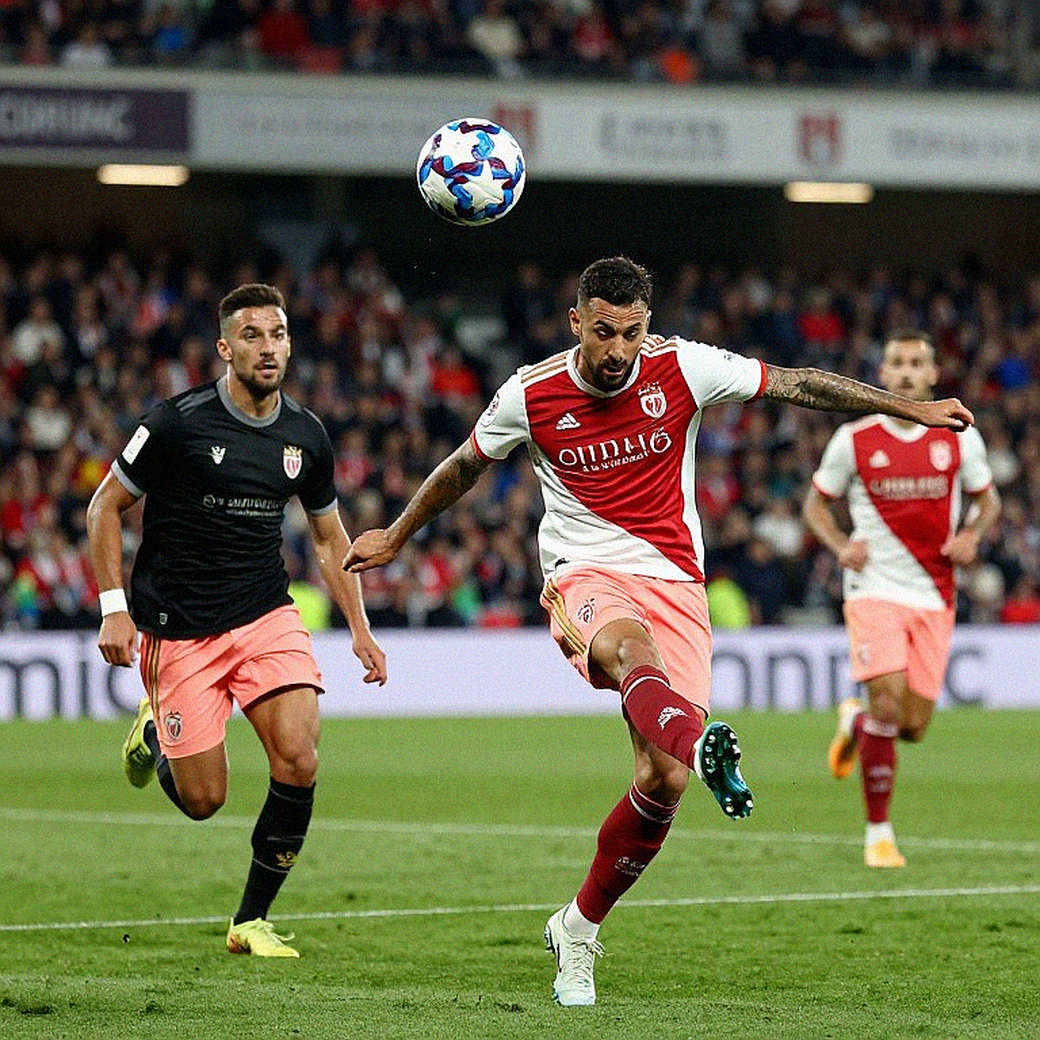
The results-and-opinion layer runs on a cycle that can be measured. When a team wins many matches in a row but its process metrics, such as expected goals, are lower than its opponent's, that is the sign of an unsustainable run. Conversely, when a team loses but creates more quality chances, that losing run can reverse at any moment.
I use four metrics to read this layer:
- Expected goals created and expected goals conceded, compared with actual results to find the deviation.
- Chance-conversion rate. If a team scores far beyond the quality of its chances, it is living on luck or on a poor opposing goalkeeper.
- A form run over a minimum sample of five matches. Below five matches, any conclusion about form is storytelling, not data.
- The initial expectation level. The pre-season expected position, the media prediction, and the betting odds. This is the yardstick for whether a result is success or failure.
When these four metrics contradict the league table, public pressure appears in a predictable order. First the fans, then the media, then the board, and finally the coach. I once got a prediction wrong because I read results without reading process. That was an expensive lesson: a team can win ten matches by playing a brand of football that cannot be repeated, and the eleventh defeat always arrives at the moment no one expects.
What matters at this layer is not predicting who wins. It is recognising when opinion is being led by results, and when results are concealing a deeper problem sitting in another layer.
Layer Five: League Context and Club Positioning — Which Part of the Food Chain You Occupy
Every club lives in a food chain. Some clubs sit at the top, hunting. Some sit in the middle, serving as stepping stones. Some sit at the bottom, being hunted. And a club's position in that chain determines almost its entire behaviour in the market.
A title-contending club buys players to fill specific gaps. A mid-table club buys players to sell them on. A relegation-threatened club buys players to survive, and often pays above true value because of time pressure. What I call the "panic premium" appears only in the third group.
Three signals help me position a club in the chain:
- Squad value relative to direct competitors. This is a rough but useful yardstick for whether a club is over- or under-performing its resources.
- Talent flow. A club that repeatedly loses young players to bigger clubs is a supplying club. A club that repeatedly buys young players from smaller clubs is an accumulating club.
- Reliance on the academy. If a club fields more than half of its starting eleven from its own academy, it tends to have greater financial resilience than clubs in the same group.
At this layer, the common error is to judge a club by its own results without comparing it to its position in the chain. A mid-table club finishing eighth may be doing far better than a big club finishing third. But the press only reports on the third-place club.
Layer Six: Rules and Governance — Where Money Meets the Barrier
Football has a dense system of rules, and most readers only meet it when a punishment is handed down. But rules are not only for punishment. Rules are the blueprint of every behaviour in the industry.
There are four groups of rules an investigator must know: financial fair play, transfer registration, disciplinary rules, and competition eligibility. Each group creates its own kind of risk, and each kind of risk creates its own kind of behaviour.
The clearest example is financial fair play. When a league caps permitted losses, clubs look for ways to book phantom revenue to balance the books. A sponsorship deal with a company linked to the owner, recorded at many times market value, is the most common method. The real money flows from the owner's pocket into the club, but on paper it is commercial revenue.
In my investigation into money flows at the 2026 World Cup, I received an anonymous file about a payment from a construction company to the account of a senior official at a continental federation. I tracked the money through three intermediary countries and found the sum split into eleven small transactions, each exactly equal to one third of a tournament-hosting licence fee. The numerical match was not a coincidence. It was a trace.
Silence is also a kind of evidence, and it is filed with the documents. At the rules layer, the most suspicious thing is usually the thing not mentioned. When a federation opens an investigation and closes it without publishing a conclusion, that gap is itself the document. When a club is fined but the verdict does not state the amount, the hidden figure is the answer.
Layer Seven: Management and the Dressing Room — Where Power Is Shared
A club does not run on tactics. It runs on power. And power inside a club is shared in very different ways depending on the type of owner.
There are four typical owner types: state capital, foreign private capital, member ownership, and local tycoons. Each behaves by its own logic. State capital prioritises image and political stability. Foreign private capital prioritises profit and resale value. Member ownership prioritises identity. Local tycoons prioritise relationships.
When I analysed the transfer history of 48 clubs in a national league, I noticed a pattern: clubs whose chairman was also a local government leader often concealed unpaid wages through undeclared "image consultancy" deals. A typical case was a club with 4.7 billion won in unpaid wages funnelled into murky advertising transactions. On the books, it was commercial expense. In reality, it was wages unpaid to players, disguised as a service that did not exist.
In the dressing room layer, there are four signals to watch:
- Leadership structure. Who is the captain, who is truly heard, and whether there is any nationality-based faction.
- Coach-player relations. How a player answers an interview matters more than the content of the answer. The prolonged silence of a key player is a message.
- Generational transition. A veteran squad forced to rejuvenate too quickly breeds internal conflict.
- The contract year. A player entering the final year of his contract often shows fluctuating form, and his renewal moves are an indicator of the internal situation.
Layer Eight: The Risk Profile — Six Kinds of Risk and One Trap
I always build a six-column risk table for every club I follow: sporting risk, financial risk, personnel risk, rules risk, opinion risk, and systemic risk.
Sporting risk is injury and form. Financial risk is cash flow and debt. Personnel risk is contracts and the dressing room. Rules risk is potential sanctions. Opinion risk is pressure from fans and media. Systemic risk is everything outside the club's control, such as a change in the rules or in the industry's capital flows.
The biggest trap at this layer is reading an empty file and concluding that there is no risk. That is a false-negative error, and it is more dangerous than a false positive. When you label a club "low risk" without sufficient data, you are giving the reader a false sense of safety. The correct approach is to write "not assessable", and to state clearly why it is not assessable.
Layer Nine: Media, Expectation, and the Transmission Chain of an Entire Industry
The final layer, and the one that connects all the others, is the layer of media and expectation. Every event in football passes through this layer before it reaches the public. And each time it passes through, it is distorted a little.
A media story about football always has a heat cycle. It begins with emergence, accelerates, peaks, and then declines. A good journalist is one who knows which phase of the cycle he is in. Reporting in the acceleration phase is reporting with the crowd. Reporting in the decline phase is reporting against the current, and that is usually when the truth appears.
At this layer, I always ask three questions: Which tier of credibility is this source in? What is this reporter's motive? And if this story is true, what happens next?
The third question matters most. A transfer rumour is not just a piece of information. It is a tool. The agent uses it to push up the price. The club uses it to pressure another deal. The media uses it to get clicks. The player sometimes uses it to gain leverage in renewal talks.
From the media layer, the event spreads down through the segments of the industry: the academy chain, the agent ecosystem, the broadcast and commercial market, the capital networks, and the national-team system. A big transfer at one club can change the price of a whole group of players in the same position within weeks.
The Counterintuitive Angle: When the File Is Empty, the Real Story Begins
This is what I want to say plainly, because it goes against the instinct of most football readers. We are taught that a complete report is a trustworthy report. I believe the opposite is truer: a report so complete that it has no gaps at all is usually a report that has been edited.
When I receive an analytical file in which every field is empty, my first reaction is not to conclude that there is nothing to say. My first reaction is to ask why it is empty. There are four possibilities, and they lead to four different lines of investigation. First, the source is blocked, for example the document sits behind a paywall or failed to be collected. Second, the data exists but is held at a layer not permitted to be published. Third, the data was deliberately withdrawn before reaching outsiders. Fourth, the event truly has not happened, and the emptiness is genuine.
Distinguishing these four possibilities is the hardest part of the job. And the fatal mistake is to collapse all four into one conclusion: "nothing to worry about". I once almost made that mistake in a case that later turned out to be the third possibility. A club sent me a full set of documents, clean and spotless, without a single blur. I had almost finished writing a piece praising them. Then I remembered a rule I set for myself: when you have gathered enough data, stop and ask "what is not written here". I went back and saw that the entire agency-fee file was missing. Three weeks later, the tax authority stepped in.
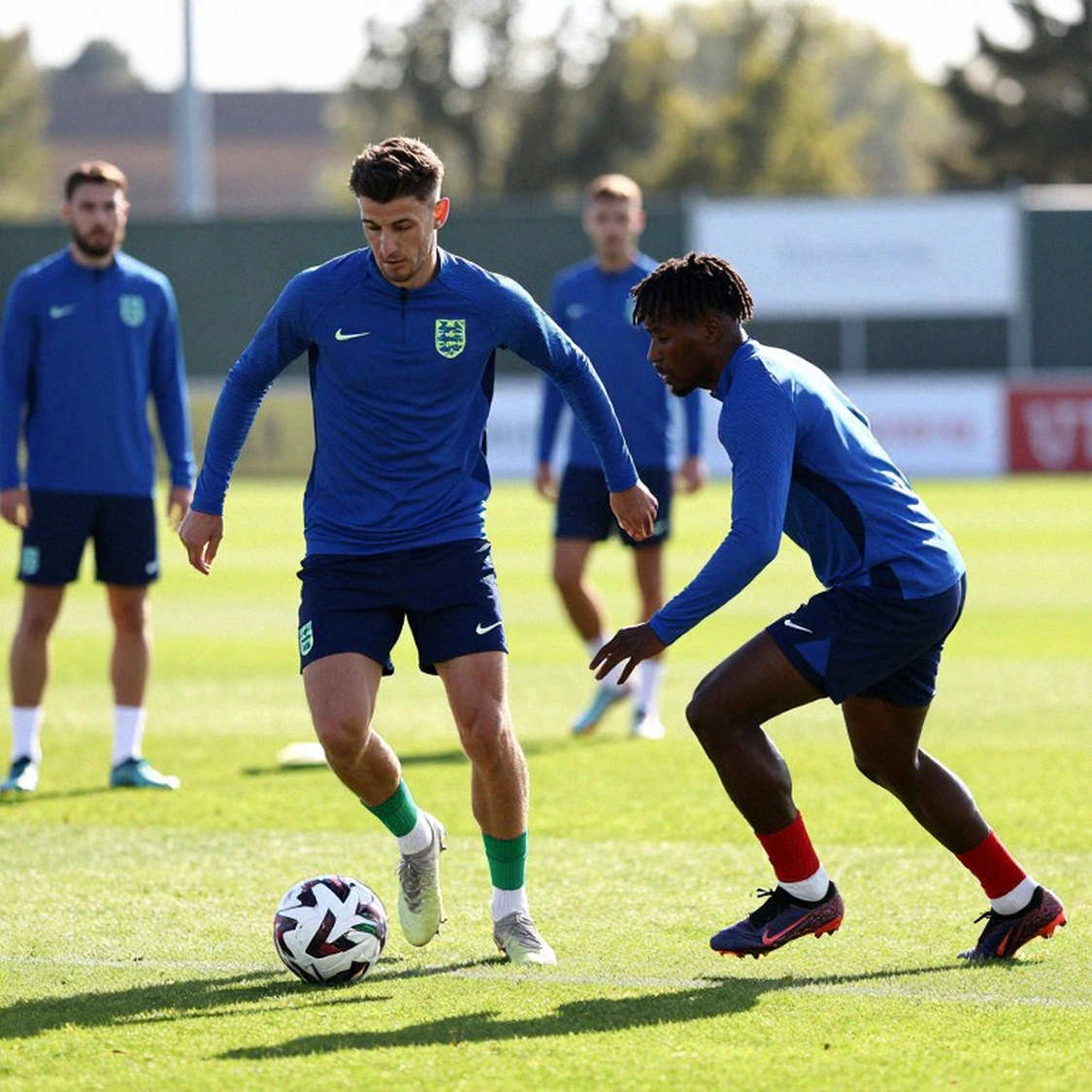
At the rules layer it is the same. A federation that does not publish the conclusion of an investigation does not mean there was no violation. It means that conclusion is not yet permitted to be seen. A club that says nothing about a coach's future does not mean he is safe. It means the negotiation is happening somewhere else.
The second counterintuitive point is this: in football, people rarely lie directly. A direct lie leaves a trace and can be sued over. The more effective method is to tell a true part, true in a way that suits them, and let the rest sink into silence. That is why I never read a press release at its surface meaning. I read it to find what has been left out.
What to Track, and an Open Conclusion
After many years of work, I keep a list of signals to track continuously. When an analytical file is empty, I wait for four things. First, a re-extraction, to see whether the information points reappear. Second, source verification, to know whether the original document is truly accessible. Third, entity identification, to know whether any club, player, or league is named. Fourth, time-sensitivity tagging, to know which phase of the season the event sits in.
When these four signals appear, the analytical layer opens. When they do not, my job is not to invent a tidy conclusion. My job is to state clearly that the file is empty, and to point out exactly where the gap lies.
There is a line I wrote in my notebook and reread every morning: football is not clean, but financial reports taught me how to find the stain line by line. And there is another, which I treat as a reminder of my own limits: my investigation file is thicker than I thought, but still thinner than the conscience of those who signed it.
The nine layers I have just described are not a formula for always finding a villain. They are a way of organising suspicion. Because suspicion without organisation is merely bitterness, while suspicion organised by data becomes evidence. And in an industry where people grow ever better at hiding by choosing what to say, the football reader deserves to be handed not only answers, but a map of the questions that have not yet been asked.
A Thought to Carry Away
Next time you watch a match and see a statistics sheet that looks too good, ask yourself: which line was left out. Next time you read a statement that looks too clean, ask yourself: where is the gap. Because football is not written by what it tells you. It is written by what it decides not to say. And the task of the serious reader, as of the serious writer, is to learn to count the silences too.