
The Shirt on the Book Cover: When Bayern Munich Reclaimed Its Brand from a Former Player
**Core answer**: Bayern Munich asked former right-back Christian Lell to remove the club's shirt from his book cover because the publisher had not licensed the club's trademark rights. The dispute was resolved through a standard cease-and-desist letter, not a sporting sanction, though Lell framed it publicly as being "excluded" by the club. **Key facts**: - Christian Lell made 98 first-team appearances for Bayern Munich between 2003 and 2010 as a right-back. - The publisher used Bayern's shirt and crest on a commercial book cover without requesting trademark rights. - Bayern Munich consistently pursues trademark infringements, according to Bild. - Lell, 42, said Bayern "excluded" him but accepted he may never officially wear the Bayern shirt again. - No official statement from Bayern Munich appeared in the source material. **Source attribution**: Goal.com, citing Bild and Christian Lell's own Instagram statements | Cross-checked: VuaBong.vn **Related Q&A**: Q: Did Bayern Munich take legal action against Christian Lell personally? A: No - the cease-and-desist targeted the publisher's unlicensed use of Bayern's trademark, not Lell personally. Q: What is an Abmahnung in German trademark law? A: An Abmahnung is a formal German cease-and-desist letter used in IP disputes, often with cost-shifting, and was the likely instrument in this case. Q: How did Christian Lell respond publicly? A: Lell said Bayern "excluded" him, but stated he had no problem with never officially wearing the Bayern shirt again.
Christian Lell is not a name that lives in the memory of most Vietnamese football fans. He was a right-back, a product of Bayern Munich's youth academy, who made 98 first-team appearances for the Bavarian club between 2026 and 2026. Seven seasons, nearly a hundred matches, a boy who grew up in the red and white shirt. He was loaned to 1. FC Köln between 2026 and 2026, then wore the Hertha BSC shirt for two years from 2026 to 2026, and UD Levante before retiring in 2026, at the age of 32.
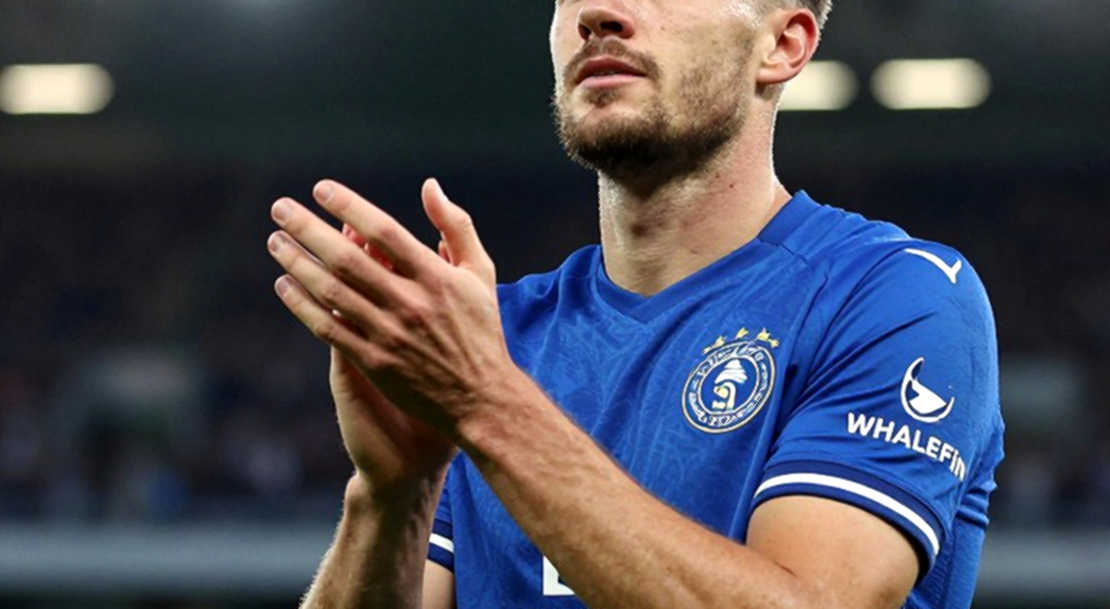
At 42, he wrote an autobiography. On the book's cover, he appeared in his former club's shirt. Then the phone rang - a call from the office of the top leadership position at Bayern. After that came a letter from a lawyer: the publisher had not requested permission to use the club's trademark rights. The shirt had to be removed from the cover. The publisher complied.
That is the entire matter in legal terms. But Lell called it exclusion. "Bayern Munich excluded me," he said on social media. And this small story, seemingly just a brief item in the German football world, opens a much larger question about how super-clubs treat those who once wore their shirt.
Context: Ninety-eight matches and a book
To understand why this story carries weight, it must be placed in the right spot. Lell was not a star. He was a rotation player, a versatile defensive workhorse, present in the squad but rarely the first choice. Ninety-eight matches across seven seasons is an honest number: enough for him to call Bayern home, not enough for Bayern to call him a legend.
That gap is what creates the tragedy. Players like Lell are the silent backbone of every super-club. They fill out the squad, they endure seasons of being substituted, they stay when others leave. But when their careers end, they have no statue, no testimonial day, no place in the museum. All they have left is an autobiography and a photo in an old shirt.

And then even that photo is ordered to be taken down. Ironically, just a few months earlier, Lell had taken part in a charity indoor football tournament for Bayern's over-40s. He still had an emotional tie to the club. That is precisely why the legal letter felt like a rejection.
From the numbers, I see a person waiting to be called by name. Those ninety-eight matches are not just statistics. They are seven years of youth, training sessions at Säbener Straße, an entire life tied to one shirt. And when that number is touched by a legal letter, it is no longer a number. It is a wound.
Core: Trademark rights and two parallel rights
This is where clarity is needed. The story is not that Bayern hates Lell. This is a trademark issue, and it has its own legal logic.
Bayern Munich owns its trademark signs: the club name, the crest, the kit design. Anyone wishing to use these signs for commercial purposes needs a licence. Lell's publisher placed the Bayern shirt - along with the crest - on the cover of a book sold for commercial purposes without that licence. According to Bild, Bayern routinely pursues such trademark infringements. This is a consistent stance, not a strike aimed at an individual.
It is important to distinguish the two types of rights overlapping here. Lell owns his own image - personality rights allow him to control the use of his personal likeness. But Bayern owns the shirt and crest marks of the club. A cover combining both may be lawful for Lell as a person, yet unlawful for the club's commercial marks. This is a point few articles analyse, because it requires separating two rights systems that are usually merged into one.
The legal instrument Bayern most likely used is an Abmahnung - a formal cease-and-desist letter under German law, with the possibility of cost-shifting. This is a common and usually cheap-to-comply mechanism. The publisher almost certainly weighed compliance against litigation cost, and chose compliance. The letter came from Säbener Straße - Bayern's administrative headquarters and training ground - indicating the demand passed through the club's official commercial and legal department. This is policy, not emotion.
This matters because it changes how the whole story is read. If this were a personal strike, it would be a story of betrayal. If it is a policy process, it is a story about the system. And in most cases, the truth lies in between: a policy process applied without anyone thinking it would touch the emotions of a specific human being.
The contrarian angle: When a process becomes a feeling
The contrarian point lies here: the story the media tells - "a super-club excludes its own former player" - is an emotional reading of a completely ordinary administrative process. But precisely because it is ordinary, it is worth discussing.
Look at how Bayern handled it. First came a call from the office of the top leadership position. Only then came the lawyer's letter. This sequence is notable. A completely cold club would send the lawyer directly. A completely warm club would send no lawyer at all. Bayern sits in between: they tried to handle it as a relationship, then were forced to handle it as a procedure. That hesitation - if it existed - is where the human nature of a giant organisation shows through.
Then comes the most subtle detail. Lell criticised "those responsible... who are now prancing around there." But he specifically exempted Hoeneß and Rummenigge - two former leaders - from his criticism. This is not an indictment of the club. It is a comparison between eras of leadership. Lell is saying that the Bayern of Hoeneß and Rummenigge would not have done this. He is mourning a club culture, not attacking an individual.
And there is another layer most articles overlook. An autobiography is a document the club cannot control. If the book contains critical content about Bayern, separating the club crest from the cover is also a form of brand-risk management. This is only speculation, but it fits the logic of a commercial department always thinking about long-term image.

At 50, I understand that the pitch has no borders, but the heart has coordinates. And Lell's coordinates are Munich - a place he belongs to, but no longer belongs to in the way he wants. This is the tragedy of every mid-tier player at a super-club: they belong there in memory, but not there in the system.
The asymmetry: One book and one empire
The asymmetry must be named, because it is the emotional engine of the whole story. On one side is Christian Lell, 42, a retired rotation player self-publishing a book. On the other is Bayern Munich, one of the most valuable football brands on the planet, with an entire professional legal department. When these two sides meet, the outcome is almost predetermined.
But the asymmetry is not only in power. It is in memory. Bayern has a museum, a history, a system of honours. Lell has only a book. When the club asked him to remove the shirt from the cover, they were telling him that even his private memory must obey their rules of the game. This is something no statistic can measure.
I have seen women players forgotten in a similar way. They leave the pitch with no one remembering their name, no one calling it correctly. Get a name wrong once, remember it for a lifetime; correct it and you value it more. Here, the issue is not a name, but a shirt. Yet the essence is the same: a person stripped of the right to belong.
The phone call in the middle of the pandemic taught me that sport heals without an audience. And this story, in a way, is also a wound without an audience. No one cheered for Lell in the moment he received the letter. No one applauded when he decided to take the shirt down. It was a quiet loss, taking place in an office and on a phone screen, not on a pitch.
The industry: The border between personal rights and club brand
Placed in a broader context, this is an under-examined friction point of the football industry. Throughout a playing career, the relationship between player and club is governed by contract. But after retirement, when a player enters the phase of commercialising their personal image - writing memoirs, selling merchandise, attending events - the boundary becomes blurred.
The core problem: the player owns their story, but the club owns the marks that made that story. You cannot tell the story of wearing the Bayern shirt without mentioning the Bayern shirt - but that shirt does not belong to you. This is a paradox the football industry has not fully resolved.
For the derivative-product market - books, merchandise, memorabilia - the lesson is clear: clubs may increasingly require formal licensing agreements for any ex-player product bearing club marks. This is a quiet tightening of the commercial environment. If it becomes a pattern, we may see growing demand for standardised image-rights and licensing clauses in player contracts, as well as commercial guidelines for ex-players.
Every contract is a life relocated. And here, there is an implicit contract no one signed: after retirement, a player is no longer free to tell their own story the way they want, because that story is tied to a brand that does not belong to them. This is an invisible clause, and Lell has just discovered it.
Risk and response
In terms of risk, this is a low-level story. It was legally resolved, financially immaterial, and confined to a short media cycle. But the residual risk - however small - is reputational. A super-club perceived as legally heavy-handed toward a 42-year-old former player.
Notably, there is no response from Bayern in the available information. The story is currently being read one-sidedly. This is the classic condition for a short, sympathy-leaning cycle. If Bayern issues a formal statement, the story could be reset or defused. Their silence, so far, is itself information.
It must be stressed that the available information comes from two sources: Lell's own personal account - a primary source with its own interests - and Bild, a tabloid with credibility but a leaning toward sensationalism. There is no statement from Bayern. This means we should treat the "exclusion" reading as an interpretation, not an established fact. This is the discipline needed when reading any story where only one side speaks.
Conclusion: Doors opening slowly
The corridor of women's sport is not only about victories, but about doors opening slowly. And Lell's story, though it belongs to men's football, is also such a door - a door revealing how sports organisations manage their own memory and brand.
What I want readers to carry away is not a judgement about Bayern. It is a question. When a person gives their youth to one shirt, what do they own after their career ends? The club owns the brand. The player owns the memory. But the boundary between those two - who may tell the story, who may wear the shirt, and who may remember - remains an uncharted land.
Lell has accepted it. He said he has no problem with officially never being allowed to wear the Bayern shirt again. It is a polite resignation, and perhaps also a sad truth. Because in the end, the shirt on the book cover is not a commercial asset. It is the memory of a 20-year-old boy who once believed that red belonged to him.
That World Cup did not get the name wrong; I was simply not old enough to call it correctly. And perhaps, somewhere, this story is also a reminder that every sporting memory deserves to be called by its right name - whether it is the name of a legend, or the name of a right-back who played 98 matches and believed that shirt was home.