
One Substitution, Twelve Straight Points, and Vietnam's Slow-Start Problem in Sepak Takraw
**Câu trả lời cốt lõi**: Tuyển sepak takraw đôi nữ Việt Nam thắng Hàn Quốc 2-0 ở bán kết Asiad 20 với tỷ số 15-6 và 15-13, nhờ cú thay người ở điểm 3-6 khi HLV Nguyễn Thị Vui đưa Hồng Liên vào thay Nguyễn Thị Khánh Ly. Việt Nam giành vé vào chung kết gặp Philippines. **Dữ kiện chính**: - Bán kết đôi nữ Asiad 20: Việt Nam thắng Hàn Quốc 2-0, các hiệp 15-6 và 15-13. - HLV Nguyễn Thị Vui thay Nguyễn Thị Khánh Ly bằng Hồng Liên khi Việt Nam bị dẫn 3-6 ở hiệp một. - Việt Nam ghi liên tiếp 12 điểm sau khi thay người; số liệu này chưa đối chiếu hồ sơ chính thức ISTAF. - Vòng bảng: thua Lào 1-2, thắng Myanmar 2-0, thắng Malaysia 2-0. - Chung kết gặp Philippines lúc 7h40 ngày 29/9; regu nam Việt Nam giành huy chương đồng. **Nguồn**: Bản tin thể thao Asiad 20 về bán kết sepak takraw đôi nữ, ngày 28/9. Các tỷ số và mốc thời gian đang chờ xác minh với ISTAF và ban tổ chức Asiad 20. **Hỏi đáp liên quan**: - Hỏi: Việt Nam gặp ai ở chung kết sepak takraw đôi nữ Asiad 20? Đáp: Philippines, trận đấu diễn ra lúc 7h40 ngày 29/9. - Hỏi: Vì sao HLV Nguyễn Thị Vui thay người ngay trong hiệp một? Đáp: Để đổi nhịp tấn công khi Việt Nam đang bị dẫn 3-6. - Hỏi: Điểm yếu lớn nhất của Việt Nam trước chung kết là gì? Đáp: Khởi đầu chậm, khi để đối thủ dẫn 4-1 ở hiệp một và 5-1 ở hiệp hai bán kết.
The scoreboard at the Asiad 20 sepak takraw court read 3-6 in South Korea's favour. Vietnam had trailed, clawed back, then trailed again — the kind of start that renders tactical planning meaningless. Coach Nguyen Thi Vui did not wait for the first game to pass its halfway mark. She pulled Nguyen Thi Khanh Ly off the court and sent Hong Lien in. From that moment the match flipped entirely: Vietnam scored 12 unanswered points to close the first game 15-6. The second game was far tighter, decided only by Hong Lien's late finishing touches, but it still ended 15-13. Vietnam beat South Korea 2-0 to reach the women's doubles final. In a match where the technical statistics sheet is essentially blank, the substitution at 3-6 is the only hard data point capable of explaining the whole picture.
Sepak takraw is not volleyball, even though both belong to the net-rally family and both score by rally. The ball is woven from rattan or synthetic material, and players use feet, knees, chest and head to send it over the net. Women's doubles fields only two players per side, played to 15 points in a best-of-three format. The sport is governed by the International Sepak Takraw Federation (ISTAF), while the Asian Games platform falls under the Olympic Council of Asia.
Vietnam's group stage was anything but smooth. They lost 1-2 to Laos in their opener, then beat Myanmar 2-0 and Malaysia 2-0 to reach the semifinals. In the men's regu event, Vietnam stopped at the semifinal and took bronze — a result showing the delegation's success is not evenly spread.
The schedule is an under-discussed variable. On 28 September the team played its group decider in the morning and its semifinal at noon. The final is set for 7:40 a.m. on 29 September. For a side with only two players on court, two matches in one day plus an early-morning final is a genuine physical and concentration problem, not a footnote.
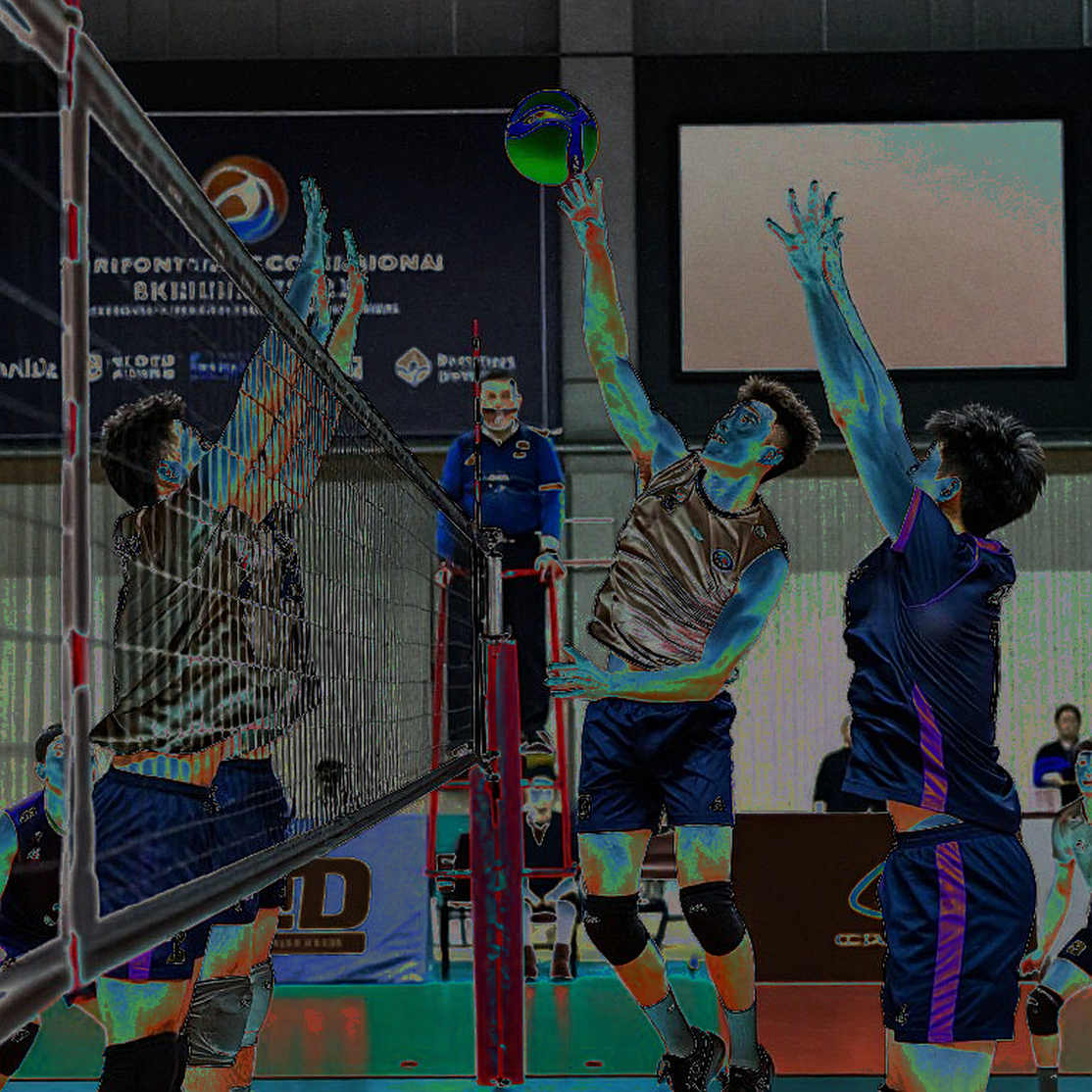
Judging by the 2-0 scoreline alone, this looks like an easy win. The opposite is true. In game one Vietnam let South Korea lead 4-1 and then 6-3. In game two the script repeated: 1-5 and then 7-3. That slow-start pattern appeared twice in a single match, and it says more than any highlight.
In sepak takraw, a substitution does not merely change a player — it changes the entire structure of the rally. Each side has only two players. Roles are implicitly divided: one feeds the ball and sets the rhythm, the other finishes. When Khanh Ly left and Hong Lien entered, that division was rewritten. Hong Lien did not just fill a slot; she changed the drop point of the finishes and changed how South Korea had to defend. The difference is that the opponent had no time to adapt inside a 15-point game.
The 15-point format makes everything harsher. In volleyball, falling four points behind early in a 25-point set still leaves 21 points to fix it. Here, losing four points when only 15 are needed means losing nearly a third of the game. The margin for error is compressed, and every individual mistake is magnified. That is why the 12-point run is not just a pretty sequence — it is a decisive swing inside a 15-point structure.

More notable is that coach Nguyen Thi Vui did not wait for a bad result. She substituted at 3-6, before the game was half gone. That kind of decision reflects someone reading the flow of the match rather than the scoreboard. A coach reacting to the score would have waited for 6-9, when the game is nearly settled. Vui moved early, and she was right.
Yet that same successful substitution exposes a problem. If Hong Lien is the rhythm-change option kept on the bench, then the team's repeated slow starts in both games suggest the starting pair's opening structure is not stable enough. It can be called fighting instinct. But in a competition with margins this thin, spotting an opponent three or four points twice in one match is high-risk behaviour, not identity.
The limits of the data deserve a straight statement. Everything above is built from scorelines. There is no finishing success rate, no error count, no ball-contact data. The 12-point run appears in reports but has not been cross-checked against official ISTAF or Asian Games match records, so it must be treated as pending verification. This is a structural weakness of a sport without thick data infrastructure. Were this volleyball, we would have a dozen metrics to dissect. In sepak takraw, the scoreline is sometimes all that survives.

The contrarian read deserves consideration: beating South Korea does not prove Vietnam is systemically stronger. It proves Vietnam has a bench option good enough to flip the rhythm, and a coach willing to use it early. Those are two different conditions.
The narrative that Vietnam dominates the Philippines head-to-head also needs cooling down. Head-to-head history is past data, not current form. The claim of a very bright gold-medal chance is typically attributed to experts without any analytical basis beyond old results. In a women's doubles event at a continental Games, the gap between two leading sides is usually measured in three rallies, not in years of history.
And the biggest concern is not the Philippines. It is Vietnam itself. With a structure built on one starting pair plus one bench option, the entire women's doubles programme rests on two people. The men's regu bronze shows the delegation's strength is not broad. If the starting pair declines or reaches the end of its peak cycle, there is no visible sign of a second pair ready to take over.
The final against the Philippines will be decided precisely where the semifinal exposed weakness: the first five points. If Vietnam enters with a lead, or at minimum level after the opening rallies, pressure shifts to the opponent, and the finishing quality of Hong Lien and Khanh Ly is enough to close it out. If the 1-4 or 1-5 script repeats a third time, the Philippines need only hold rhythm once to turn historical advantage into psychological burden. Coach Nguyen Thi Vui's team has proven it can overturn a match. The question on 29 September is not whether they can flip it, but whether they are forced to.