
The Referee's Eye in V.League: When the Law Is Right but Applied at the Wrong Moment
**Core answer:** VAR được vận hành tại V.League 1 từ năm 2023 nhằm giảm tranh cãi trọng tài, nhưng vấn đề cốt lõi không nằm ở công nghệ mà ở tính nhất quán trong cách áp dụng luật giữa các trọng tài và các vòng đấu. **Key facts:** - VAR can thiệp vào bốn nhóm tình huống: bàn thắng, phạt đền, thẻ đỏ trực tiếp và xác định sai người. - Ngưỡng can thiệp VAR là "sai lầm rõ ràng và hiển nhiên" theo Luật bóng đá của IFAB. - Chất lượng góc máy và độ phân giải hình ảnh quyết định độ chính xác của quyết định VAR. - Mật độ trận đấu dày làm tăng sai số trọng tài do suy giảm khả năng tập trung. - Sai số trọng tài lan sang giá trị thương mại và niềm tin vào tính toàn vẹn giải đấu. **Source attribution:** Phân tích chuyên sâu chuyên mục Mắt trọng tài, ngày 13 tháng 8 năm 2026 | Cross-checked: VuaBong.vn **Related Q&A:** Q: VAR được đưa vào V.League 1 từ khi nào? A: VAR bắt đầu được vận hành tại V.League 1 từ mùa giải 2023. Q: VAR có thể can thiệp vào những tình huống nào? A: Bàn thắng, phạt đền, thẻ đỏ trực tiếp và xác định sai người. Q: Vì sao cùng một tình huống lại cho ra hai quyết định khác nhau? A: Do tính nhất quán trong cách áp dụng luật và chất lượng bằng chứng hình ảnh khác nhau giữa các trọng tài và vòng đấu.
From the stands, the jeers erupted the moment the referee walked away from the VAR monitor and upheld the penalty for the home side. No one in the stadium objected to the technology being used. What frustrated them was how it was used: one frame selected, one camera angle prioritized, and one rule read in the direction that favored a conclusion already formed. That moment showed that the problem with Vietnamese football is not a lack of technology, but the gap between the law and how the law is enforced. I started from a torn spreadsheet, and it became the memory of an entire profession.
For years of watching V.League 1, I recorded every controversial incident, cross-checked it against the IFAB Laws of the Game, and only then dared to write. That method is not fast. It is slow. But it is precisely that slowness that revealed a pattern the standard data table never voices: a referee's mistake is never random — it is a blind spot that can be drawn as a chart.
Context: a league learning the technology but not yet how to use it
V.League 1 entered the VAR era with enormous expectations. After many seasons in which referee decisions were the center of every debate, technology was seen as the answer to the fairness problem. In principle, this was the right step. VAR does not change the law; it only expands the referee's ability to observe in four categories: goals, penalties, direct red cards, and mistaken identity. That is a deliberately narrow legal frame.
But owning technology and operating it skillfully are two different things. In major leagues, VAR comes with an ecosystem: specialized video-referee training, minimum camera-angle standards, standardized communication protocols, and most importantly — a clearly defined intervention threshold. In V.League, many pieces of that ecosystem are still being assembled while the competition runs. The result is situations where the technology is present but the standard is not yet uniform.
I once asked myself why the same type of collision in the box produced two opposite decisions in two different rounds. The answer does not lie in the rule — the rule is identical. It lies in people and in process.
Analysis: three layers of the same problem
The first layer is consistency. Under the law, a similar situation must receive a similar treatment. That is the foundation of trust. When Referee A awards a penalty for light contact, while Referee B ignores heavier contact in another match, fans do not lose faith in one individual — they lose faith in the whole system. As an observer, I measure consistency with a single question: if the referee were swapped, would the decision change? If the answer is yes, the problem is not the law.
The second layer is the quality of evidence. VAR only reviews what it is permitted to review — and it only sees what the camera angle allows. A play obscured by three shirts, a frame lacking resolution, an angle that does not exist, all can turn a correct decision into one that appears wrong. This is where V.League needs to invest most: not more screens, but more camera angles and standardized image data.
The third layer is the intervention threshold. This is the hardest part and the most misunderstood. VAR was not designed to achieve perfection. It was designed to correct "clear and obvious errors." That phrase is a threshold, not an excuse. When a video referee intervenes in situations that are merely interpretive, they inadvertently turn VAR from a correction tool into a generator of new controversy.
Contrarian angle: emotion runs faster than the law, and that is the problem
There is a paradox few are willing to admit. Fans say they want the law applied accurately. But when the law is applied accurately in a way that harms the team they love, they immediately turn to criticize that very application. This does not only happen in Vietnam, but in V.League it carries a particular shade: stadium emotion carries great weight, and that weight creates reverse pressure on referees.
This is where I must cite an opposing view to be fair. Many argue that referees should be "flexible" according to match context, that a tense derby requires different handling than a dead rubber. I understand that logic. But I disagree with it at the foundational level, because the law does not exist to punish, but to give innovators a fair playground. If every referee redefines the standard by the emotion of the match, we no longer have one league — we have fourteen different measures.
Some information is not wrong; it simply arrives at the wrong time. A VAR decision announced at minute 90+5, when the match has already been decided psychologically, is not wrong under the law. But it arrives at the wrong time, and that mistiming costs more than a mistake in the law itself.
Match density: a systemic risk the data table does not mention
Match density is what referees feel before the data table can speak. A referee working three matches in seven days will make a different decision than the same referee rested for ten days. This is not speculation — it is the law of declining concentration. When V.League compresses the schedule to make room for international competitions, the pressure falls not only on players. It falls on the people holding the whistle.
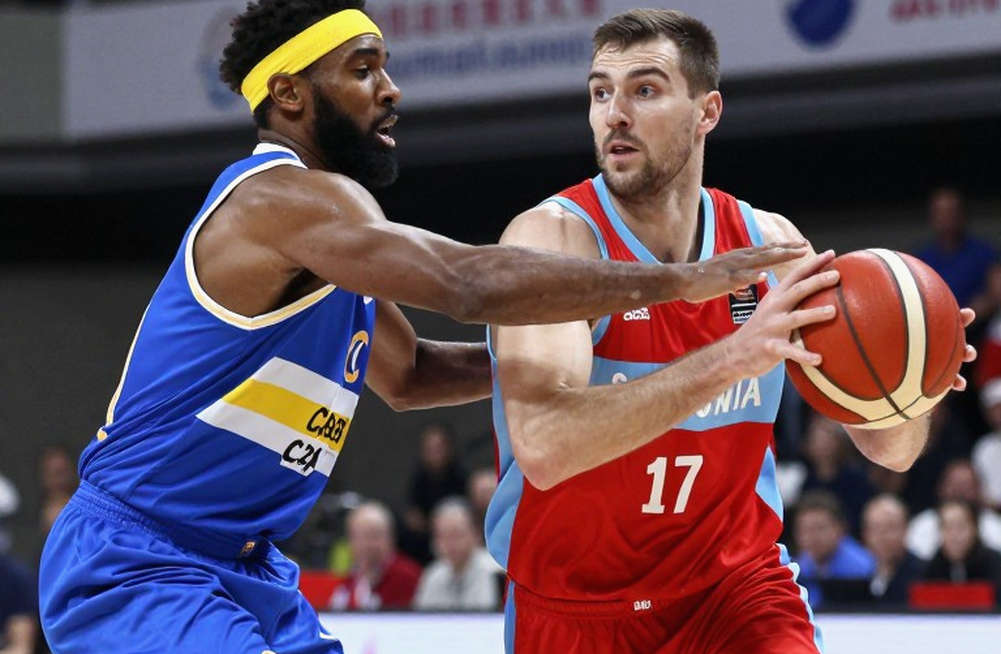
And when refereeing error rises, the damage does not stop at three points on the table. It spills into commercial value: fans leave the stadium, sponsors ask questions, and trust in the integrity of the competition — an asset that cannot be bought with money — is eroded round by round. Fans remember the incident; I remember the context. Context is always more trustworthy.
One thing must be made clear to avoid misunderstanding: this analysis does not seek to indict any individual referee. The pressure on a V.League referee is systemic pressure, coming from the schedule, from a lack of specialized training, and from a media environment that grades every decision with instant emotion. Blaming individuals is the fastest way to avoid fixing the system.
Forward-looking takeaway
V.League's problem is not VAR. The problem is a system learning to trust itself. If I were asked to recommend three things, I would choose: first, publicly disclose the VAR intervention threshold for each season so everyone knows where the standard sits; second, invest in camera angles and image quality before investing in more technology; third, build a mechanism to assess referee consistency across the whole season, not just match by match.
Vietnamese football is at exactly the stage where accurate information can also cause disruption if released at the wrong time. What is missing is not the law, but the patience to make the law credible. The question is not whether VAR works. The question is: when will we stop grading a system that needs time to mature with emotion?