
An Se-young sets five records at the 2026 Asian Games: When women's singles has only one pole
**Câu trả lời cốt lõi:** An Se-young lập năm kỷ lục sau khi bảo vệ huy chương vàng đơn nữ Asian Games 2026 tại Aichi-Nagoya: tay vợt đơn nữ đầu tiên vô địch hai kỳ liên tiếp, thành tích 56 thắng 1 thua trong năm 2026, danh hiệu quốc tế thứ 46 cân bằng Susi Susanti, cú đúp Vô địch Thế giới - Asian Games lần thứ hai, và chuỗi chín trận thắng liên tiếp trước Akane Yamaguchi. **Dữ kiện chính:** - Chung kết ngày 29 tháng 9 năm 2026: An Se-young thắng Akane Yamaguchi 21-17, 21-9. - Năm trận, mười game, không thua game nào tại Asian Games 2026. - Mùa giải 2026: 56 thắng, 1 thua trong 57 trận, tỉ lệ thắng 98,2%. - Danh hiệu quốc tế thứ 46, cân bằng thành tích của Susi Susanti. - Cú đúp Vô địch Thế giới - Asian Games trong cùng năm: 2023 và 2026. **Nguồn:** Bài phân tích chuyên sâu Stage-2 dựa trên dữ liệu BWF và Hiệp hội Olympic châu Á (OCA), công bố năm 2026 | Cross-checked: VuaBong.vn **Hỏi đáp liên quan:** - Hỏi: Ai là tay vợt đơn nữ đầu tiên bảo vệ huy chương vàng Asian Games? Đáp: An Se-young, tại Aichi-Nagoya 2026. - Hỏi: An Se-young đã thắng Akane Yamaguchi bao nhiêu trận liên tiếp? Đáp: Chín trận liên tiếp, theo dữ liệu đối đầu trực tiếp. - Hỏi: Hàn Quốc giành huy chương gì ở nội dung đồng đội nữ Asian Games 2026? Đáp: Huy chương đồng, dù An Se-young thắng Yamaguchi ở bán kết.
The final point of the women's singles final at the 2026 Asian Games fell on Akane Yamaguchi's side of the court. The scoreboard flicked: 21-17, 21-9. In Aichi-Nagoya, An Se-young dropped her racket and covered her face with both hands. In Hanoi, I sat in front of a screen with a notebook in which I had already marked one line in red ink: "not a single game dropped."
The gold medal is not what made me stop and think. How it was won is what matters. Five matches, ten games, not a single game conceded to any opponent. The path ran from Smagulova, through Liyanage, then Ratchanok Intanon, Chen Yufei, and closed with Akane Yamaguchi - a difficulty curve that any player could only dream of.
What made me reopen my entire tracking sheet was a different sum. When I added up all of An Se-young's matches in 2026, I got 57: 56 wins, 1 defeat. A 98.2% win rate. Place that rate beside any women's singles player of the modern era, and you will have to pause for a few seconds.
A record, as I understand it, does not lie in how much a player wins. It lies in winning under conditions others cannot.
Once every four years, and an opportunity that does not repeat
The 2026 Asian Games took place in Aichi-Nagoya, Japan. It is a continental multi-sport event held every four years, and for badminton, women's singles has been contested since 2026. This year's final fell on September 29, 2026 - a marker sitting between two Olympic cycles: after Paris 2026 and before Los Angeles 2028.
As someone who has hosted broadcasts of major badminton events such as the Sudirman Cup, I have always placed the Asian Games in a category of their own. It is not a stop on the World Tour. Its value does not lie in ranking points. It lies in representation: once every four years, an entire continent funnels into one arena.
That changes entirely how a player must prepare. A World Tour event can come and go, and a loss can be recovered. The Asian Games cannot. You have one chance, and that chance comes once every four years. For a player born in 2026 like An Se-young, the number of times she can compete at these Games during her peak is counted on the fingers of one hand.
The context has another layer. This is the first Asian Games after Paris 2026, and the second-to-last before Los Angeles 2028. It falls precisely in what experts call a player's "golden window": mature enough to be unshaken, young enough to still have speed. An Se-young entered that window as world No. 1.
But the real story begins with what she had to defend.
Five milestones, and one difficulty curve
The first record, the heaviest: the first women's singles player to successfully defend an Asian Games gold medal. The discipline has existed since 2026. In those more than six decades, no one had won two consecutive editions. This kind of record cannot be measured by one season; it must be measured by an entire career, and by the ability to stand firm under the pressure of a four-year wait.
I once hosted a talk on athlete psychology, and people tend to underestimate the pressure on a defending champion. The challenger steps onto the court thinking of what they might gain. The defender steps on thinking of what they might lose. At the Asian Games, the gap between those two mindsets is multiplied by four years. An Se-young crossed it without dropping a single game. That is why I call this the heaviest milestone.
The second record lies in the very path she walked. Five matches, ten games, no game dropped. It sounds simple, but look at the names. Ratchanok Intanon - a former world champion, once the nightmare of an entire generation. Chen Yufei - the Tokyo 2026 Olympic champion. Akane Yamaguchi - world No. 2, who has faced An Se-young for years.
All three lost in two games. None could drag her into a third. For a player who owns a controlling style and enduring movement, winning two straight games against top opponents says one thing: she is better not only at a single moment, but across the entire length of a match.
If you look closely at a heat map, you will see where the match is truly decided. Here, the original analysis admits there is no detailed heat-map data for each rally. But the scoreboard is itself a rough heat map. The second game of the final ended 21-9. That is a margin you almost never see in a final at the top of women's singles. It shows the opponent was broken physically and mentally before the match ended.
The third record is the run of nine consecutive wins over Akane Yamaguchi. This is the metric I want to spend the most time on, because it clearly separates "form" from "gap." One win can be luck. Two wins can be form. But nine straight wins over the same opponent at world level is a statement about structure.
Yamaguchi is not an easy player to figure out. She is known for an enduring style, relentless movement, and the ability to turn a match with long rallies. An Se-young beating her nine times in a row points to a stylistic match-up advantage, not an accident. A great era does not collapse because of one defeat, but because of the metres of movement in between - and here, those metres lean hard to one side.
The fourth record is the World Championships - Asian Games double in the same year, the second of her career. An Se-young did it in 2026 and repeated it in 2026. The World Championships are the Badminton World Federation (BWF) annual individual showpiece, while the Asian Games are a quadrennial continental stage. Winning both in the same year demands stability across twelve months.
Doing it twice - three years apart - is the hardest part. It proves An Se-young's peak is not a single-season spike but a plateau stretching from 2026 to 2026. For a women's singles player at twenty-four, that is a rare window of dominance.
The fifth record is more historical: her 46th career international title, matching the tally of Indonesian legend Susi Susanti. I must be clear about this metric, because my role demands caution. The BWF does not publish a single official list of a player's "international titles." The count depends on which events you include. The figure of 46 titles is a media-compiled metric, and it needs verification against BWF and Olympic Council of Asia primary data before it can be treated as accurate.
Beside Susi Susanti, the story gets more interesting. Susi Susanti was the greatest women's singles player Asia produced in the 1990s - Indonesia's first Olympic gold medallist, and the icon of an era. An Se-young reaching that milestone, however the counting is debated, places her in the same conversation about legacy.
There is one more historical milestone the original analysis mentions: South Korea's streak of consecutive champions in certain disciplines. In mixed doubles, South Korea once had dominant pairs across multiple editions, such as Park Joo-bong and Chung Myung-hee in 2026-2026, or Kim Dong-moon and Ra Kyung-min in 2026-2026. These are historical facts that need independent cross-checking, but they reveal a tradition: South Korea knows how to sustain supremacy in its flagship disciplines.
The power map: from three poles to one
To understand why these five milestones matter, they must be placed on the power map of world women's singles. For years, women's singles was a battle between three poles: Japan, China, and South Korea. Japan had Akane Yamaguchi. China had Chen Yufei, Wang Zhiyi, Han Yue. South Korea had An Se-young.
In the current top tier, An Se-young is world No. 1. Behind her are Yamaguchi and Chen Yufei in the top ten. The chasing pack includes Wang Zhiyi, Han Yue, and Tai Tzu-ying - now in the late stage of her career.
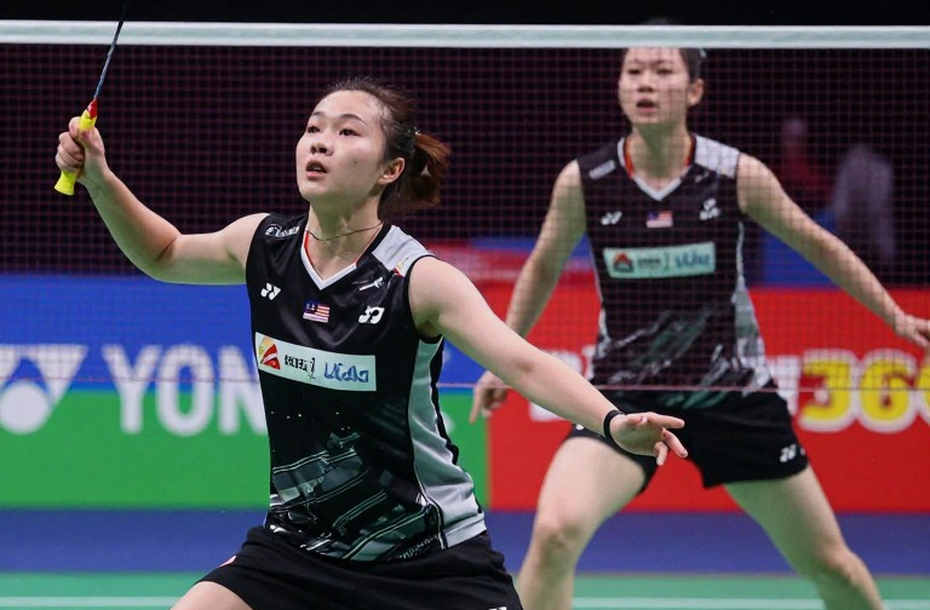
That structure paints a clear picture. An Se-young is not just leading a large group; she is separating from it by a gap that direct head-to-head metrics confirm. The nine-win run over Yamaguchi, and the two-game losses of both Chen Yufei and Intanon, show that the current second tier has no stable answer to her.
This creates an interesting paradox about depth. China and Japan have several quality women's singles players, spread across many names. South Korea funnels almost all its strength into one. In individual events, that strategy delivers maximum effect. In the team event, it exposes its limits.
The contrarian angle: a star and an empty space
There is a detail in this picture few notice, and it tells a very different story. In the women's team event, An Se-young still took the court and still beat Yamaguchi in the semifinal against Japan. But South Korea took only bronze. The team's final result ran against the individual head-to-head result.
That detail deserves a pause. It shows An Se-young's individual dominance has not yet translated into the strength of the entire South Korean women's team. In other words, South Korea owns an absolute star, but not yet a system of matching depth.
This is the blind spot of every "dynasty" narrative. When a player wins nearly everything, the media tends to attribute all success to that individual. But behind her, the gap remains. I once wrote about this in football, analysing how a team depends on a single star. That structure works until the star is injured, or until rivals find a way to neutralize her.
For An Se-young, injury risk is real. A 57-match season places a large load on her knees and lower back. Such a dense schedule is only sustainable with an elite recovery and conditioning system. The original analysis provides no information about the coaching or support staff around her, so this is a variable to watch.
There is another contrarian angle. Nine consecutive wins over Yamaguchi sounds like absolute dominance. But in sport, such a long run also creates a fragile expectation. Each time the two meet, the pressure to "must win" grows a little. The moment that run breaks - if it breaks - will be a media shock far larger than the actual value of one defeat.
And there is a question the original analysis raises but cannot answer: who was An Se-young's only defeat in 2026 against, and in what circumstances? That information matters. If it was a loss from exhaustion, it speaks to scheduling. If it was a loss to a specific style, it speaks to a tactical gap. One defeat in 57 matches does not diminish the record, but it can be an early signal.
What needs verification
I want to use this section to speak plainly about the limits of the data, because the role of a records researcher demands it. Many records in the list above are historical claims dependent on definitions. The record of "the first women's singles player to defend an Asian Games gold" needs cross-checking against Olympic Council of Asia records. The "46 international titles" mark needs cross-checking against the BWF's counting method. The facts about South Korean mixed-doubles pairs in the 1980s and 2000s need independent verification.
I say this not to diminish An Se-young's achievement. I say it to protect the value of that achievement itself. A record is only trustworthy when it stands up to verification. And in this case, the core of the story - 56 wins and 1 defeat, nine straight wins over Yamaguchi, the World Championships and Asian Games double achieved twice, and not dropping a game in the whole tournament - consists of strong, verifiable facts.
That makes the story solid. Even without inflated numbers, the picture is already clear.
Conclusion
Looking back at the whole picture, what I see most clearly is how one individual can reshape an entire discipline. World women's singles was once a battle between three poles. Now it leans toward one. An Se-young is not just leading the rankings; she is redefining the standard of that position.
The question left for the Los Angeles 2028 cycle is simple: can a structure built on one star hold for four more years, or will the rivals behind her find an answer? The answer does not lie in the gold medals already won, but in the metres of movement in training sessions no one records.