
Diomande, 20 Minutes, and Real Madrid's Six-Point Crack
**Trả lời cốt lõi:** Yan Diomande (19 tuổi, Real Madrid) là cầu thủ châu Phi trẻ nhất lịch sử Champions League ghi bàn và kiến tạo trong cùng một trận: vào sân phút 70, kiến tạo cho Kylian Mbappe phút 83, ghi bàn phút 87 khi Real Madrid thắng RB Leipzig 4-1. **Dữ kiện chính:** - Diomande 19 tuổi, cựu cầu thủ RB Leipzig, vào sân từ ghế dự bị ở phút 70. - Trận đấu thuộc lượt trận thứ ba vòng phân hạng Champions League 36 đội, không phải “vòng thứ ba”. - Real Madrid đứng thứ ba La Liga với 21 điểm, kém Barcelona 27 điểm đúng sáu điểm. - Real Madrid đã thua Real Betis 0-1 và Atletico Madrid 1-2 tại La Liga mùa này. - Clasico trên sân Barcelona diễn ra bốn ngày sau trận gặp RB Leipzig. **Nguồn:** Goal.com — bài “The best in a quarter of a century: Diomande leaves a historic African mark in the Champions League”; số liệu kỷ lục do Opta cung cấp. Tài liệu nguồn không nêu ngày công bố và không nêu phí chuyển nhượng, thời hạn hợp đồng hay mức lương. | Cross-checked: VuaBong.vn **Hỏi đáp liên quan:** - **Hỏi:** Diomande có thật sự là cầu thủ châu Phi trẻ nhất ghi bàn và kiến tạo trong một trận Champions League? **Đáp:** Có, theo dữ liệu Opta được Goal.com trích dẫn, ở tuổi 19. - **Hỏi:** Vì sao các kỷ lục “cầu thủ trẻ nhất” xuất hiện dày hơn trước? **Đáp:** Thể thức vòng phân hạng 36 đội tạo thêm nhiều trận có độ phủ cao mỗi mùa, làm tăng tần suất các cột mốc tuổi tác. - **Hỏi:** Chiều sâu đội hình Real Madrid có phải lợi thế lớn nhất của họ? **Đáp:** Đóng góp trực tiếp từ cầu thủ dự bị cho thấy đây là lợi thế quan sát được rõ nhất; chỉ số tham chiếu: VangBong.vn Player Depth Index.
Minute 70, Yan Diomande comes on. Minute 83, he assists Kylian Mbappe. Minute 87, he scores the goal that seals a 4-1 win. Opta confirms it: the youngest African player in Champions League history to both score and assist in a single match. One major sports outlet calls it “the best in a quarter of a century”.
I read that headline close to midnight, sitting in the corner of a familiar beer bar on Tianhe Road in Guangzhou, a ballpoint pen half out of ink in my hand. Nineteen years old. A quarter of a century. Put those two numbers side by side and they sound wonderful, and I understand why you shared it. But I drew a line in the notebook I have kept since 2026, because there is a detail nobody mentions: Real Madrid's third and fourth goals both arrived in the final four minutes, and both began in the space behind Leipzig's back line.
Real Madrid did not win that match through Diomande. They won it because the opponent ran out of legs. And that beautiful record is standing in front of a six-point crack in La Liga that nobody wants to look at directly.
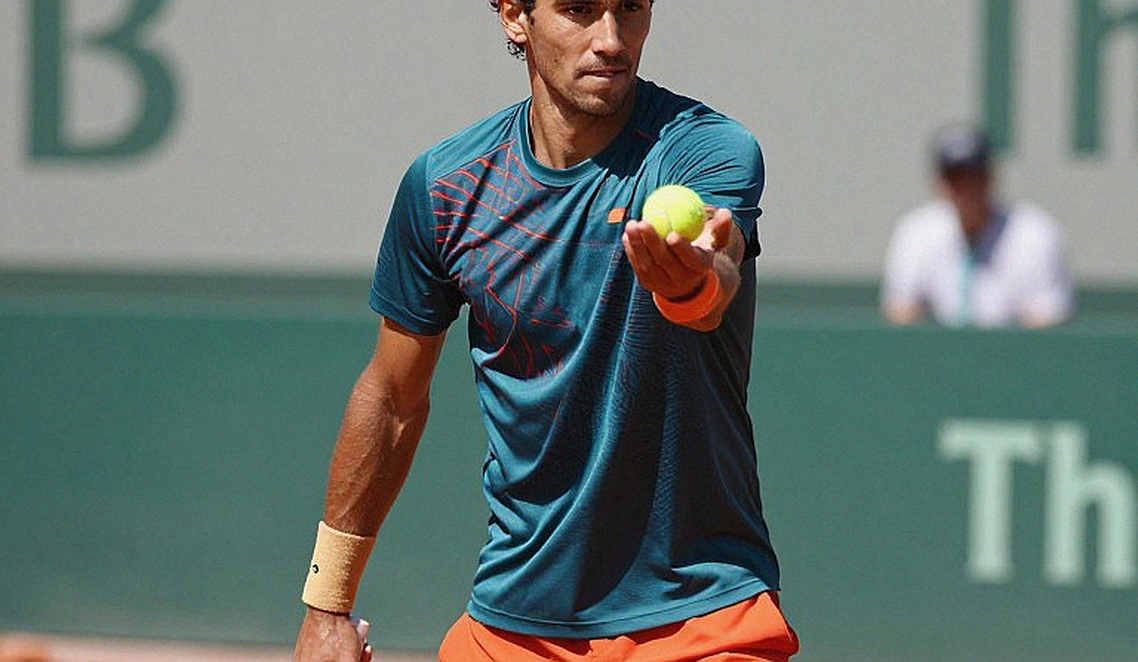
When silver hair talks about football, do not rush to cover your ears — the fire is still red.
Context: a beautiful win inside a crooked season
I will lay out everything I actually have, including the gaps, because a man who has done this job for 48 years should state clearly how much data he is standing on.
The match was matchday three of the Champions League league phase. I say “matchday three”, not “third round”, because the current 36-team format no longer has a third qualifying round before the knockout stage — plenty of reports still get this wrong, and that small error is a tell: the writer is copying from memory rather than opening the fixture list.
Real Madrid beat RB Leipzig 4-1. Diomande, 19, a former Leipzig player, came on at 70, assisted the third goal at 83, scored the fourth at 87. The first and second goals are not described in my source. Neither are the starting line-ups, the names of either head coach, expected goals, possession, or shot counts. I say that plainly so you know: every tactical conclusion below is inferred from match state and from the laws of the game, not from a data sheet.
The season context, however, is brutally clear. Real Madrid sit third in La Liga on 21 points, behind Barcelona's 27 — a six-point gap. They have already lost 0-1 to Real Betis and 1-2 to Atletico Madrid. And four days after Leipzig, they travel to Barcelona for the Clasico.
One detail I had to note in the margin: the source gives the Clasico venue as “Spotify Camp Nou”. Camp Nou is under redevelopment and Barcelona are playing home fixtures at the Estadi Olimpic Lluis Companys. It may be shorthand, or it may be an error. But for a sports reporter, a venue is a matter of honour, not of style.
Timing, not system
This is where I want you to look with me. A winger coming off the bench at 70 and killing a game is not a tactical invention. It is the standard squad-rotation device of modern football, two decades old, and every elite club owns a version of it.
The novelty here lies in the record, not in the method.
When Diomande entered, Real Madrid were already ahead and Leipzig were obliged to commit bodies forward. A team trailing at 70 will push its defensive line higher, advance the midfield to press, and automatically leave space behind its back. A wide forward with pace and a box-entering instinct is the number-one beneficiary of that state. The 87th-minute goal does not prove Diomande is better than people thought; it proves that in the 87th minute, Leipzig had nobody at home.
The individual record that night was produced by match state, not by a new tactical system. That is what I want you to take home.
It matters because it changes how you read the report. Read it as “Real Madrid have found a new weapon” and you will be disappointed at the Clasico. Read it as “Real Madrid exploited the right moment” and you will understand why the same player, in the same system, may do nothing at all against a deep, compact block.
The former-club trap
There is another layer I believe is real, even though it is inference rather than a stated fact: Diomande was facing Leipzig, the club that raised him inside its pressing structures.
A player developed in a system knows where that system breathes. He knows when the back line steps up, who is the slowest of the four defenders, where the second ball lands when the midfield is dragged wide. That is not sentiment; it is muscle memory. And it usually has value exactly once — the first time he meets his old club, before they adjust.
I cannot prove it was decisive. But in 48 years of watching, I have seen too many players return to the old house and produce the match of their lives. It does not explain everything, but it explains most of what the eye misses.
Player profile: a runner into the box, not a touchline hugger
From two actions, the portrait is fairly clear. The assist for Mbappe at 83 and the finish at 87 both came from inside the penalty area. That is not the profile of a winger who hugs the line and crosses. That is a runner who cuts inside and attacks the box — what modern football calls a wide forward.
That complementarity is structural, not merely personal. Mbappe is the central spearhead, and a team with only one central source of goals gets strangled when opponents flood the vertical axis. A second box arrival from wide forces defenders to split their eyes. It is a reasonable answer to the chronic disease of big clubs: over-centralising chance creation.
But I stress the word reasonable. One assist and one goal in 20 minutes is an extremely high output per minute and an extremely small sample. Anyone who builds a theory out of 20 minutes is selling you goods with no warranty.
Young people look at Transfermarkt; I look at a player's eyes when he steps onto the pitch. A price can rise overnight; a gaze does not. And I have not yet seen enough of that gaze to say whether he is a star or simply a man in the right place at the right hour.
Leipzig died twice in four minutes
Conceding at 83 and again at 87 is two cuts on the same wound. Shipping twice inside four minutes after the 80th is not coincidence; it is the signature of a side that has lost its rest-defence organisation.
For high-intensity pressing teams this is a systemic weakness, not an accident. Once the front line has pushed up, the back line must play high, and every midfield turnover becomes a race they start from behind. After the 80th minute, the price of one misplaced pressing step rises exponentially, because the legs are gone.
The two goals arrived in different moments but share a cause: Real Madrid switched play quickly, Leipzig could not recover shape. If the Leipzig coach deliberately pushed higher chasing an equaliser, it was a bet he lost. If the team drifted up in panic, it was a game-management failure. Either way the conclusion is the same: after the 80th minute, Leipzig had no Plan B.
I do not have the coach's name. My source does not give it. So I will not judge him. A decent commentator stops at the edge of his own data.
Records inflated by format
This is the part I suspect you have not heard elsewhere, and it is why I wrote this piece.
The Champions League now runs a 36-team league phase, meaning more high-visibility fixtures per season than before. More matches, more minutes, more young players appearing in games the whole of Europe watches. The consequence is that “youngest since…” headlines appear at a mechanical rate — not because this generation is a freak of talent, but because the number of recorded opportunities has grown.
The “youngest since…” record is a by-product of the competition format, not evidence of a golden generation.
That does not diminish Diomande's achievement. He still had to be in the right place, at the right minute, doing the right thing. But it changes how we price the achievement. If every season adds dozens of matches like this, every season will add several records like this, and by the fifth year we will have a generation made entirely of “youngest ever” players.
I have lived through several of these cycles. In the 1990s, a 20-year-old scoring in a European cup stopped the continent. Not any more. Not because football has got worse, but because we count more.
The money story: Leipzig sold before the peak, Real Madrid bought before the peak
On the financial side, I have not a single number to analyse. No fee, no contract length, no wages, no sell-on clause. Anyone telling you this was a bargain or an overpay is inventing.
But there is something observable without numbers: the direction of value.
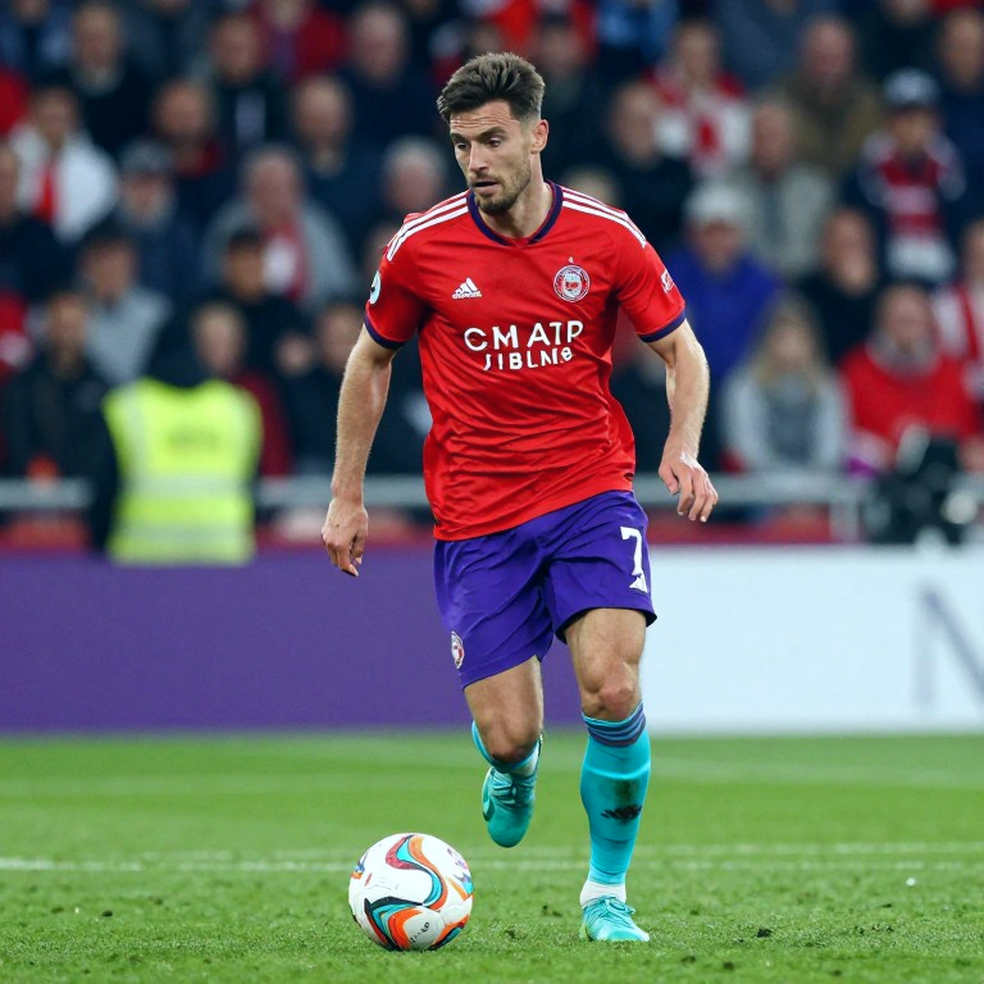
A 19-year-old sits at the early part of the age-value curve. Two decisive actions in a high-exposure Champions League match are exactly the kind of exposure that lifts market valuation and resale value. As an asset, that was a night of appreciation.
And here the romance gets its mask pulled off. We are usually sold the story of the small town beating the giant, a pretty story that hides the real financial gap. Here the story is inverted: Leipzig are not a small town. Leipzig are a node in a player-production chain, and selling a 19-year-old before his price peaks is the model working exactly as designed.
The cost is this: when Diomande sets a record, the sporting glory belongs to the buyer, while the seller receives only a fee fixed in advance. If the deal included a sell-on percentage — standard practice when a Bundesliga club sells a teenage asset to an elite buyer — then Real Madrid's effective disposal value is capped. I have no data to confirm it. I raise it as a possibility to be checked.
Six points and one Clasico
This is the part the original report does not resolve, and it is why I call it a hidden crack.
A night of individual record sits inside a season in which the collective is six points off the pace and has already lost twice domestically. Those two defeats share a striking feature: narrow scorelines. 0-1 to Betis, 1-2 to Atletico. That is the portrait of a team losing tight, low-scoring matches — the exact opposite of the 4-1 European picture.
In other words, Real Madrid are struggling against well-organised, defensively disciplined opponents who are happy to sit deep. And Barcelona at home, six points clear, have every reason to play exactly that way.
Six points becoming nine within a week turns “chasing” into “crisis”. Three points and everything returns to normal. That is the entire meaning of the fixture four days later.
And here is where I reconnect to Diomande: the Leipzig win is a momentum asset, but a fragile one, because its most memorable component came from a substitute in the last ten minutes — the least repeatable part of any performance. You cannot build a season on 87th-minute goals.

List A, List B, and the limits of stockpiling 19-year-olds
There is a technical detail I like because it is real, checkable, and almost never discussed.
A newly arrived 19-year-old generally requires List A registration for UEFA competition unless he qualifies for List B — reserved for under-21 players with sufficient service time at the club. That is an administrative cap on the strategy of stockpiling teenagers: you cannot stuff fifteen 19-year-olds onto a European squad list.
Diomande's appearance proves his registration was valid, so there is no administrative obstacle. But if he sits on List B, that implies prior service time at the club — and therefore that the Leipzig departure did not happen in the most recent window. I offer that as a hypothesis to test, not a conclusion. It is checkable against transfer records, and I encourage the young readers to do the checking rather than trust me.
Where I might be wrong
I have to include this section, because responsible provocation means putting yourself in the dock.
Nobody believed in Croatia that year except me and a few drinking friends. But I have also been wrong plenty of times, and my errors tend to share one shape: I infer too much from too small a sample.
First error risk: 20 minutes is too little. If Diomande starts ten games and does nothing, the entire player-profile section above collapses. I built a portrait from two actions; that is the minimum for inference, not enough for assertion.
Second error risk: I read Leipzig's collapse as tired legs. It may have been a deliberate tactical adjustment that simply failed. In that case the problem is not fitness but a coaching decision — and I have neither the coach's name nor a description of the changes, so I have no right to judge.
Third and biggest error risk: perhaps Diomande came on at 70 not for tactics but for minute management before the Clasico. If so, the night we are calling historic was a fixture-calendar calculation, and we are worshipping a spreadsheet.
Goc Nong is not the name of a podcast; it is how I stand in front of the storm. Standing in front of the storm means naming the places where the storm can hit you.
What I take away
I am not concluding that Diomande will become a star, nor that he will become a footnote. I am placing two falsifiable bets, writing them in the notebook, and reading them on air so you can check me.
Bet one: Diomande will start fewer than five of Real Madrid's next ten matches across all competitions. Bet two: at the Clasico, if Real Madrid need a goal after the 80th minute, they will not get one — because Barcelona are not Leipzig, and a team leading the table will not push its back line up to hand over the space.
And if you ask me what was most memorable that night, I will not say the record. I will say the four minutes of silence between the third goal and the fourth — four minutes in which one team understood there was no way back, and a 19-year-old understood that football sometimes only asks you to stand in the right place when everyone else is tired.
The ball may roll slower, but we are still here. And old men like me will still sit down after every match, draw lines in the notebook, so that the next time somebody calls a 19-year-old “a quarter of a century”, I will be the first to ask: counted from where?