
VTB United League Negotiates With Foreign Clubs: The Broadcast Math Behind Sergey Kushchenko's Statement
Câu trả lời lõi: Chủ tịch VTB United League Sergey Kushchenko xác nhận trên Match TV rằng đàm phán với các CLB nước ngoài, trong đó có các CLB Serbia, vẫn đang tiếp diễn; giải đấu cũng xem xét các tournament phối hợp với ban tổ chức nước ngoài. Chưa có CLB, thể thức hay mốc thời gian nào được xác nhận. Dữ kiện chính: - Sergey Kushchenko là Chủ tịch VTB United League; phát biểu đưa ra trong cuộc phỏng vấn với Match TV. - Serbia là kênh đàm phán chính; Phó Chủ tịch Liên đoàn Bóng rổ Serbia Filip Sunturlic tham gia trao đổi. - Đường ray một: một CLB Serbia dự vòng đấu chính thức VTB United League — khả năng ngắn hạn thấp. - Đường ray hai: tournament mời phối hợp với các đội dự EuroLeague và EuroCup — ma sát pháp lý thấp nhất. - Các CLB Nga nằm ngoài EuroLeague và EuroCup từ năm 2022; chưa có xác nhận đồng ý từ phía Euroleague Commercial Assets (ECA). Nguồn: phỏng vấn Match TV với Chủ tịch VTB United League Sergey Kushchenko | Cross-checked: VuaBong.vn Hỏi đáp liên quan: Hỏi: Một CLB Serbia có thể dự vòng đấu chính thức VTB United League mùa tới không? Đáp: Khả năng ngắn hạn thấp, vì các CLB hàng đầu Serbia đã ràng buộc lịch thi đấu với ABA League và EuroLeague. Hỏi: Bước đi cụ thể gần nhất có thể là gì? Đáp: Một tournament mời hoặc giao hữu quốc tế có tổ chức, vốn cần ít phê duyệt hơn tư cách thành viên giải đấu. Hỏi: EuroLeague hoặc FIBA đã đồng ý chưa? Đáp: Chưa có tuyên bố nào từ ECA hoặc FIBA được ghi nhận trong nguồn này, đây là điều kiện bắt buộc còn thiếu.
Sergey Kushchenko, president of the VTB United League, sat down in a Match TV studio and said the thing club boards across Russia have waited four seasons to hear: negotiations with foreign clubs are still going. He named Serbian basketball, floated the possibility of a Serbian team in the regular championship, and pointed to a lighter option — joint tournaments with foreign organizers, where Russian clubs could meet teams currently playing in the EuroLeague and EuroCup. For a casual reader, that is a routine administrative line. For anyone who reads a league's balance sheet, it is the first signal of a rights deal that has not been named yet.
The structure behind one sentence
European basketball runs on two separate tiers. The first is operated by Euroleague Commercial Assets (ECA) and contains the EuroLeague and EuroCup, home to Real Madrid, Barcelona, Olympiacos, Fenerbahçe, and also Crvena Zvezda and Partizan. The second is the regional tier, where the ABA League is the home of clubs from Serbia, Croatia, Slovenia and Montenegro.
Since 2026, Russian clubs have been outside the first tier. The VTB United League, which once counted non-Russian members such as Belarus and Kazakhstan, has narrowed toward a domestic core. Seasons still happen and titles are still awarded, but the export side of the product is gone.
That hits revenue before it hits competitiveness. Every cross-border game is a complete unit of inventory: a time slot sellable to a foreign broadcaster, a regional sponsor, a club brand appearing in front of an audience that does not speak Russian. When those games disappear, sponsorship contracts lose the story they sell, and international rights buyers lose the reason to renew.
The presence of Filip Sunturlic, vice-president of the Basketball Federation of Serbia, in this story sits exactly there. Federation-level talks are the mandatory gate for any cross-border competition. A club that wants to play abroad needs its own federation to vouch for it and the host federation to nod.
Two tracks, two cost levels
Kushchenko's statement has to be split into two tracks, because their probability and their cost are completely different.
Track one is a Serbian club entering the regular championship. It is the most reported scenario and the hardest one. Serbia's top clubs are committed to the ABA League and compete for EuroLeague places. Adding another national league means asking for releases from two existing competitions, and no organizer voluntarily gives up calendar space to a league outside its own system. Administratively, this track needs ECA's signature — the body that holds eligibility rights. Nothing in Kushchenko's remarks confirms ECA has agreed.
Track two is joint tournaments: invitational or organized friendly events. This is the lowest-friction route. It requires no membership, does not touch national league bylaws, and usually needs only federation-level approval. It is also a product that sells at a premium over a standard domestic game, because neutral viewers have a reason to watch, sponsors have a reason to appear, and broadcasters have a reason to push it into prime time.
The venue of the talks matters too. They are happening around events such as the Serbian Super Cup and Expo-Basket, where officials can meet on the edge of a tournament, test positions, and avoid a joint communiqué.
The real value is the part nobody states
The value of this statement is structural. A league isolated on the sporting side loses commercial value before it loses competitive value. Media rights, sponsorship packages and season-ticket revenue are all priced on interest from audiences outside Russia. When international opponents vanish from the schedule, that pricing drifts down season by season, quietly and hard to reverse.
If an invitational format is built successfully and can be repeated, it becomes a template. Other federations can join individually with low commitment instead of signing a league-wide agreement. This is a coalition-of-the-willing model, and in sports business such coalitions usually start as a four-team exhibition and grow into an annual product. My years of reading sports balance sheets keep proving the same point: money does not stop when a door closes, it changes doors. When the pandemic shut every arena, money still found a way.
There is one specific risk here. The entire process depends on a single channel: Serbia. If Serbia's position shifts for any reason, including reasons outside basketball, the process returns to the starting line. A league trying to reopen an ecosystem needs more than one counterparty.
The contrarian read
The loudest scenario is the least likely one. If forced to pick an outcome within twelve months, I pick an invitational tournament, not a regular-championship slot. Calendar pressure from the ABA League and the EuroLeague is a hard barrier, and it does not depend on anyone's goodwill.
The more telling detail is the language. A league president who has to go on television and confirm that talks are still going is usually signalling slow progress, and the real function of the statement is to keep the issue alive in public conversation. Data does not lie, but the person reading the data is what has value — and the only data point here is a sentence, not an agreement.
Domestic fans also need a warning. They will read the headline as foreign clubs are coming, while the source text only supports discussions continue. The distance between those two readings is the distance between a marketing plan and a signed contract. The transfer market teaches exactly this lesson: paying outcome prices for unproven assets is the fastest route to a loss, whether the asset is a nineteen-year-old player or a slot in an international competition.
One more blind spot: the key sits with the owners of the Serbian clubs' calendars, not with the VTB United League. All the goodwill at federation level can be neutralized by a clause already signed.
What to watch
Crisis does not ask who is ready, but it does sort out the winners. For the VTB United League, the sorting is happening at the hardest point: turning a sporting relationship into a product with a date, an opponent and a rights buyer.
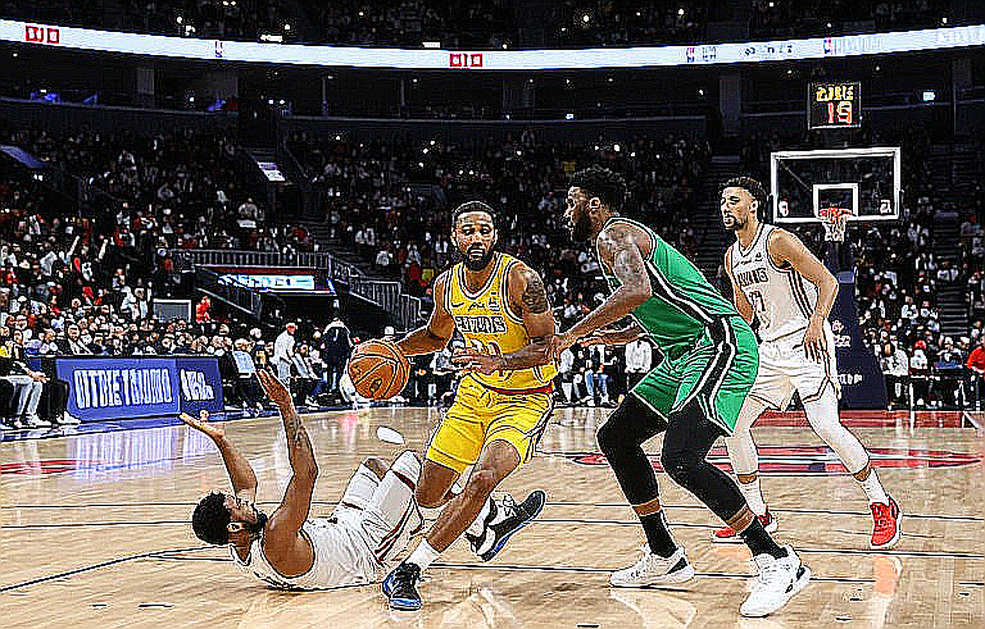
Three signals will settle it — the name of a specific club rather than the phrase Serbian clubs; a format with a date and a venue; and a response from the EuroLeague, ECA or FIBA. When all three appear, it is a deal. When only a television sentence appears, it is a negotiation still looking for a door.
Fans in Moscow or Belgrade do not pay for a press release. They pay for a game with a tip-off time.